How To Clean Slate Tile Floors Quickly And Easily
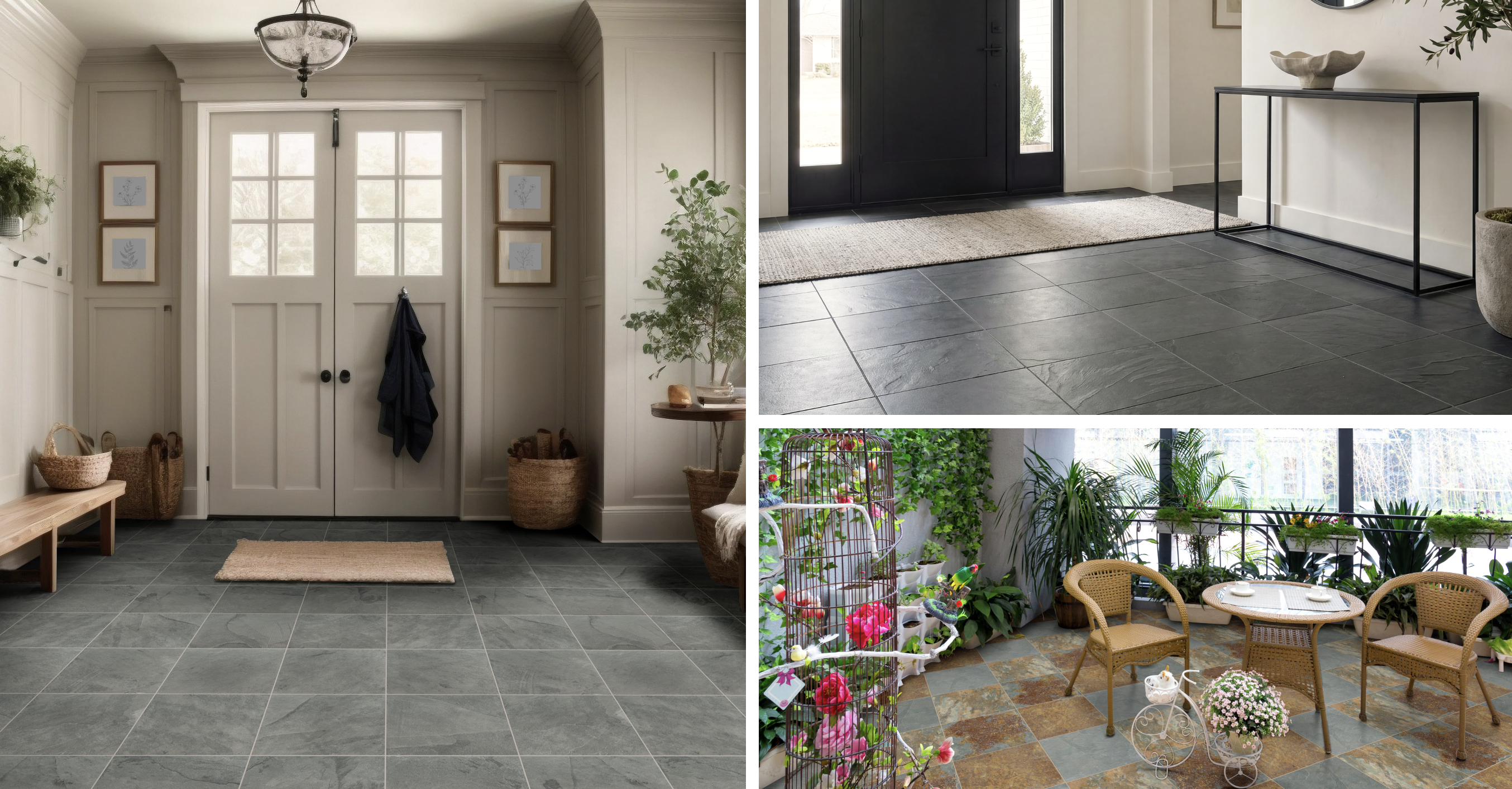
For homeowners who want a natural, timeless look, slate tile is a popular choice. MSI’s blog Stylish Slate Tile For Both Indoors And Out showcases their incredible allure. Slate, whether used indoors or out, adds texture and character that few materials can match. But like any natural stone tile flooring, it requires the right care to stay looking its best. But a simple maintenance routine will help keep your slate floors looking great for years to come, even if improper cleaners or tools might damage the surface over time. In this guide, you will learn how to clean slate tiles, the best tips for slate cleaning and sealing, and everything you need to know about keeping your slate flooring beautiful for a lifetime.
HOW TO CLEAN SLATE FLOORS SAFELY
For the best slate floor cleaning, vacuum with a hard-surface setting and then mop with a microfiber mop and pH-neutral stone cleaner. Don’t use acidic cleaners such as vinegar, which can etch into the natural MSI slate surfaces and break down the protective seal over time.
KNOW YOUR SLATE: CLEFT VS HONED MSI SURFACES
It’s a good idea to know what type of slate finish you have before you start to clean. MSI’s slate tile collection includes two main surface finishes, cleft and honed, which respond differently to dirt, moisture, and cleaning tools.
Natural cleft slate has the rough, layered texture of slate as it comes from the quarry. It’s great at hiding scratches, and it has natural slip resistance, but those ridges and grooves also trap dirt and crumbs. Honed slate, on the other hand, has been ground to a smooth, matte, or low-sheen finish. It is easier to wipe clean, but it can show water spots and surface dirt more readily.
Slate is a metamorphic rock created from fine-grained sedimentary stone under intense heat and pressure. Its defining characteristic — foliation — happens when the stone splits naturally into layers. Those natural layers can be penetrated by harsh chemicals, acidic solutions or abrasive tools, flaking, discoloring, or causing long-term structural damage to the surface.
| Surface Type | Dirt Trapping Level | Best Cleaning Tool | Maintenance Difficulty |
|---|---|---|---|
| Natural Cleft | High – Ridges and grooves easily trap crumbs, dust, and debris. | Vacuum (hard-floor setting) + Microfiber mop. | Moderate – Requires multi-directional sweeping to clear texture. |
| Honed | Low – Smooth surface prevents dirt from getting "stuck." | Dust mop + Damp microfiber cloth. | Easy to Low – Simple to wipe, but more prone to showing water spots. |
DAILY MAINTENANCE: HOW TO CLEAN SLATE TILES FOR ENDURING LUSTRE
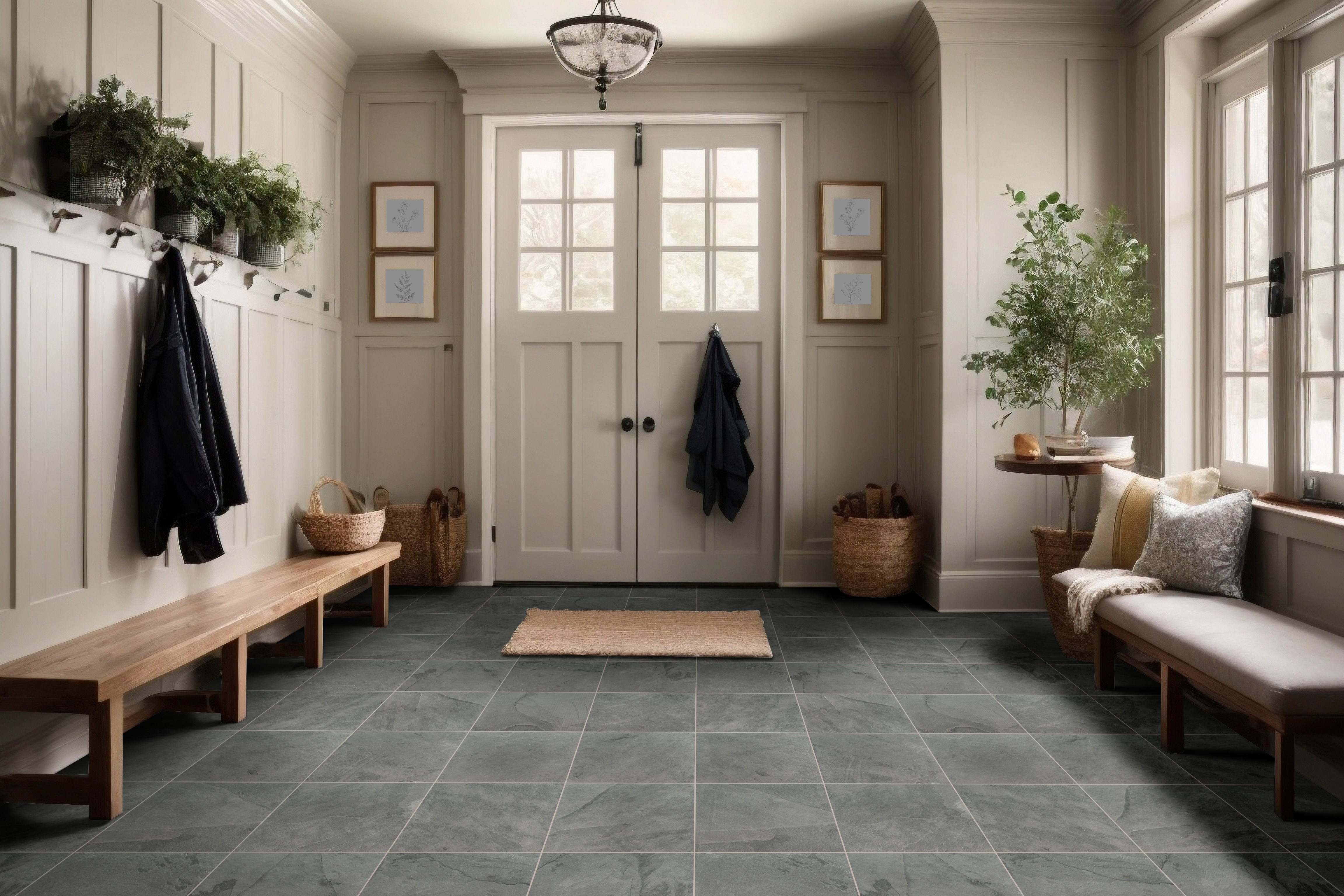
Keeping slate floors clean on a regular basis helps to prevent wear and keep them looking their best, particularly in areas like the mudroom with Montauk Blue Slate Tile in the image above.
DRY SOIL REMOVAL (PROTECTING THE NATURAL LAYERS)
Routine maintenance should include sweeping or vacuuming before mopping because dirt, sand, and grit will slowly scratch slate surfaces over time.
- Use a soft-bristled broom for cleft surfaces. You can run a stiff brush over those ridges all day, but it won't clean them, it will just move the grit around.
- For honed slate, use the hard-floor vacuum setting, which covers the entire surface without scattering debris.
- Place good quality entry mats at all exterior doors to reduce the amount of tracked-in grit before it even gets to your floors.
SAFE MOPPING WITH PH-NEUTRAL CLEANERS
Many household floor cleaners are not designed for natural stone and can leave a residue that dulls the finish.
- Use a stone safe cleaner with a neutral pH. They are made to take off dirt without damaging the mineral matrix of natural stone.
- Follow the manufacturer’s recommendations for cleaner dilution; more is not better. Extra product is harder to rinse away and can leave streaks.
- Rinse your mop well each time you go over the floor. The aim is a damp mop, not a wet one.
DRYING AND BUFFING TO PREVENT WATER SPOTS
Water spots show up particularly well on the dark slate types. After mopping, wipe with a dry microfiber cloth or mop head again to remove any excess moisture. This last pass brings out the natural luster of the stone and prevents mineral deposits from drying on the surface.
DEEP CLEANING: HOW TO REMOVE STAINS FROM SLATE FLOORS
Are you googling “stains on my slate floor” on a regular basis? Even the best-kept slate floors can be stained by everyday spills and mishaps. Regular mopping won’t touch the stains that spills, pet accidents, and tracked-in oil can leave. Before you begin to think about slate floor refinishing, be sure to properly perform your slate tile cleaning and maintenance. First, determine the cause of the stain so you can pick the right slate tile cleaning method.
HOW TO IDENTIFY STAINS (ORGANIC VS. OIL-BASED)
Organic stains (coffee, wine, food, pet accidents) tend to appear as brown or pink discolorations. They are closer to the surface and are more responsive to hydrogen peroxide treatments.
Oil stains (cooking grease, motor oil, lotion) will darken the stone and may appear as wet-looking patches even when the surface has dried. They need a drawing agent to extract the oil out of the pores of the rock.
USING A STONE POULTICE FOR DEEP EXTRACTION
The best tool for pulling deep-set oil stains out of porous natural stone is a poultice. How to clean your surface for deep extraction:
- Blend baking soda with water (or a commercial stone poultice product) into a thick paste, like peanut butter.
- Apply a 1/4-inch thick layer over the stain, extending a bit beyond the edges.
- Cover with plastic wrap, taping the edges to slow drying and help the poultice draw the oil upwards.
- Let sit for 24-48 hours, then remove and thoroughly rinse area with warm water.
HOW TO CLEAN GROUT LINES IN TEXTURED SLATE WITHOUT RISK
Dirt and organic buildup can accumulate in the grout lines of cleft slate installations. Gently scrub the recessed grout joints with soft bristles (never a metal scrubber). Apply your pH neutral stone cleaner to the grout and let it sit for two to three minutes. Scrub and rinse thoroughly.
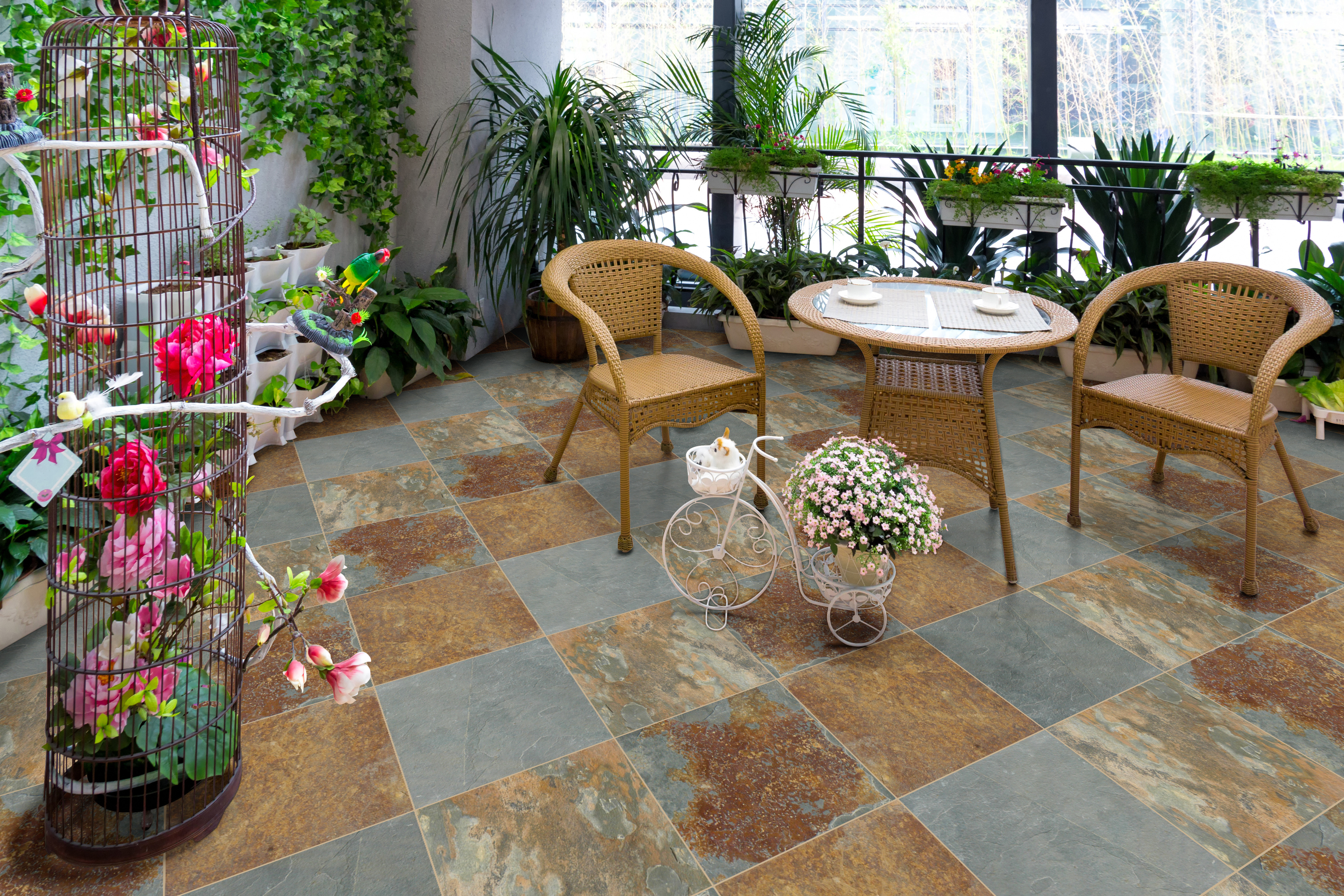
EASY 4 STEP GUIDE ON HOW TO CLEAN SLATE TILE FLOORS (THE MSI METHOD)
Follow this time-tested approach, consistent with best practices for slate tile care and maintenance.
- Grit Removal: Switch the vacuum to hard-floor mode or use a soft-bristle broom to remove all abrasive debris. This step protects the surface when mopping.
- Prepare Solution: Combine warm water with a pH neutral stone cleaner of professional quality in a clean bucket. Dilute the product at the recommended dilution ratio.
- Controlled Mopping: Wring out your microfiber mop until it is damp, but not dripping. Too much water can cause the tiles to slide and weaken the grout or setting bed over time.
- Buff Dry: Use a clean dry cloth or mop to remove any moisture and bring out the natural luster of the stone.
HOW TO SEAL SLATE TILE FOR LONG-TERM PROTECTION
Slate floor cleaning and sealing go hand in hand; slate sealing creates an invisible barrier that slows down liquid absorption making spills far easier to wipe up before they become stains. We recommend following proper slate tile installation procedures, which include sealing the tile before grouting and again once the project is complete.
- Step 1 – Prep & Clean: Make sure the stone is completely dry, preferably 24 hours after your last cleaning. Trapped moisture under the sealer may cause cloudiness and reduce adhesion.
- Step 2 – Apply Sealer: Use impregnating (penetrating) sealer for depth protection rather than topical sealer. Topical sealers peel, turn yellow, and trap moisture. Use a clean applicator pad or brush and apply in smooth, even strokes.
- Step 3 – Dwell Time: Allow the sealer to set for 10 to 15 minutes. If it soaks in fast, reapply to keep the surface wet during this time.
- Step 4 – Excess Removal: Buff away all the residue with a clean, dry cloth before it dries. Leaving excess sealer on the surface to cure creates a sticky haze that is very difficult to remove.
Want to learn more about cleaning and sealing slate? Check out our educational blog where we answer the question: Will Sealing Your Slate Tile Change Its Color?
THE WATER DROP TEST: DOES YOUR MSI SLATE NEED SEALING?
Place a few drops of water on the tile surface and wait for 30 seconds. If the water beads up and runs off, you have a healthy seal. If the water darkens the stone and seeps within 30 seconds, it’s time to reseal. How often should you seal your slate tile? For residential slate installations, the re-sealing frequency is typically every one to three years, depending on the amount of traffic.
MISTAKES WHEN CLEANING SLATE: WHAT NOT TO DO
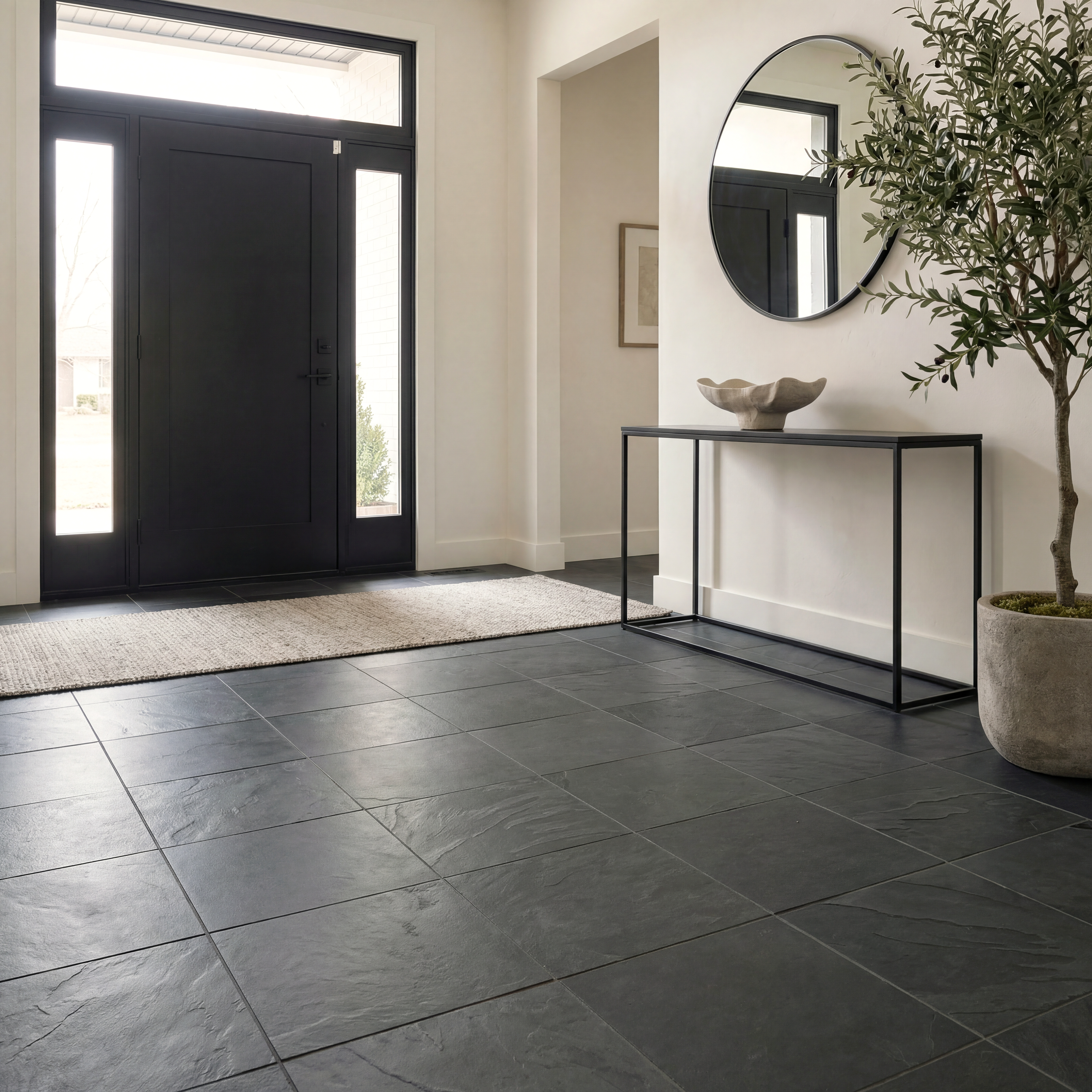
Never use vinegar, lemon juice, bleach or any acidic household cleaner on natural slate, even on dark-surface Montauk Black Slate Tiles shown in the image above. Acids attack the mineral makeup of the stone, creating microscopic etching that dulls the surface over time. Repeated use of acidic cleaners can cause permanent damage to the stone over time. Use only pH-neutral cleaners safe for stone.
Wool, scouring pads, and stiff wire brushes will physically scratch both cleft or honed slate. Another common error is using steam mops, because the intense heat and moisture can break down the sealer bond and force water into the natural layers of the tile. Even ‘natural’ or ‘eco-friendly’ all-purpose sprays should be tested in an inconspicuous spot first, as they may contain citrus oils or other acidic ingredients.
THE BEST CLEANERS FOR SLATE TILE FLOORS (WHAT ACTUALLY WORKS)
Not all floor cleaners are suitable for natural stone, and similar stone-safe care is important when you need to Seal and Clean Travertine Tile.. If you would like to clean your slate floors without damaging them, do the following:
- pH-Neutral Stone Cleaners: Choose products that are specifically designed for use on natural stone surfaces.
- Mild Dish Soap (Occasional Use): Just a drop of plain dish soap in warm water can be used for a light cleaning, but don’t overdo it or use it too often, because it can build up residue over time.
- DIY vs. Commercial: DIY solutions like baking soda pastes are useful for poultice applications (i.e., stain removal), but should not be used for routine mopping. Commercial stone cleaners will give you consistent pH control that you cannot get reliably with DIY solutions.
- What MSI Recommends: Always consult the care documentation specific to your product. MSI’s slate tile care and maintenance resources offer product-specific guidance for every product in the line.
EXPLORE MSI SLATE TILE FOR YOUR NEXT PROJECT
Whether you're installing slate tiles indoors or taking them outside with our outdoor slate tiles collection, MSI offers a wide range of slate options for both indoor and outdoor applications. To see these surfaces in person and learn more about how to clean slate tiles, find an MSI showroom near you, or connect with an authorized MSI dealer in your area to get your project started. Have a question right now? Chat with us today.
FREQUENTLY ASKED QUESTIONS
1) Does MSI slate tile require regular sealing?
Yes. Natural slate is a porous stone, so regular sealing is recommended to prevent liquid absorption and staining. We recommend resealing every one to three years for most residential installations. You can check how good your seal is with the water drop test.
2) Can I use lemon juice or vinegar to clean slate flooring?
No. Avoid using vinegar, lemon juice or any other acidic cleaners on natural slate. The acid attacks the mineral surface of the stone, permanently dulls it, and breaks down the protective seal. Always use a pH neutral cleaner that’s designed for natural stone.
3) What do I do about white haze or “hazing” on slate tiles?
White haze on slate is normally from one of two things. One is excess sealer that was not fully buffed off during application, and the other is mineral deposits from hard water. For sealer haze, lightly buff with a clean cloth moistened with a little mineral spirits. For mineral deposits, use a non-acidic, stone-safe descaler product. Never use vinegar or CLR.
4) How do you remove deep oil stains from slate?
The best way is with a stone poultice. Make a thick paste of baking soda and enough water to cover the stain with a ¼-inch layer, then cover with plastic wrap and let it sit for 24-48 hours. As the poultice dries it will draw the oil out of the stone. Rinse thoroughly and repeat as needed for stubborn stains.
5) Can I Use a Steam Mop on Natural Slate Flooring?
Natural slate steam mops are not recommended. The extreme heat can wreak havoc on the protective sealer, and the forced moisture can seep into the natural layers of the stone, causing it to expand and possibly flake over time. For the safest, most effective results, stick with damp microfiber mopping with a pH-neutral stone cleaner.
 SHARE
SHARE
 PIN
PIN
 TWEET
TWEET