How To Clean And Seal Quartzite Countertops In 2026: The MSI Guide

Quartzite countertops offer the beauty and durability of natural stone that today’s homes want. From delicate, marble-inspired veining to dramatic movement and earthy tones, quartzite remains one of the most sought-after countertop materials for kitchens, baths, bars and laundry rooms alike. But like any luxury surface, it's all about the upkeep. Learning how to clean quartzite countertops and how to seal them with the appropriate care will help to retain their beauty for decades.
This article will explain regular quartzite cleaning routines, how to remove stains, best practices for sealing quartzite countertops and long-term care routines for popular choices such as Taj Mahal Quartzite and Sea Pearl Quartzite. Whether you’re constructing a new kitchen or maintaining an existing one, these professional tips can help you safeguard your investment while keeping your countertops looking like they came straight from the showroom.
How to Clean Quartzite in 30 Seconds
Clean everyday with a mild dish soap or pH-neutral stone cleanser and warm water. Avoid abrasive sponges and acid cleaners, such as vinegar or lemon juice, which can etch and harm the surface.
How to Clean Quartzite Countertops: Daily Cleaning Is Best
Cleaning quartzite countertops is a straightforward process. Follow these four steps after cooking, preparing food, or whenever the surface needs attention. It’s simple to keep up with every day and takes just a few minutes.
Step 1: Remove Spills, Crumbs, and Loose Dirt
Focus on the areas that need attention first. Start by clearing the counter by brushing away crumbs with a dry microfiber cloth and wiping up spills. This keeps food particles from getting dragged across the surface while using a cleaner or doing the overall wipe.
Step 2: Use a Gentle pH-Neutral Cleaner
Create a cleaning solution by mixing a few drops of cleaner or mild dish soap into warm water. Dampen a soft cloth or nonabrasive sponge, squeeze out the excess water, and wipe the countertop gently. If you are still wondering how to care quartzite countertops, start with regular cleaning and avoid using more soap than necessary. Too much can leave a film that attracts dirt and makes polished stone look dull.
Step 3: Wipe Away Soap Residue
Now this is a step most people overlook. If not removed properly, cleaning solution can do more harm than help. Use a separate cloth dampened with clean water to remove any remaining soap. This step is especially helpful if the countertop looks streaky after cleaning.
Step 4: Dry the Surface Completely
Finish with a clean, dry microfiber towel. Drying prevents water spots and mineral deposits, particularly around sinks and faucets in areas with hard water.
This simple routine is the foundation of good quartzite countertop care. Once you get into the habit, daily cleaning takes only a few minutes.
What Is the Best Cleaner for Quartzite Counters?
The best approach to cleaning quartzite countertops naturally is to use warm water and a soft microfiber towel.
You have two practical cleaner options to use without harming the stone’s finish or sealer:
- A pH-neutral stone cleaner: Look for a product specifically labelled for natural stones.
- Mild dish soap diluted with water: A good DIY option for everyday spills and grease.
A pH-neutral cleaner for quartzite countertops should be compatible with both the stone and its sealer. When choosing cleaners for quartzite countertops, avoid assuming that a product is safe simply because it is marketed as plant-based or suitable for multiple surfaces.
If you’re a homeowner who loves the look of marble but wants a more durable natural stone, MSI’s guide to Quartzite Countertops That Look Similar to Marble provides stunning design inspiration.
Chemicals and Tools to Avoid
Homeowners often assume natural cleaners are gentle enough for natural stone, but everyday household formulas can cause irreversible etching, dullness, or scratches. Keep these off your surface:
Many ask, “Can you use vinegar on quartzite? The answer is no. Vinegar is corrosive and will eat away at sealers over time and diminish the finish of the stone. Even occasional use can take its toll over time.
Avoiding harsh chemicals is one of the easiest methods to extend the life of your countertops and decrease future maintenance.
Deep Cleaning: Tackling Stubborn Stains and Spills
Even well-maintained countertops can discolor. Knowing how to disinfect quartzite countertops is important. Quickly treating a spill can help reduce long-term damage and avoid the need for quartzite restoration.
How to Remove Spills and Stains From Quartzite
Identifying the source of the stain is important for effective quartzite stain removal.
For Oil-Based Stains
- Use a mild soap after wiping the excess oil with a clean cloth for cooking oils, grease, makeup, or lotions.
For Organic Stains
- Identify the discoloration cause before treating coffee, wine, tea, or any other food spills. Then wipe the surface first, then clean the stains using a safe, mild solution. If it’s not working, then use a professional stone care product or book expert cleaning.
Always try any cleaner on an inconspicuous spot first.
Dealing with Hard Water Spots and Cloudy Areas
Mineral buildup can result in the formation of hard water spots around sinks and faucets. Don’t use abrasive scrubbers that could scratch polished surfaces.
Instead:
- Use a soft microfiber cloth
- Apply a stone-safe cleaner designed for mineral deposits
- Buff gently in circular motions
Afterward, washing the surface helps to prevent spots later. If a mark doesn't disappear with routine cleaning, avoid repeated scrubbing. A stain may need a specialized treatment, while etching or finish damage may require professional attention rather than another cleaning product.

How to Seal Quartzite Countertops
One of the most crucial aspects of long-term care is learning how to seal quartzite countertops.
Sealing serves to prevent the stone from:
- Moisture absorption
- Staining
- Everyday wear
- Cooking oils and spills
The Water Drop Test: Should You Seal Your Stone?
A simple “Water Drop Test” will help you determine if your countertop needs to be resealed.
Here's how:
1. Add a few droplets of water to the surface.
2. Leave for 10 to 15 minutes.
3. Dry up.
Water darkening the stone, or being absorbed quickly, is the time to reseal. If the droplets remain beaded on the surface, your present sealer is probably still working well.
Selecting the Best Quartzite Sealer
An impregnating sealer is the best quartzite sealer for most purposes.
- Topical Sealers: These settle on top of the stone like a film or wax. Ignore these, they can peel, collect moisture and change the natural beauty of the stone.
- Impregnating Sealers (The Pro Choice): Industry professionals prefer these as they “sink into” the stone. They use sub-surface technology to seal the pores and still allow the stone to 'breathe'. For optimal results on dense quartzite look use a high quality, solvent based impregnating sealer.
MSI recommends high quality impregnating sealers that are specifically created for natural stone counter tops.
The 4-Step Sealing Process
- Surface Prep: Thoroughly clean surface with a pH neutral stone cleanser. Make sure the stone is dry since moisture within the pores will prevent the sealer from penetrating.
- Application: Apply generously with a clean lint-free cloth or a soft sponge using overlapping circular movements. The surface should be wet looking but not inundated.
- Dwell Time: Let the sealer set for 10 to 15 minutes. This is the absorption window. If the stone takes the sealer all the way in, add a bit extra. Don’t allow sealer dry on surface while doing this.
- Removal and Buffing: Remove any excess sealant with a clean, dry microfiber cloth. Buff the area until the surface is dry to touch. Leaving extra sealer to cure on top can leave a sticky, cloudy residue.

How Frequently Should You Seal Quartzite?
Most quartzite countertops need to be sealed every 6 to 12 months.
The “once a year” concept is a good place to start, but your real sealing routine should be based on how you use your kitchen.
- The Sink Zone: The area around the sink and dishwasher is subjected to higher water and detergent exposure, which can accelerate the breakdown of sealers. These areas may need a “touch-up” seal every 6 months.
- The Prep Zone: If you do a lot of cooking with oils and acidic ingredients, you'll wear down the sealer faster from regular washing than you would a decorative island or a dry bar.
- Light vs. Dark Stones: Light-colored quartzites such as Taj Mahal or White Macaubas are generally more porous than darker, denser kinds and may require more frequent treatment to prevent staining, especially when exploring Warm neutrals timeless appeal with earthen shades of granite and quartzite.
Specialized Care for Taj Mahal and Sea Pearl Quartzite
Some types of quartzite require maintenance procedures that are specific to its color and finishing.
Taj Mahal Quartzite
One of MSI’s most popular countertop picks is Taj Mahal Quartzite, featuring warm cream tones and subtle veining.
Because spills show up better on lighter-toned surfaces:
- Mind the Finish: Taj Mahal is available in Brushed and Polished finishes. Brushed surfaces have more texture and can better cover fingerprints, but they may need more rigorous cleaning to ensure dirt doesn’t settle in the “valleys” of the stone’s pattern.
- Color-Safe Cleaning: Its light, creamy tones will instantly show up any “yellowing” from inappropriate cleaners or oily residues. Maintain the stone’s warm white background using a clear, pH-neutral cleanser for a crisp, not dingy look.
- Heat Stability: Taj Mahal is very solid and heat resistant, making it a popular choice for fireplace surrounds. But always use trivets in the kitchen to avoid “thermal shock” or harm to the sealer.
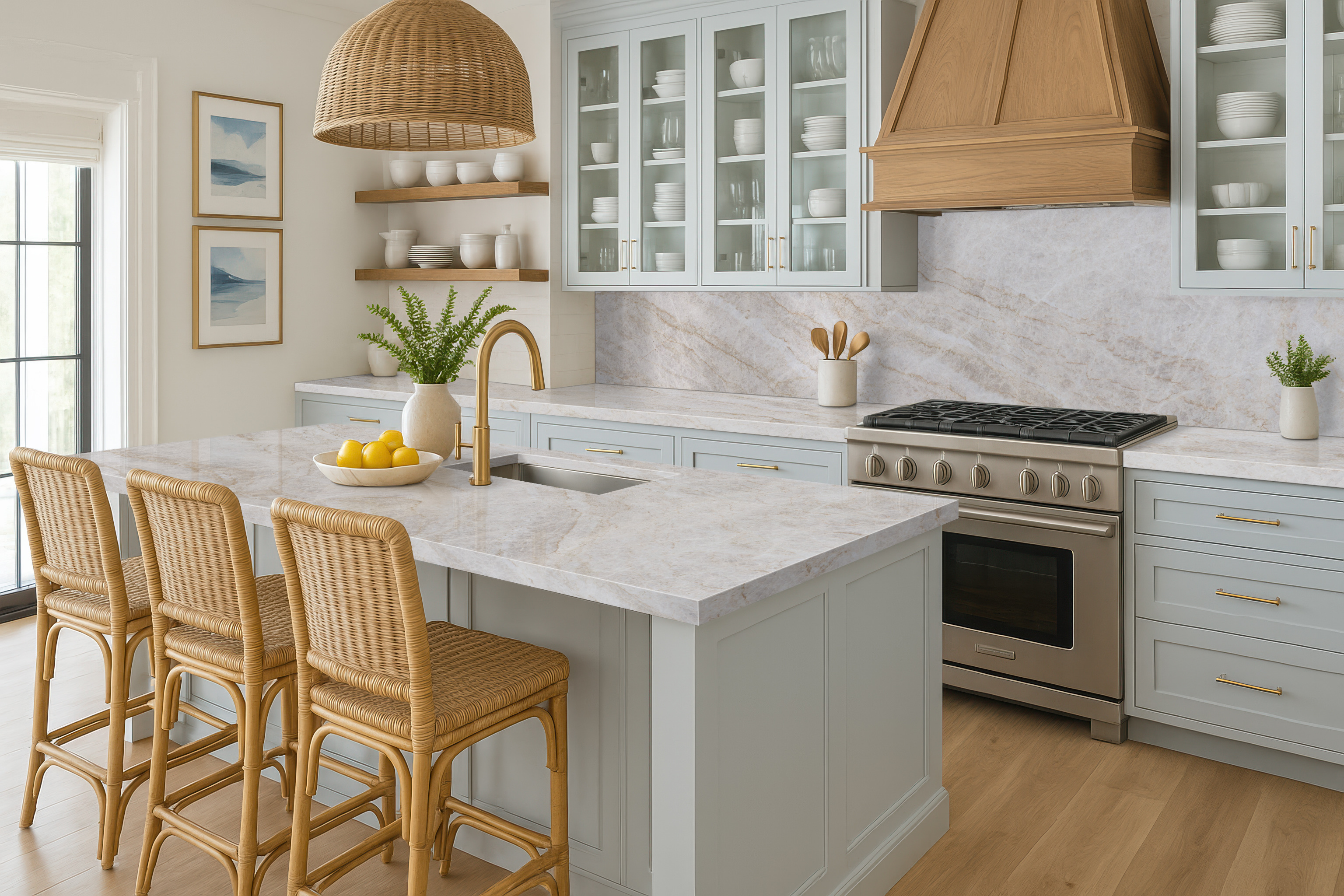
Sea Pearl Quartzite
Sea Pearl Quartzite has subtle gray tints and flowing fluidity that lends itself to a sophisticated, natural appearance.
- "Ghosting" Stains: As quartzite is a porous substance, water can seep into the minuscule pores and discolor the stone. When the sealer breaks down, these patches become transitory "ghostly" shadows that normally vanish as the liquid dries up.
- Water Drop Test: This is a commonly recommended test by experts every 6 months. If the water beads up the seal is intact. If it absorbs and darkens the stone within 5-15 minutes, it’s time to re-seal.
- Daily Maintenance: It’s a great idea to use a microfiber cloth for a daily dry-buff. It avoids the creation of “micro-filming” from hard water minerals and soap residue, which can cloud the inherent sparkle of the stone over time.
Taj Mahal and Sea Pearl Quartzite have excellent long-term attractiveness with regular maintenance.
Quartzite Care Dos and Don’ts
A few basic habits can significantly increase countertop life.
Do:
- Use coasters under beverages
- Clean spills immediately
- Use cutting boards
- Wipe surfaces daily
- Seal countertops regularly
- Use microfiber cloths
Don’t:
- Use vinegar or acidic cleaners
- Place hot pans directly on the surface
- Use abrasive scrubbers
- Allow standing water to sit
- Skip routine sealing
- Cut directly on the countertop
For more insights into quartzite care, maintenance considerations, and long-term performance, see MSI's The Pros and Cons of Quartzite Countertops.
How Quartzite Maintenance is Different from Granite and Marble
Quartzite is sometimes likened to marble and granite since it contains aspects of both. It has the sumptuous look of marble but with more durability and scratch resistance that is comparable to granite. Natural quartzite does need some considerate care though, as each slab is made of different mineral compositions and have different porosity levels.
What is Quarzite? - Quartzite is a natural rock that has been created by heat and pressure. This geological process makes it quite dense, but not totally nonporous. Some types will absorb moisture more quickly than others, especially brighter-toned stones with striking veining.
This is why the first step in learning how to care for quartzite countertops is knowing that quartzite maintenance is different from other natural surfaces.
| Material | Hardness (Mohs Scale) | Typical Sealing Frequency | Acid Resistance |
|---|---|---|---|
| Quartzite | 7–8 | Every 6–12 months | Moderate |
| Granite | 6–7 | Every 1–2 years | Moderate to High |
| Marble | 3–5 | Every 3–6 months | Low |
Quartzite is quite resilient but can be dulled by acidic substances over time. Proper cleaning practices and regular sealing help to keep the surface’s beauty and performance.
Browse the full line of MSI Quartzite countertops and discover models that combine timeless beauty with everyday dependability.
If you’re still evaluating countertop materials, check out MSI’s guide on How to Choose the Right Countertop to help you analyze maintenance requirements, quartzite durability and design aesthetics.
Keep Your Quartzite Looking Beautiful for Years to Come
Knowing how to clean quartzite countertops—and how to seal, prevent stains and maintain them—will help keep your investment looking wonderful year after year.
Proper sealing, regular cleaning and a few good habits a day will keep quartzite surfaces looking like one of the most eye-catching features in your home for decades to come, helping you Bring natures artistry into your home with quartzite countertops.
To get more design inspiration and superior natural stone choices, explore 8 stunning quartzite countertop designs to elevate your kitchen and check MSI’s complete line of Quartzite countertops.
From the gentle elegance of Allure Quartzite to the brilliant blues of Azul Macaubas, or the traditional warmth of Taj Mahal Quartzite, MSI’s natural stone selection offers a surface for each taste and environment, including ideas for Quartzite with Cabinets Pairing. To see these possibilities in person, locate an MSI showroom near you or contact an MSI dealer in your region and get started on your project!
Frequently Asked Questions about Quartzite Care
1) Does quartzite need to be sealed?
Yes. Quartzite is quite durable, although most natural quartzite surfaces will need to be sealed regularly to help withstand moisture and stains.
2) What not to use on quarzite countertops?
8 Don’ts Not to Use on Quartzite
- Acidic Cleaners
- Harsh Detergents
- Abrasive Sponges
- Steel Wool
- Scouring Creams
- Chemical Solvents
- Strong Degreasers
- Unverified Cleaners
3) Can you polish quartzite countertops yourself?
Light quartzite polishing can sometimes be done using stone-safe products, but professional polishing is recommended for significant dullness or scratches.
4) Can you clean quartzite with vinegar?
No. Vinegar is corrosive and will harm the sealer and dull the sheen over time.
5) How do I remove oil-based stains from quartzite?
Use a baking soda poultice or commercial stone poultice to safely extract the oil from the stone.
6) What happens if I don’t seal my quartzite?
If not sealed, quartzite is more prone to staining, moisture absorption, discoloration, and long-term damage.
7) Can quartzite countertops stain easily?
Quartzite is pretty stain resistant, especially when sealed well. However, oils, alcohol, coffee and acidic substances can still discolor with long exposure.
8) What is the best sealer for quartzite countertops?
The best protection is usually provided by high grade impregnating sealers made specifically for natural stone, and at the same time they preserve the natural look of the stone.
9) How long does quartzite sealer last?
Most sealers last from 6 to 12 months, depending on how much you use the countertop and how much it is exposed.
 SHARE
SHARE
 PIN
PIN
 TWEET
TWEET