Many homeowners are turning to luxury vinyl flooring to upgrade their living spaces. But when choosing your new luxury vinyl flooring material, it's important to first estimate your expenses for purch ... Read More
Luxury Vinyl Flooring Installation Costs
Many homeowners are turning to luxury vinyl flooring to upgrade their living spaces. But when choosing your new luxury vinyl flooring material, it's important to first estimate your expenses for purch ... Read More
Cost of Vinyl Flooring and Installation: A Complete Guide
LVT can easily go from doable to impossible if you don’t calculate the full project cost upfront.
The average cost of vinyl flooring and installation typically falls around $5 to $9 per square foot for materials and fitting charges. MSI’s Everlife® luxury vinyl flooring is available in both rigid core and glue-down formats, so the product and setup method you choose can affect your final amount. Rigid core uses an easy-install locking system, while Everlife® glue-down products are laid down with adhesive. The final price can be higher or lower depending on the quality, type, project size, subfloor condition, floor prep, setup method, local labor rates, and whether your old floor needs to be removed or not.
Read further to learn how much the final quote can come to, including all the hidden charges, what affects the price, how LVT installation costs compare, which extras can increase your budget, and tips to save money.
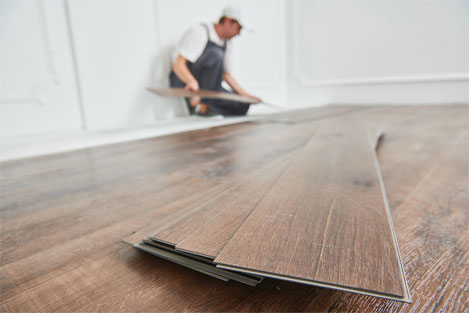
How Much Does Luxury Vinyl Flooring and Installation Cost?
The easiest way to understand your flooring budget is to break it into three parts: the flooring itself, the labor, and any extra work needed to get the room ready. Luxury vinyl can mean a basic sheet, a standard plank, or a higher-end luxury product. The installation practices matter, too. A straightforward click-lock one isn't the same project as a glue-down one that requires more preparation and working hours.
For a quick starting point, here's how the numbers break down:
| Category | Average Cost |
|---|---|
| Material | 2–4/sq. ft. |
| Professional LVT labor | 3–5/sq. ft. |
| Installation, material + labor | 5–9/sq. ft. |
This table can be your starting point. Think of these as planning numbers, not a promise of what your local installer will charge. The final amount can change based on the flooring you choose, your home's location, the room layout, the condition of the existing floor, and how much preparation the job needs.
The Everlife® product format can also affect the estimate. Some Everlife® rigid core products include pre-attached backing and use a floating click-lock method, while Everlife® glue-down products require adhesive. Always confirm the installation requirements for the specific collection before comparing quotes.
The next question is: What are you actually paying for?
What Is Included in the Cost of Luxury Vinyl Flooring?
A final replacement quote can look simple at first glance, but the total usually reflects more than just labor costs. Here's what to look for before comparing one quote with another.
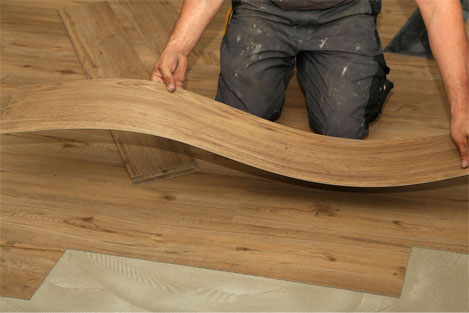
Luxury Vinyl Plank Material
This is the actual flooring you see and choose from, including the planks, tiles, or sheets that will become your finished floor. Material prices vary based on the type, construction, thickness, wear layer, design, and brand. Standard luxury vinyl plank material can cost $2-$4 per square foot.
The product itself can also affect the process. For example, click-lock planks are designed to fit together as a floating floor, while glue-down products require adhesive and a different installation process.
Professional Help
If you're hiring an installer, labor is a major part of the final bill. Professional help can charge about 5 per square foot, and those ranges aren't necessarily contradictory. For example, Everlife® rigid core flooring uses a click-lock method, while Everlife® glue-down is installed with adhesive. The estimate should reflect the correct method rather than treating every luxury vinyl product as the same. Labor pricing can change based on where you live, the method, the room layout, and how much prep is required before the first plank goes down.
Subfloor Preparation
Your new flooring needs a suitable surface underneath it. If the subfloor is uneven, damaged, or otherwise unsuitable for installation, your installer may need to patch, smooth, level, or repair it first. This is one reason the final quote can change after an installer sees the space in person. A floor that looks fine from across the room may reveal dips, damage, or other issues once you remove the existing material.
Existing Flooring Removal
If you're replacing carpet, tile, or any other floor, ask whether removal is included in the installation price or listed separately. Removing and hauling away an old floor can add work and disposal costs, particularly when the material is difficult to remove, or the subfloor needs additional work afterward. Flooring estimates commonly treat removal and disposal as separate project expenses.
Underlayment or Moisture Protection
Not every luxury vinyl floor needs a separate underlayment. Some products have an attached backing or pad, while others may require an additional layer depending on the product conditions.
If you see an underlayment charge on your estimate, ask what it is for. You don't want to pay for an extra layer that your flooring doesn't require.
Transitions, Trim, and Molding
New flooring still has to meet walls, doorways, cabinets, stairs, and other flooring surfaces neatly. That can mean adding transition pieces, quarter round, shoe molding, or baseboards. Molding, trim, and transitions can increase labor costs because they require additional measuring and detail work.
Stairs and Other Detailed Areas
Stairs are another item worth checking before signing a quote. Installing LVT flooring on stairs takes different materials and extra work than covering a simple, open floor. The same idea applies to rooms with lots of corners, closets, built-ins, cabinets, or unusual angles. More cuts and detail work can mean more installation time and more material waste.
Waste and Extra Material
In general, don't order exactly enough flooring to cover the measured square footage. Some material has to be cut during installation, and complex layouts can create more waste than simple rectangular rooms.
The material order may be slightly larger than the actual floor area depending on the product, room layout, and pattern.
Equipment and Tool Charges
Some installations require specialty equipment rather than basic hand tools. Hiring help may already have the necessary equipment, while another contractor may list equipment or rental amounts separately. Either way, check the estimate so you know whether these charges are already built into the labor price.
Travel, Delivery, or Minimum-Job Charges
Some contractors build travel, delivery, setup, or minimum-job costs into their pricing, while others list them separately. Small projects are especially likely to have minimum charges because the installer still has travel, loading, setup, and cleanup time, even when the actual floor area is small.
If you're getting quotes for a small bathroom, hallway, or other limited area, ask whether there's a minimum charge before comparing the per-square-foot price.
Debris Removal and Disposal
Finally, find out what happens to the old surface and debris after the job is finished. Some quotes include haul-away and disposal, while others charge for it separately.
Once you know what goes into the process, the next question is which type fits your budget. Sheet, standard, and luxury vinyl can have very different materials and costs. The installation method, such as glue-down or click-lock, can change the equation, too.
Vinyl Flooring Cost Comparison
Once you know the basic comparison, the next question is usually, “What kind should I actually buy?”
That matters because it is a broad category. Luxury vinyl plank (LVP) and luxury vinyl tile (LVT) can look very different, install differently, and land at very different price points.
Here's how the main options compare:
| Flooring type | What you're paying for | General Amount |
|---|---|---|
| Standard vinyl plank | Individual planks | Amount may vary considerably depending on thickness, quality, and method |
| LVP | Thicker, more detailed planks designed to mimic hardwood and other materials | Average $5-$9/sq. ft. |
| LVT | Tiles designed to replicate stone, ceramic tile, and other surfaces | Roughly starts at $2/sq. ft. |
The ranges are wide for a reason. LVT vinyl flooring installation costs mean you're not just paying for the luxury vinyl itself; you're also paying for the product's construction, how it has to be installed, and the amount of work your particular room requires.

Click-Lock vs. Glue-Down
Click-lock uses planks that connect along their edges and typically float over the subfloor rather than being glued directly to it. Click-lock luxury vinyl typically starts at $2 per square foot installed.
Glue-down luxury vinyl is adhered directly to the subfloor. It may require more installation work because the adhesive must be applied properly, and the finished floor may need to be rolled. Glue-down installation requires a project-specific quote because preparation and adhesive requirements vary.
Don't assume that “glue-down” automatically means a much more expensive finished floor. One method may cost more in labor while the flooring itself costs less, bringing the overall project surprisingly close to another installation method.
What Should You Budget For?
Material is only one piece of the final costs of LVT and installation. When comparing estimates, look at:
- Material: Which product and quantity are included?
- Labor: Is installation priced separately or included?
- Preparation: Does the quote cover subfloor repairs or leveling?
- Removal: Will the installer remove and haul away the old floor?
- Finishing: Are transitions, trim, and molding included?
- Extra charges: Check for delivery, equipment, travel, minimum-job, or disposal fees.
A quote with a slightly higher per-square-foot price can sometimes be the better value if it already includes the work that another quote charges separately. It’s always better to compare the final price, not just the number beside “installation.”
8 Ways to Save on Luxury Vinyl Plank Flooring
A final quote can climb quickly when small extras start stacking up. Before you commit, a few simple checks can help you avoid paying for surprises later.
- Get the full project price upfront. Ask whether the quote includes material, labor, removal, subfloor preparation, trim, transitions, cleanup, and disposal. Not just the installation rate.
- Check the subfloor before ordering. Uneven or damaged areas may need repair or leveling. Finding those issues early can help you plan for the added expense and avoid surprises later.
- Ask about waste and extra material. Ask how much is being added and whether unused material can be kept for future repairs.
- Compare installation methods. Click-lock and glue-down vinyl can have different requirements.
- Ask about small-job or travel charges. If you're working only in a bathroom, hallway, or single room, check whether the installer has a minimum charge or adds delivery or travel fees.
- Get removal and disposal in writing. If you're replacing existing flooring, confirm who is removing it, hauling it away, and paying disposal fees.
- Compare at least two complete quotes. A less expensive vinyl plank installation cost isn't necessarily cheaper if important services are left out of the estimate.
- Consider DIY. Doing it yourself can save money, but remember to budget tools, accessories, waste, and other factors. Hiring a professional may save time and prevent mistakes.
The Bottom Line
The cost of vinyl flooring and installation isn't determined by the flooring box alone. Material, labor, installation method, square footage, subfloor condition, removal, and finishing work all play a part.
If you're comparing quotes, look beyond the material price for a better understanding. Make sure you know exactly what's included, what could be added later, and what you're actually buying. Once you have that figured out, you can choose a floor based on more than just the lowest number on the estimate.
MSI’s Everlife® luxury vinyl flooring collection gives homeowners multiple ways to approach a project. Explore the Everlife® luxury vinyl flooring collections to compare styles, product formats, and installation requirements.
Frequently asked Questions | LVP Installation Cost
How much does luxury vinyl flooring cost per square foot installed?
Estimates vary by type and project. The average price to install luxury vinyl flooring is about 9 per square foot.
How much does it cost to install 1,000 square feet of luxury vinyl flooring?
With the current 5-9 per-square-foot installed range as a planning benchmark, 1,000 square feet would be approximately 9,000 before project-specific extras. Your actual quote may be higher or lower depending on the surface, working hours, subfloor, layout, removal, and finishing work.
Is luxury vinyl plank flooring cheaper to install than hardwood?
LVT can have a lower total installed cost than hardwood: around $1,000–$1,800 for 200 square feet compared with 1,200 for 200 square feet of hardwood. However, the actual comparison depends on the specific products and installation requirements.
Does removing old flooring increase the cost?
Yes. Removal and disposal may be separate from the installation price. Removal and disposal are priced separately and depend on the existing flooring and project condition.