Engineered Hardwood Thickness Explained: What Really Matters For Durability
Most homes are best served by 1/2” (12-14mm total) engineered hardwood. Make sure you get a wear layer of at least 3mm and a multi-ply plywood core. The overall thickness is what makes the floor feel solid underfoot. The thickness of the wear layer is what determines how long the surface will last and if it can ever be refinished. For high-traffic rooms or long-term investment, select 5/8" (15-18 mm total) with a 4-6 mm wear layer.
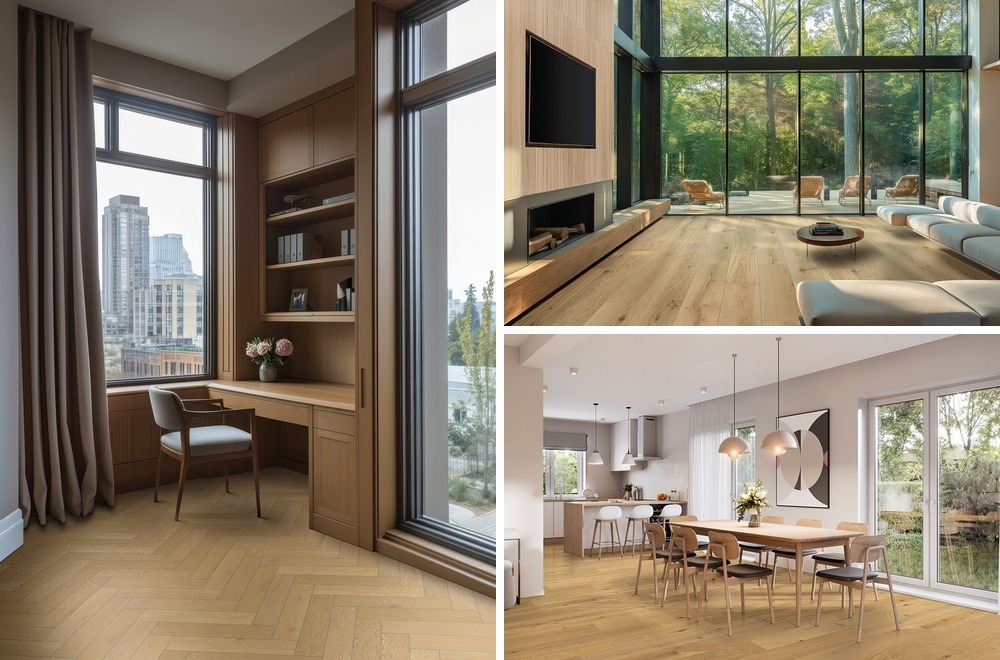
Engineered hardwood floor thickness generally include two measurements: the overall thickness of the plank and the thickness of the hardwood wear layer. Overall thickness can affect the stability, feel and installation requirements of the floor, but the wear layer is especially important because it affects the surface’s performance over time and the ability to refinish the floor in the future.
Understanding these specs can help you compare products more accurately when shopping for today’s 2026 hardwood flooring trends,, including options like the MSI Woodhills waterproof hardwood flooring collection. This guide covers what engineered hardwood thickness really means, which measurements matter most for durability and longevity, and how to select the right specifications for various rooms in your home.
| Question | Answer |
|---|---|
| How thick should engineered hardwood be? | 1/2" (~12.7 mm) total; read wear layer against the 2.5 mm NWFA sanding minimum |
| What does total thickness affect? | Underfoot feel, structural stability, and installation height |
| What does wear layer thickness affect? | Surface life and whether the floor can be sanded (scratch resistance is species hardness + finish, not wear-layer depth) |
| Best thickness for high-traffic rooms? | 5/8" (~15.9 mm) total with a 4 mm wear layer (MSI McCarran®) |
| Is engineered hardwood compatible with radiant heat? | Yes, when the manufacturer rates it for radiant; NWFA caps subfloor surface at 85°F |
What Is Engineered Hardwood Thickness?
Each engineered hardwood plank will have two different measurements. To read just one of them is an expensive mistake.
Total plank thickness is from the bottom of the backing to the top of the finished surface and includes all layers, the wear veneer, all core plies and the backer. The number is usually specified in fractions of an inch (3/8", 1/2", 5/8", 3/4") or in millimeters.
Wear layer thickness is the actual hardwood veneer applied on top of the core. It’s the layer you see, walk on, and maybe refinish. Wear layers range from 1.5 mm on basic products to 6 mm on premium planks.
Some spec sheets list both numbers together. For example, “15/4 mm” would be a 15 mm plank with 4mm wear layer. Always read the 2 digits. A 20mm plank with a 1.5mm wear layer has a lot less refinishing potential than a 15mm plank with a 4mm wear layer. Total thickness gives you an idea of how the floor will feel under foot. The thickness of the wear layer is a measure of the service life.
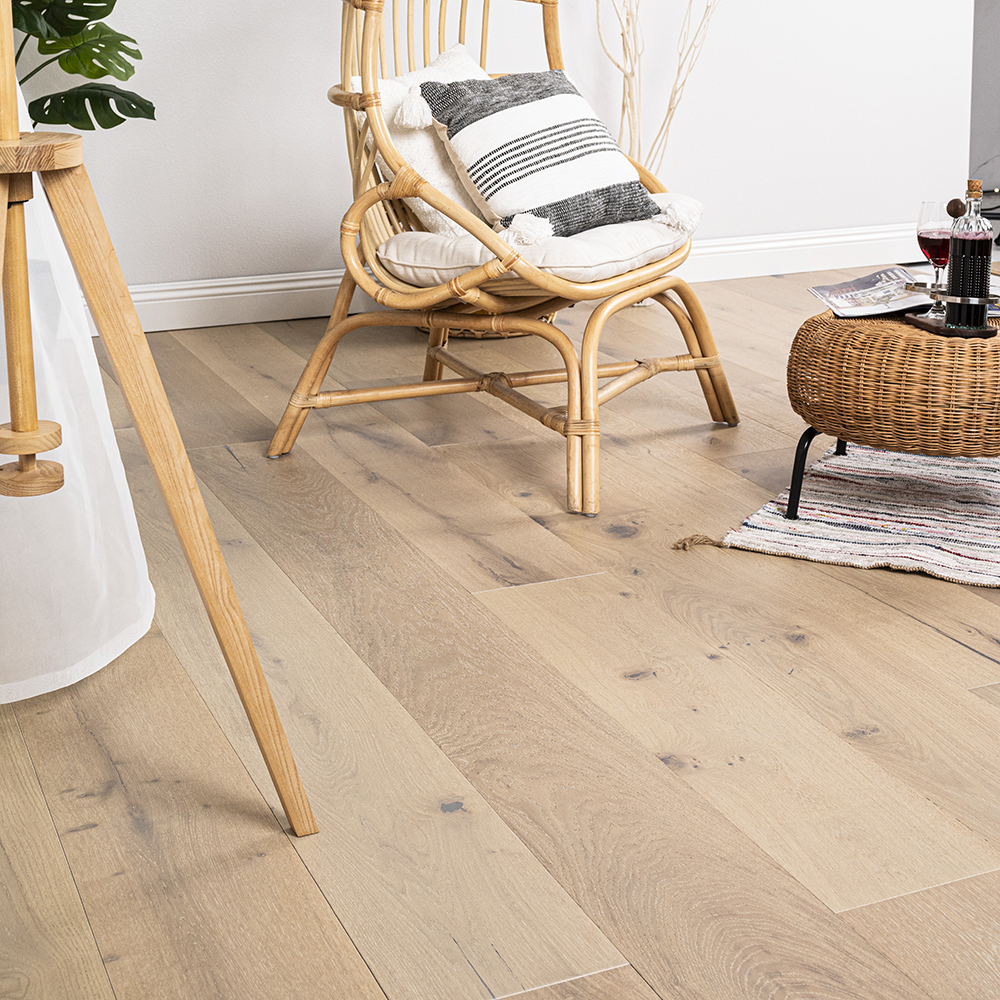
Mccarran® Whitlock Engineered Hardwood
Common Engineered Hardwood Thickness Options: 3/8", 1/2", and 5/8"
Engineered hardwood is available in several plank thicknesses, with 3/8", 1/2", and 5/8" among the most common. Total plank thickness affects the floor’s construction, stability, and installation options, while the wear layer determines how much real hardwood is available at the surface and whether refinishing may be possible.
3/8" engineered hardwood (~9.5 mm)
At 3/8", engineered hardwood has a thinner overall profile, making it a good option when minimizing changes in floor height is important. MSI Kelmore™ is 3/8" thick with a 1.2 mm real wood wear layer.
Because thinner engineered hardwood products often have relatively thin wear layers, they generally are not intended for traditional sanding and refinishing. This makes the wear-layer specification especially important when comparing 3/8" flooring options.
1/2" engineered hardwood (~12.7 mm)
A 1/2" plank is a versatile choice for many residential applications and may be available for nail-down, glue-down, or floating installations, depending on the specific product. MSI Ladson® is 1/2" thick with a 2 mm real wood wear layer.
The 2 mm wear layer provides more real hardwood than many thinner products, but it is still below the 2.5 mm thickness commonly associated with traditional sanding and refinishing. For most homeowners, 1/2" engineered hardwood offers a strong balance of construction, installation flexibility, and everyday performance.
5/8" engineered hardwood (~15.9 mm)
At 5/8", engineered hardwood has a thicker overall construction and is often paired with a more substantial wear layer. MSI McCarran® is 5/8" thick with a 4 mm real wood wear layer.
A 4 mm wear layer provides considerably more hardwood at the surface and can offer greater refinishing potential than thinner wear layers. This makes 5/8" flooring an appealing option for homeowners who want a substantial plank and the possibility of extending the floor’s life through future refinishing.
For radiant-heat installations, always follow the flooring manufacturer’s requirements regarding approved products, installation methods, and maximum surface temperatures.
1/2" vs. 5/8" engineered hardwood thickness debate for buyers: 1/2" works for most residential users without significant compromise. It's a tough tier to beat for standard residential use.
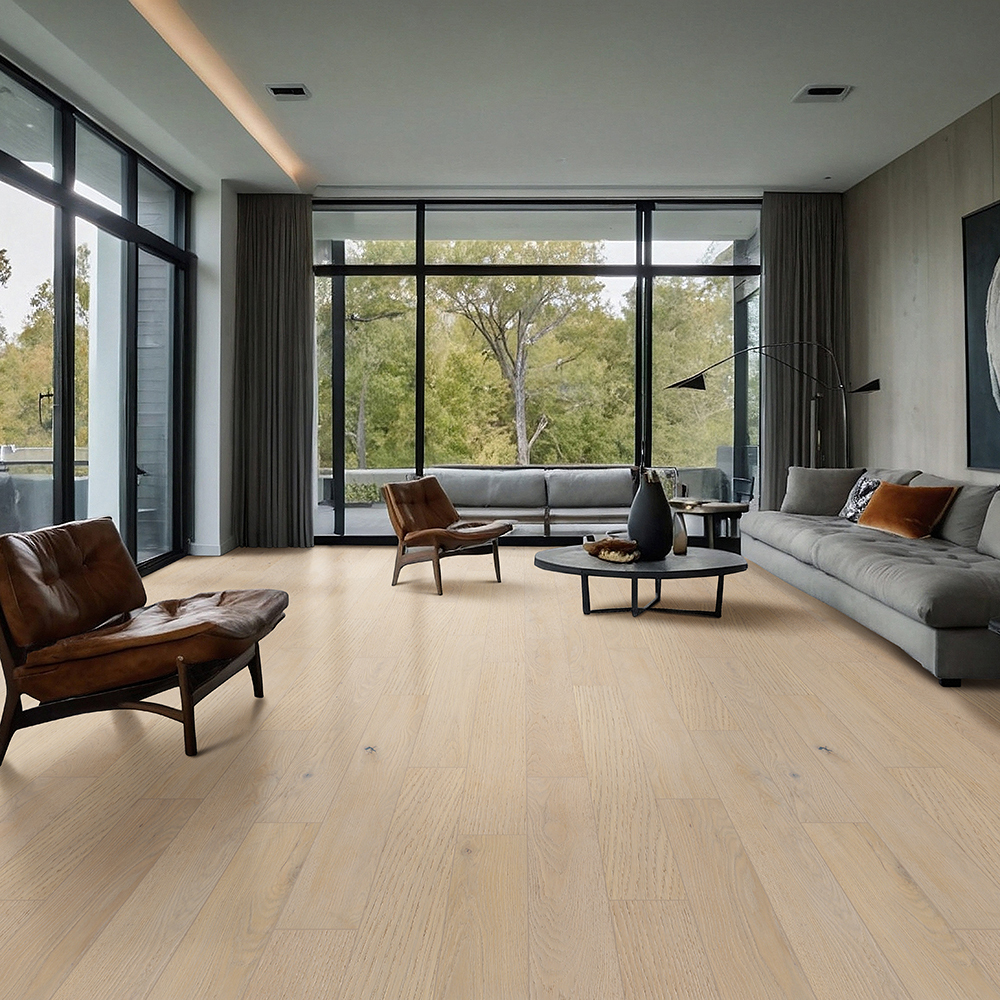
Kelmore™ Lazura Engineered Hardwood
Engineered Wood Floor Thickness Chart
| Thickness | Total MM | MSI W™ example | Best For |
|---|---|---|---|
| 3/8" | ~9.5 mm | 1.2 mm | Budget, low traffic, condos |
| 1/2" | ~12.7 mm | 2 mm | Most homes — the safest choice |
| 5/8"+ | ~15.9 mm | 4 mm | High traffic, pets, long-term value |
Engineered hardwood thickness mm vs inches. Millimeters are more precise, especially for wear layers where one millimeter makes a big difference in refinishing potential. Read spec sheets with both units.
Wear Layer Thickness: The Real Key to Engineered Hardwood Durability
What I want to make clear here is: The one spec that really drives long term performance of engineered hardwood is wear layer thickness. The thickness of the planks will determine how solid the floor is. The lifespan of the floor is determined by the thickness of the wear layer.
The wear layer is designed to withstand the abuse of everyday foot traffic, chair legs, pet nails and everything else life throws at your floor. The depth of the surface tells you whether you can sand and refinish the floor to make it look like new again, or if you are replacing the floor the first time it looks tired. Specs for various lines in the MSI luxury engineered hardwood collection.
Approximate refinishing potential by depth is:
- Under 2.5 mm: Industry standard for unfinishable; treat as a replacement when product is worn.
- 2.5 mm: NWFA factory finished minimum to sand; LCCA “once-refinishable” class.
- Approx. 3.2 mm, LCCA grade “twice refinishable”.
- More than that: more wear-layer after a sand, but NWFA does not publish a 4–6 mm = 2–4 cycle table.
Can engineered hardwood floors be refinished? Yes, if it is thick enough when you buy it. This is the single most important question to ask before you invest in any product.
Veneer type is subtle. The standard and reliable one is sliced veneer. The grain character of sawn veneer is like solid hardwood and is dimensionally stable. Economy lines often feature rotary-peeled veneer with a broader, less refined grain pattern. It’s important to know which cut you’re getting, especially when the price points are similar.
Real world engineered hardwood durability thickness is a combination of the hardness of the species and the thickness of the wear layer. Hard white oak, even if it is a thin layer, will beat thick layers of soft pine. The wear layer gives that hardness time to do its work. Hardness is a property of the species.
Core Construction: What's Inside the Plank
The plank’s core helps determine how the floor performs. Its construction affects stability, moisture response, and how well the flooring handles shifts in humidity. To learn more about how layered core construction supports performance in changing conditions, see our Woodhills® waterproof hardwood flooring review.
Multi-ply plywood core: The multi-ply plywood core construction is preferred for most installations. It is made up of several thin layers of wood glued together with alternating grain directions (cross-grain lamination) to resist expansion and contraction as humidity rises and falls. Ply count varies by product—ANSI/HPVA EF 2020 allows any number of plies to be even or odd. What matters is the cross-grain build, and a bond that passes the standard. This core is just as good with nail down, glue down and floating methods over concrete and plywood subfloors.
High-Density Fiberboard (HDF) core: The High-Density Fiberboard (HDF) cores are denser and more uniform to provide a smooth, even surface for the wear veneer to bond to. Works dependably in stable, climate-controlled environments. Follow manufacturer on moisture sensitive cores.
What to keep in mind: The core construction can matter just as much as overall plank thickness. A well-made 14 mm board with a stable multi-ply core may outperform a thicker plank built with a core that is more vulnerable to moisture and dimensional movement. In other words, overall thickness is only one part of the performance equation.
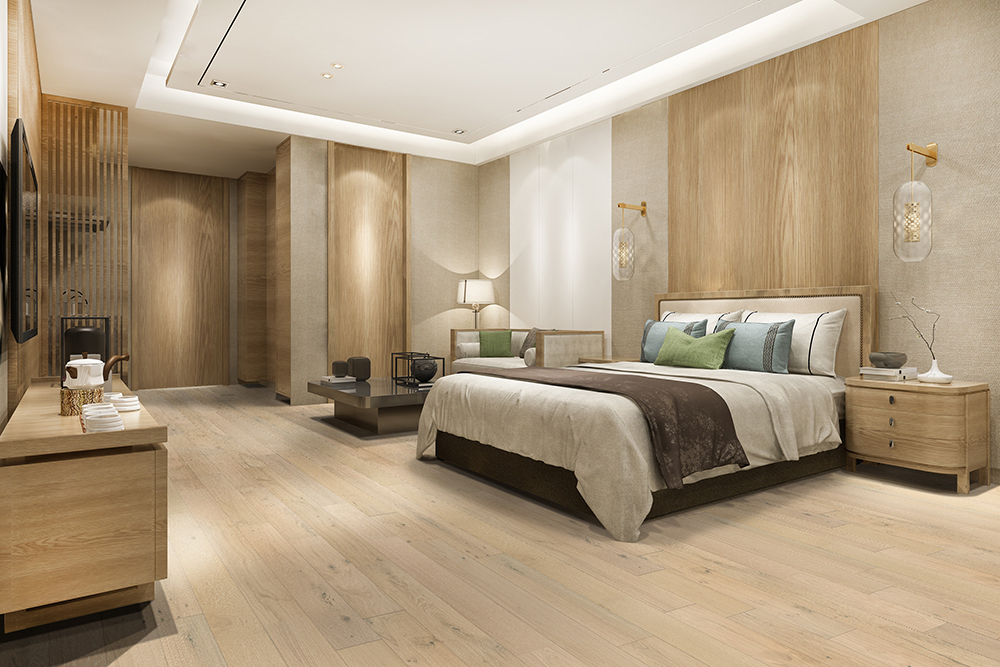
Kelmore™ Sandora Engineered Hardwood
Does Engineered Hardwood Thickness Matter?
Yes, but not in the way most buyers first assume when they ask does thickness matter in engineered hardwood. If you want to learn how engineered options stack up against other durable flooring options for value and performance, read our solid vs engineered hardwood performance comparison.
The feel underfoot is based on total plank thickness (thicker planks are less flexible and have less hollow sound), structural integrity for wide plank formats (NWFA calls anything over 5" wide plank; holding power is the issue, not a 1/2" or 5/8" thickness mandate. MSI Ladson® runs 7.5” at 1/2”; McCarran® runs 9.5” at 5/8”), the strength of the click-lock connection, and the height of the floor in relation to adjoining rooms and door clearances.
What it doesn't control by itself: Surface scratch resistance (that comes from wood species hardness), long term durability (that comes from wear layer depth), moisture resistance (that comes from core type and finish quality).
A thinner plank with a 4 mm wear layer has a refinishable surface; a thicker plank with a 1.5 mm wear layer sits under the 2.5 mm NWFA sanding minimum. NWFA’s LCCA framing puts non-refinishable engineered (wear under 2.5 mm) in a 25-year class, once-refinishable at 50 years, and twice-refinishable engineered with solid in a 75-year class—driven by wear layer, not total thickness.
A better question: The right question to ask about engineered hardwood isn't how thick the engineered hardwood flooring is, but what the wear layer measurement is and what the core is made of?

Ladson® Montevideo Oak Engineered Hardwood
Best Engineered Wood Flooring Thickness by Room
The right spec is entirely dependent on how demanding the space is. Get design inspiration with modern plank designs in different rooms and see the clean look of McCarran® engineered hardwood in 7 new colors.
Recommended Thickness & Wear Layer By Area
| Room | Recommended Total Thickness | Recommended Wear Layer |
|---|---|---|
| Bedroom | 3/8"–1/2" (9–14 mm) | 2–3 mm |
| Living room | 1/2" (12–14 mm) | 3 mm+ |
| Kitchen | 1/2"–5/8" (12–18 mm) | 3–4 mm |
| Hallway / entryway | 5/8" (15–18 mm) | 3–4 mm+ |
| Dining room | 1/2" (12–14 mm) | 3 mm+ |
| Homes with pets and children | 5/8" (15–18 mm) | 4–6 mm |
| Radiant heat installation | Manufacturer-rated; NWFA 85°F cap | Per manufacturer spec |
| Condo / apartment (height-sensitive) | 3/8"–1/2" | 2–3 mm |
For the kitchen, the best engineered hardwood flooring thickness is around 1/2″ to 5/8″ with a wear layer at or above the 2.5 mm NWFA sanding minimum (MSI McCarran® is 5/8″ with a 4 mm top layer). Kitchens experience foot traffic, chair movement and occasional splashes around sinks and appliances. That extra depth of wear layer adds a lot of extra years of surface life.
Engineered hardwood is typically more stable over radiant heat than solid hardwood. NWFA’s maximum is 85°F on the surface of the subfloor. Use only products rated by the manufacturer for radiant (MSI W™ lists radiant heat as YES) and adhere to that temperature cap. Allow sufficient time for the floor to acclimate prior to and after installation.
For below-grade and basement installs, NWFA treats engineered hardwood as suitable below grade; solid generally should not go below-grade unless the manufacturer allows it. Conventional W™ engineered hardwood is not a fully waterproof product. For moisture-heavy or below-grade rooms, use MSI Woodhills® waterproof hardwood (100% waterproof, DryLuxe™, stone core).
3/8 or 1/2 engineered hardwood? Which is better? This depends on the traffic volume and the type of subfloor. 3/8” is perfectly fine in bedrooms and low use areas. Anywhere else, 1/2” is the wiser long term choice.
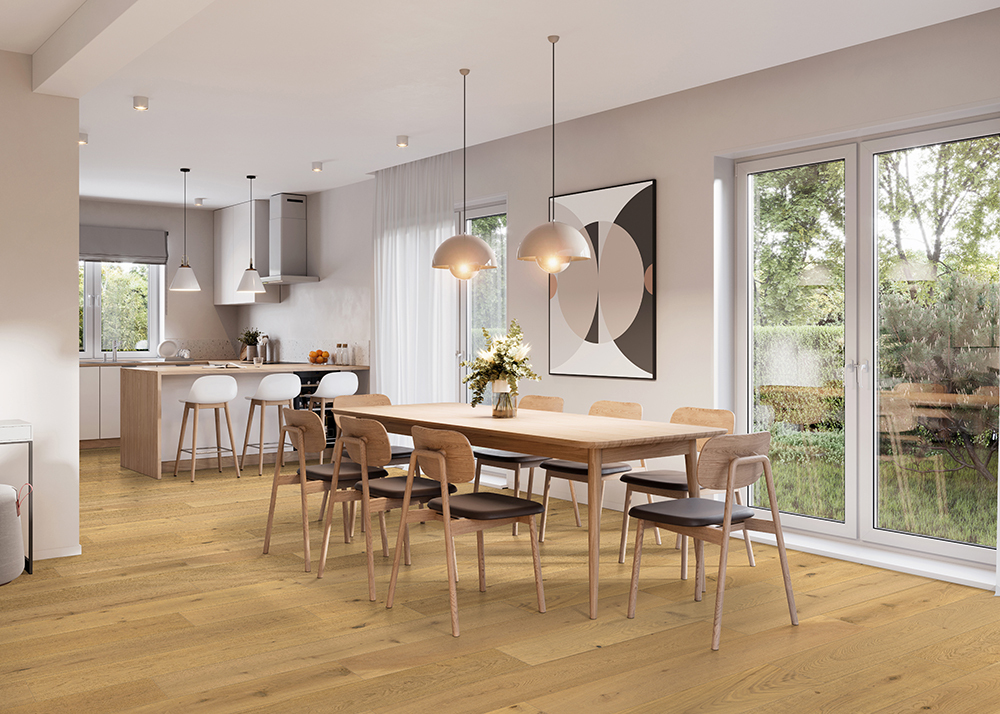
Ladson® Bramlett Engineered Hardwood
Engineered vs. Solid Hardwood: How Thickness Compares
Engineered hardwood vs solid hardwood thickness comparison is a good way to provide insight into the right product category for a given project. If you’re considering the pros and cons of wood versus resilient surface options, you can also explore luxury vinyl flooring advantages or hybrid rigid core technology benefits.
Solid hardwood’s NWFA/NOFMA standard thickness is 3/4” (19.05 mm); other proprietary thicknesses can be certified. Most solid floors can be sanded six to eight times. Solid is more sensitive to humidity and generally should not go below-grade unless the manufacturer allows it; over concrete or radiant heat, follow NWFA moisture/temperature limits and the manufacturer—not a hard ban.
Engineered hardwoods are manufactured in thicknesses from 3/8" to 3/4" providing you some installation versatility that solid wood simply can't match. The cross-grain plywood core is more dimensionally stable than solid hardwood in moist environments. Engineered hardwood’s cross-ply core is more dimensionally stable than solid in moisture swings; that is why engineered can go below-grade when solid generally cannot—not a guaranteed 1/2" vs 3/4" win.
Hardwood flooring thickness between the two groups overlaps more than most buyers realize. A 5/8″ engineered product with a 4 mm wear layer (MSI McCarran®) clears the NWFA 2.5 mm sanding minimum while offering better stability in actual humidity conditions of a home. If it’s all-wood construction and maximum refinishing cycles you want, then solid is the solution. Engineered wins in terms of installation flexibility, subfloor variety or moisture issues.
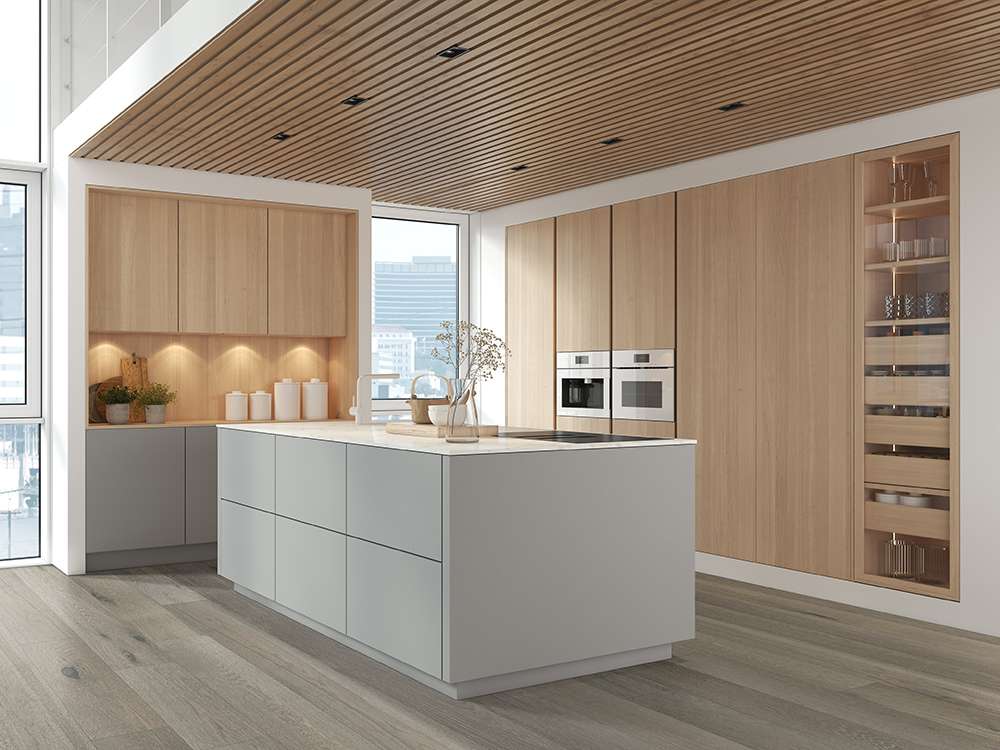
Mccarran® Milledge Engineered Hardwood
What to Look for When Buying Engineered Hardwood
Shopping for engineered hardwood gets easier when you know what to look for on the spec sheet. Just a few things to keep in mind:
- Overall engineered wood flooring thickness: Minimum 3/8 inch for all occupied areas, 1/2 inch or more for rooms with heavy traffic. That's where you start.
- Always ask for wear layer thickness as a separate number: 2.5 mm is the NWFA factory-finished minimum to sand. Published MSI W™ examples: Kelmore™ 1.2 mm, Ladson® 2 mm, McCarran® 4 mm. This figure is more important than the total thickness.
- Check core type explicitly: Multi-ply plywood cores are widely used for moisture stability and can be nailed, glued, or floated; ANSI/HPVA also allows composite cores (HDF/MDF, etc.).
- Confirm installation method: Make sure the product is rated for your intended installation and select the proper engineered wood adhesive if you plan to glue it down.
- Check the finish: Factory UV-cured finishes (NWFA discusses aluminum-oxide types as high-abrasion) protect the surface—on MSI W™ and Woodhills® that’s CrystaLux Ultra™. Then read the warranty thoroughly. MSI publishes lifetime residential on Woodhills® and McCarran®, 30-year residential finish on Ladson®, and 25-year limited residential on Kelmore™.
- Don’t judge by looks, judge by spec: Two planks sitting side-by-side in a showroom may appear almost identical, but the wear layer depth and core quality can be dramatically different. The engineered hardwood thickness mm spec sheet comparison will tell you more than the display sample.
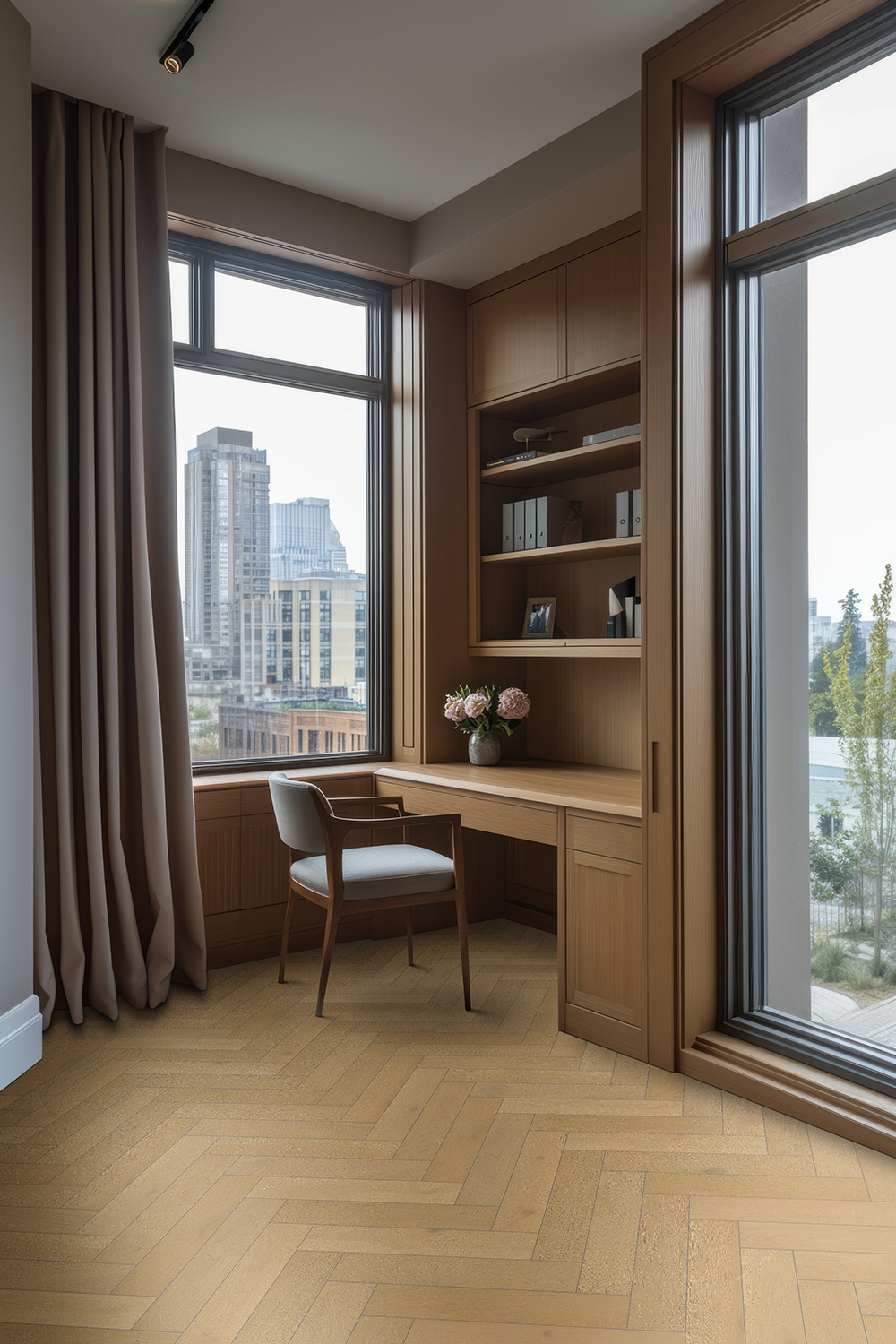
Mccarran® Whitlock Engineered Hardwood
Ready to Choose the Right Engineered Hardwood for Your Home?
Choosing the right engineered hardwood thickness starts with understanding how wear layer depth, core construction, and wood species affect long-term performance.
When you’re ready to compare actual planks and pull full specification sheets, chat with us online or visit an MSI showroom to see and feel the options side by side. You can also connect with an authorized MSI dealer who can match the right product from our Woodhills® Waterproof Hardwood Flooring and W™ Engineered Hardwood collections to your specific rooms and lifestyle.
FAQs
What is the best thickness for engineered hardwood?
Start with the wear layer read against the 2.5 mm NWFA sanding minimum for most homes. MSI Ladson® is 1/2” with a 2 mm top layer; McCarran® is 5/8” with a 4 mm top layer for heavier traffic.
Does thickness matter in engineered hardwood?
It does, but it is more important to have a thick layer for durability than a thick plank. A thinner plank with a 4 mm wear layer has a refinishable surface; a thicker plank with a 1.5 mm wear layer sits under the 2.5 mm NWFA sanding minimum.
What is a good thickness for engineered hardwood?
Most quality products start at 3/8” (9-10mm). Wear layers less than 2.5 mm are generally unfinishable, so this tier is suitable for low-use areas or condos with height restrictions where the limitations are fully understood up front.
How many times can you sand engineered hardwood? By thickness.
The number of times you can refinish engineered hardwood depends on the depth of the wear layer. NWFA: do not sand factory-finished wear layers under 2.5 mm. At about 2.5 mm the LCCA class is once-refinishable; at about 3.2 mm, twice. A traditional sand job removes about 1/32" to 1/16" (0.8–1.6 mm) of wood.
Can I put engineered hardwood over radiant heat?
Yes and because of the cross laminated core it is more stable over radiant heat than solid hardwood. NWFA limits the subfloor surface temperature to 85°F; use only products rated for radiant by the manufacturer and abide by that temperature limit.
 SHARE
 PIN
 TWEET