Solid Vs. Engineered Hardwood: Which One Really Performs Better In The Long Run?
The answer to that question depends on three precise technical features that most customers miss before purchasing. If you’re making a smart, durable investment in your home, you should consider the veneer thickness of an engineered plank (which determines how many times it can be refinished), the Janka hardness rating of your preferred wood species (which controls scratch resistance) and how the internal construction of the plank responds to moisture in its environment.
Even now, you’ll see solid hardwood floors milled in the 1920s being polished and refinished in historic homes, a testament to their century-long durability. In contrast, modern engineered hardwood floors have been proven to be reliable for below-grade and slab-on-grade installation as long as the moisture conditions are evaluated and controlled properly, while solid wood planks would have warped and buckled within a season. They are constructed in layers which give better dimensional stability than solid wood with modest changes of humidity. Each of the two goods has structural advantages of its own. Learning how these engineering variances will interact with the surroundings of your home will save you from costly installation failures.
MSI’s W Luxury Genuine Hardwood collections feature a premium selection of real hardwood floors that bring timeless beauty and high-performance durability to any residential setting to help you find your perfect match. MSI engineered hardwood ranges from friendly click-lock planks to 6mm European white oak meant to withstand decades of usage.
Solid vs. Engineered Hardwood: A Direct Comparison
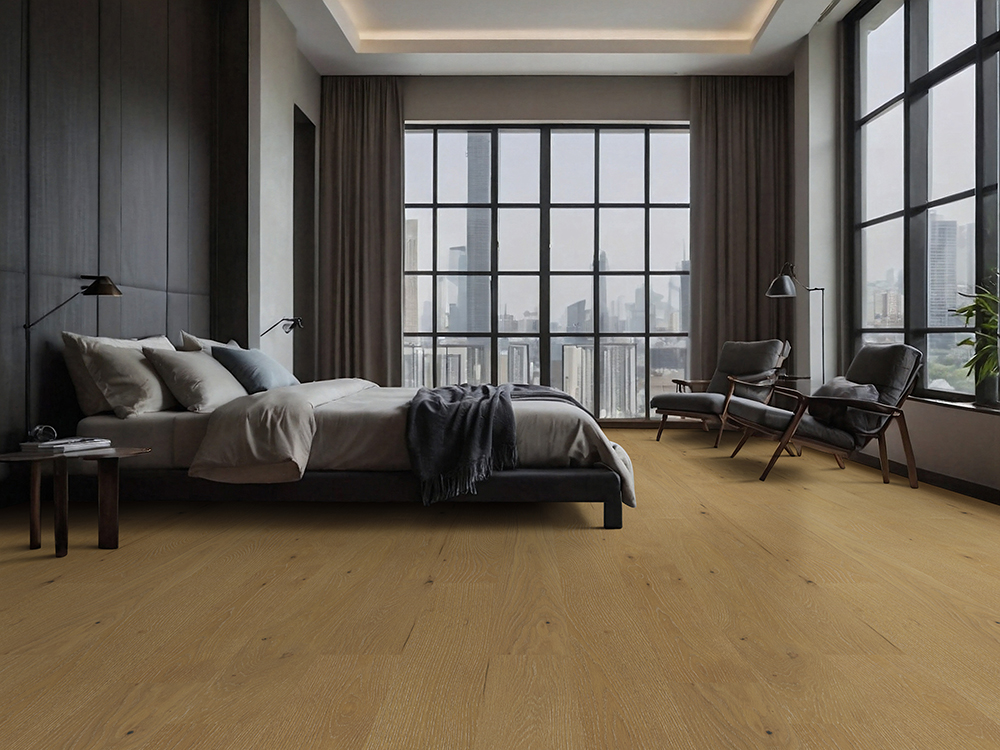
Kelmore™ Mesa Ridge Engineered Hardwood Flooring
This solid vs engineered hardwood breakdown gives you the main technical specs side-by-side when comparing engineered hardwood flooring vs hardwood floors. Whether you pick for engineered vs solid hardwood flooring depends on which construction type is structurally best suited for your home's physical architecture. Both have a real wood surface, but the engineering behind is different and the veneer thickness is the single most important and underappreciated aspect in long term performance.
| Feature | Solid Hardwood | Engineered Hardwood |
|---|---|---|
| Construction | Solid piece of wood from top to bottom. | Real wood veneer bonded to a cross-laminated plywood, HDF, or spruce core. |
| Typical Thickness | 3/4 inch solid plank. | 3/8 inch to 3/4 inch total thickness (wear layer: 2 mm–6 mm). |
| Refinishing Potential | Can be sanded and refinished 4–7 times. | 0–4 times (highly dependent on veneer thickness). |
| Lifespan | 75–100+ years (lasts generations). | 25–50 years (premium 4 mm+ veneers approach 50+). |
| Moisture Resistance | Moderate — expands and contracts with humidity; strictly avoid below-grade/basements. | Superior — minimal dimensional movement; suitable for basements, concrete slabs, and humid climates when proper moisture testing and vapor protection are used. |
| Installation Methods | Nail-down only; requires an above-grade wood subfloor. | Versatile: Nail-down, glue-down, or floating; suitable for above/below-grade and over concrete. |
| Radiant Heat | Generally incompatible. | Highly compatible with most underfloor radiant heating systems. |
| Wide Plank Option | Limited (high risk of cupping/gapping above 5 inches). | Excellent (6 inches to 10+ inches wide planks are structurally stable). |
| Material Cost | $5 to $28 per sq. ft. | $4.50 to $20+ per sq. ft. |
| Scratch Resistance | Dictated entirely by the wood species' Janka hardness rating. | Identical to solid hardwood (uses the exact same species wear layers). |
| Resale Value | Exceptional; holds a premium, traditional perception among buyers. | High; modern premium quality tiers match solid wood in market perception. |
How Each Plank Is Made - The Construction Difference That Explains Everything
To understand why these two flooring choices perform so differently under ambient stress, we need to go past the surface finish. The only real difference between hardwood and engineered hardwood is the way the individual plank is manufactured in the manufacturer. To summarize, the wood floor vs engineered wood floor debate boils down to what’s beneath the top layer.
Solid Hardwood — One Species, Top to Bottom
Each solid hardwood plank is cut from one solid piece of wood, commonly sawed to a standard 3/4 inch thickness. With a red oak floor, that board is 100% genuine red oak from the top clear coat all the way down to the subfloor. They have a classic tongue and groove design on the long and short edges and are usually placed by nailing or stapling the boards directly to a wood subfloor. Some manufacturers allow glue-down installations on well-prepared substrates when certain installation standards are followed.
The main advantage of it is that the solid board is manufactured from a single piece of lumber. But that is also the reason why the wood acts in this way. Natural wood pores absorb moisture. This is the reason the plank expands and contracts in breadth naturally with seasonal changes in relative humidity. Think about the pros and cons of hardwood flooring: the benefits greatly surpass the disadvantages. Hardwood has the most extensive refinishing potential available, the best historical longevity, and can be sanded down to the bare wood and re-stained to an entirely other shade decades down the line.
The main disadvantage, however, is that it is reactive. During dry winter months you’ll probably begin to see gaps forming between the boards. Conversely, during moist summers, those same boards might expand, leading to the edges crowding and cupping if you didn’t provide sufficient expansion gaps along the perimeter when they were installed.
What is Engineered Hardwood? - Core Type and Layered System
What is engineered hardwood flooring? Engineered hardwood flooring is a high performance layered system where a real top hardwood wear layer (the veneer) is permanently bonded under high pressure to an underlying stabilizing core. The cross-grain structure flips the orientation of the core layers, helping to offset the natural propensity of wood to expand and contract across the grain, providing the product’s trademark dimensional stability.
But, the composition of the core varies tremendously across the industry, and the sort of core structure influences how the floor will respond to physical impact and installation stress.
9-Ply Baltic Birch Plywood Core: One of the most stable, high-density plywood cores utilized in premium engineered hardwood flooring vs. solid wood. Alternating cross-laminated layers give great fastener grip for nail-down installations and superior acoustic density underfoot. Recommended for use in premium residential and heavy-duty glue-down commercial applications.
HDF Core Engineered Hardwood: Because HDF is constructed from compressed wood fibers, the core is dense, flat and consistent from one side to the other. This is the recommended product for click-lock floating installations. An HDF core engineered hardwood has somewhat less acoustic dampening than a thick plywood core, but its tremendous density resists localized denting and provides a completely flat surface for adhesive bonding. HDF is an ultra-dense, compressed composite, therefore it will not accept mechanical fasteners or nails, as typical plywood does. This is why floating click-lock systems are preferable and HDF is structurally designed.
Solid Spruce Core: This type, often seen in top-of-the-range European imports, is made up of three plies; a top veneer, a center layer of solid spruce running perpendicular and a backing veneer on the bottom. It provides a very hefty, sturdy framework underfoot with good acoustic insulation properties. This specific core engineering is highly preferred by high-end European manufacturers for premium architectural structures as it presents a unique balance of weight, structural damping and sustainability.
In the engineered hardwood pros and cons, you have an excellent balance: better temperature and moisture stability, the possibility to install planks at all levels of the flooring (including concrete slabs) and the wide-plank look. However, the pros and drawbacks of engineered hardwood flooring pros and cons must also consider that the top veneer layer is finite. This means that the long term possibility for refinishing is limited to the thickness of that wear layer and not the full body of the plank. It’s this very trade-off that MSI engineered hardwood collections are founded on, with sturdy cores and thick, refinish-ready veneers.
If you want that multi-layer stability, with no sacrifice on true wood character, then you need solutions like MSI’s Kelmore Engineered Hardwood Collection.
Veneer Thickness - The One Spec Every Buyer Must Check First
If you want to know how long an engineered floor will endure don’t look at the price tag, look right at the wear layer spec sheet. This is the main pre-purchase filter that determines the real lifetime value of the product. When the factory finish fades off, the top veneer layer of engineered hardwood thickness can be sanded and restored based on its thickness. If it is not thick enough, then the floor will need to be torn up and rebuilt.
The 2mm / 3mm / 4-6mm refinishing Framework
Product-wise, the engineered wood flooring thickness usually falls into three performance categories. Before choosing engineered hardwood flooring, find out the thickness of the wear layer. The overall thickness of the board can be deceptive, sometimes ranging from 3/8-inch to 3/4-inch, hiding a dangerously thin veneer.
| Veneer Thickness | Refinishing Options | Best Application | Long-Term Assessment |
|---|---|---|---|
| 2 mm or Less | Screen-and-recoat only; no aggressive sanding permitted. | Rental properties, budget-conscious renovations, low-traffic spaces. | Must be replaced once deep scratches or gouges penetrate the wear layer. |
| 3 mm | Up to 1 full professional sanding and refinishing. | Standard residential builds, bedrooms, family rooms, hallways. | Provides solid mid-range value with an expected 15–25 year performance horizon. |
| 4 mm – 6 mm | Typically supports 2–4 full refinishes depending on veneer thickness and product construction. | Premium residential builds, active households, selected commercial applications. | Offers the highest durability and long-term value among engineered hardwood options. |
| Note: Engineered wood flooring thickness usually falls into three performance categories. Before choosing engineered hardwood flooring, check the thickness of the wear layer. The overall board thickness can be misleading, sometimes ranging from 3/8-inch to 3/4-inch, while hiding a dangerously thin veneer. | |||
Buyer Beware: When shopping for flooring you’ll frequently see products labeled with vague marketing terms like “commercial grade,” “heavy-duty,” or “premium wear layer.” Without an explicit millimeter (mm) measurement, these phrases are meaningless and are often used to cover up a thin 1.5mm to 2mm veneer. Don’t purchase an engineered floor by relying entirely on the shop descriptions. Ask for an official manufacturer product specification sheet where the actual wear layer thickness is written as a verifiable number (e.g. 3mm or 4mm).
Janka Hardness: Why Species is More Important than Construction Type for Scratch Resistance
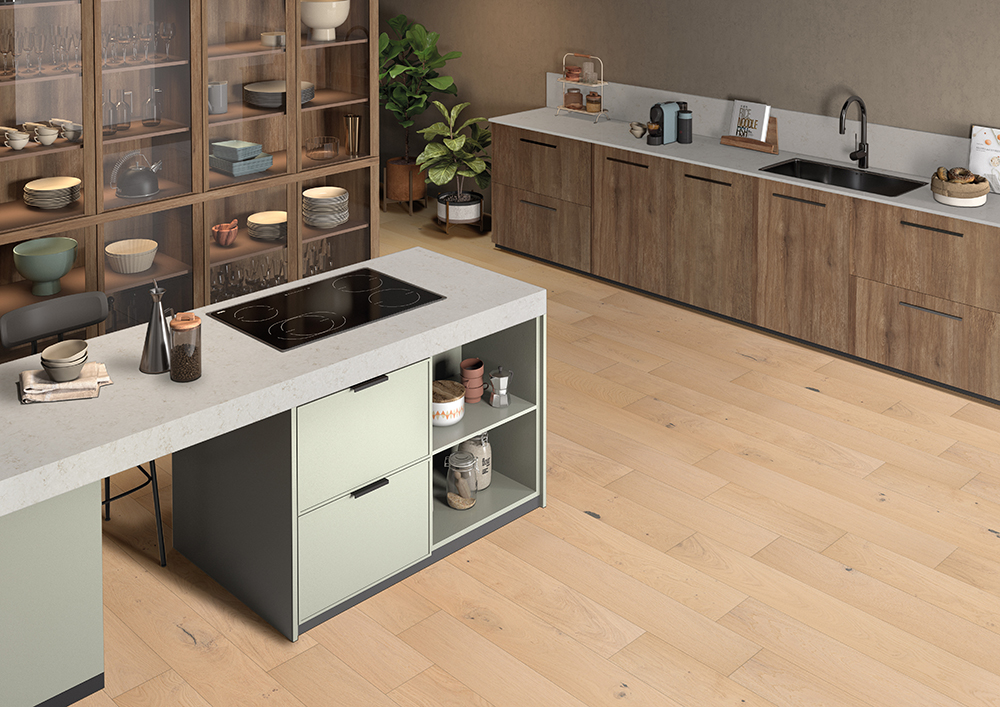
Kelmore™ Sundelle Engineered Hardwood Flooring
Many purchasers mistakenly believe solid wood planks are more durable and dent-resistant than manufactured planks. Whether your plank is solid or engineered, the validation of hardwood floors ultimately boils down to the Janka hardness grade of the wood species you select.
The surface abrasion resistance is the same since a durable engineered hardwood has the same real wood species on its top veneer as a solid board. The face grain on a 4mm white oak engineered veneer is identical to that of a 3/4-inch genuine white oak plank, so it will resist pet claws, dropped toys and moving furniture just as well.
How easily you want the floor to show wear will help you choose your species, with the use of the Janka hardness scale. lbf is pounds-force. The Janka hardness scale. It measures how much power ( lbs ) is required to push a 0.444-inch steel ball halfway into a piece of wood. The greater the lbf number, the denser the wood, the tougher and the more resistant it is to denting.
| Species | Janka Hardness (lbf) | Scratch Resistance | Performance Notes |
|---|---|---|---|
| Hickory | 1,820 | Exceptional | The hardest common domestic hardwood; excellent at hiding wear patterns; heavy rustic character. |
| Hard Maple | 1,450 | Very High | Incredibly dense with a very uniform, subtle grain; popular for sleek, high-traffic modern designs. |
| White Oak | 1,360 | High | The gold standard for modern flooring; highly stable, highly versatile, and accepts stains beautifully. |
| Red Oak | 1,290 | High | A timeless American standard; slightly warmer tones with a more open, porous grain structure than white oak. |
| Walnut | 1,010 | Moderate | Highly prized for its rich, deep natural chocolate color tones; softer wood that requires care. |
| Cherry | 950 | Moderate | Features an elegant grain that darkens beautifully with sun exposure; quite soft and prone to indentation. |
Moisture performance: Pros and Cons of Each Floor
“Is engineered hardwood water resistant?” is a question that may be asked by homeowners. The quick answer is yes, especially when contrasted to the volatile nature of solid wood. However, it is important to make a key distinction; water resistant is not waterproof.
Solid hardwood is very hygroscopic, meaning it acts like a sponge, always absorbing and releasing moisture from the air. When exposed to long periods of high humidity, solid boards will expand outward, causing cupping (edges rising) or crowning. They will contract during dry winter conditions, leaving visible gaps. This natural movement makes solid wood unsuitable for installation below grade, over radiant heat lines, or directly on concrete slabs without a complex vapor barrier system.
Engineered hardwood is the answer to this regional problem because of its cross-laminated core. The layers of wood grain are glued perpendicular to each other so that the structural forces cancel each other out. When humidity increases, the core physically prevents the top veneer from expanding laterally. The cross-grain design is the core strength of engineered flooring.
But both options come with strict moisture limits. Neither solid wood or engineered planks can ever be exposed to standing water or vapor emissions from the subfloor of more than 3 lbs. per 1,000 square feet over a 24-hour period. Prolonged exposure to moisture will rot solid wood and delaminate the adhesive layers in an engineered plank, ruining the install.
Installing Room by Room and Subfloor Installation Guide
Rooms above grade, Main level, Living rooms, Bedrooms
Both alternatives work nicely in above-grade rooms with typical plywood subfloors.
- Choose Solid Hardwood if you’re remodeling a long term “forever home” and want the freedom to alter the stain color totally numerous times over the next fifty years, or if you like narrow, conventional plank profiles.
- Choose Engineered Hardwood for super-modern, trendy, wide planks. Solid wood planks wider than 5 inches will probably cup with time, while engineered cores will stay flawlessly flat at widths of 6 to 10+ inches.
Moisture-Heavy Areas & Kitchens
Engineered hardwood in kitchen layouts is a staple in today’s open-concept designs. In terms of choosing the engineered hardwood flooring thickness for kitchens, the cross-laminated core offers the protection needed from the minor spills and humidity spikes that are common to cooking areas.
An engineered kitchen flooring system will provide you with the continuous look of real wood right up to your cabinetry, although you still have to wipe up big spills immediately. Neither engineered wood vs solid wood should ever be installed in full bathrooms with showers; for those wet environments, waterproof porcelain tile remains the necessary specification.
Basements and Below - Grade Installations
Never put solid wood in a basement. Concrete floors below ground level are always drawing moisture up from the soil. Solid wood glued over these floors will always distort and buckle within the first seasonal cycle.
Real wood looks are difficult to achieve in basements; engineered products are the only sure thing. To ensure a successful below-grade installation, float the planks on a continuous 6-mil polyethylene vapor barrier to protect the wood from subfloor moisture emissions, or for glue-down installations, use a manufacturer-approved moisture mitigation system, or an adhesive specifically for concrete substrates.
Before any below-grade installation, it is critical to check the slab moisture status; in-situ relative humidity (RH) testing according to ASTM F2170 is generally regarded as the preferred method and calcium chloride testing (ASTM F1869) is used where appropriate. Although standard wood flooring guidelines specify that planks should not be exposed to general subfloor emissions of more than 3 lbs. per 1,000 square feet over 24 hours, this testing provides an irrefutable baseline for structural safety. If vapor emissions are found to be above 5 lbs. per 1,000 square feet over 24 hours, you simply cannot overlay a standard underlayment. Instead, you must apply a specialized, self-leveling moisture barrier system directly to the concrete substrate before installation to block out the excess vapor and safeguard your investment from subfloor failure.
Radiant Heat Systems
Most engineered hardwood products are rated for use over radiant heat systems, simply be sure your individual product is rated for radiant heat before ordering.
It is technically possible to install solid hardwood over radiant heat lines with careful temperature control, but it is rarely recommended. If a homeowner pursues this option, they must follow strict operating parameters: the floor surface temperature must never exceed 80 degrees F, and seasonal fluctuations must be limited to 15 degrees F. In day-to-day residential living, it is almost impossible to maintain such ultra-strict humidity and climate controls for most homeowners, and failure to do so will completely void your product warranty. This extreme sensitivity is exactly why dimensionally stable engineered hardwood remains the preferred and industry-recommended specification for radiant systems.
Engineered Hardwood Durability, The Definitive Numbers on Lifespan
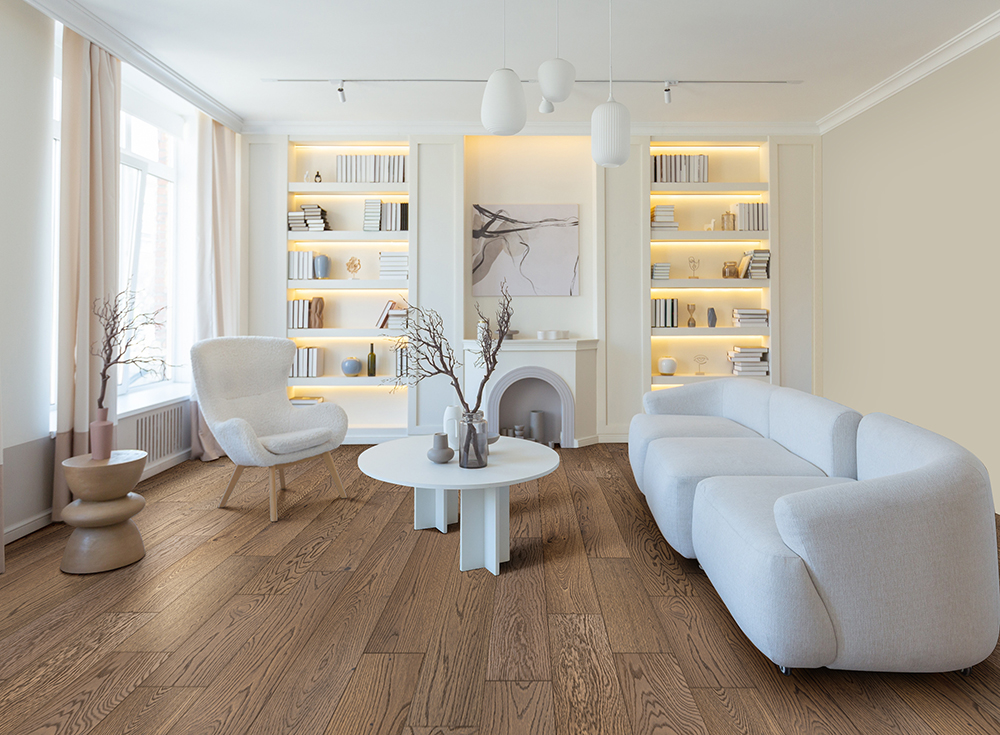
Ladson® Clayborne Engineered Hardwood Flooring
Ultimately, the durability of the floor is defined by the finish layer and the thickness of the structure. When we talk about engineered hardwood durability, it is proportional to how long it will last, which directly correlates to the thickness of the veneer, as explained in our 2mm/3mm/4-6mm framework. Engineered hardwood flooring durability is, in practice, based on the wear-layer rating: the more thickness of veneer, the more refinishing cycles, the longer the service life.
In terms of engineered wood durability, a premium engineered plank with a thick 4mm to 6mm wear layer can handle 3 to 4 full professional sandings, providing a lifespan of up to 50 years. Premium engineered flooring at this level is at the higher end of engineered flooring performance and can greatly close the lifecycle-cost difference to solid hardwood when properly maintained. Conversely, an entry-level 2mm engineered wear layer can only handle a light screen-and-recoat process, meaning a shorter lifespan of 15 to 20 years before replacement is necessary.
Fortunately, modern pre-fished flooring (solid and engineered) is factory finished with an aluminum oxide finish. This special topcoat is much harder than any polyurethane finish that would be applied in the field by a contractor. This heavy-duty protection means that under normal residential traffic, neither flooring type should need full sanding or refinishing for the first 15 to 20 years of its life, assuming the surface is properly maintained.
Lifespan Recap:
- Solid Hardwood Lifespan: 75–100+ years (needs periodic refinishing cycles)
- Engineered Hardwood Lifespan: 25–50 years (premium engineered hardwood flooring collections with 4mm+ veneers attain the top end of this range).
Total Cost - Upfront Prices vs. 50-Year Lifecycle Math
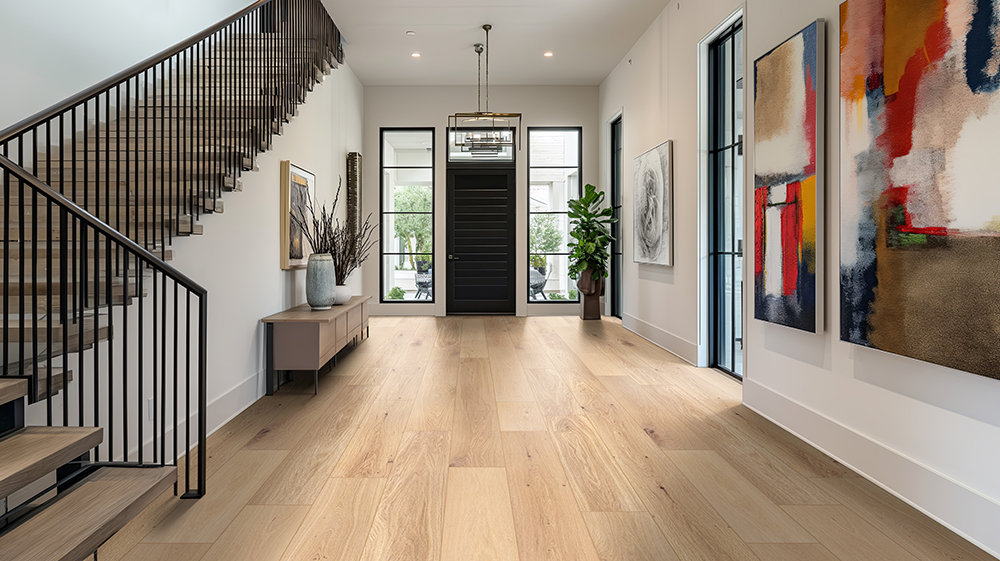
McCarran® Tualatin Blonde Engineered Hardwood Flooring
Engineered Hardwood Flooring Cost: Material and Installation Comparison
Engineered hardwood flooring costs can vary greatly and usually range between $4.50 and well over $20 per square foot for the material. Budget-friendly engineered hardwoods with a 2mm veneer typically cost between $4.50 and $7 per square foot, while higher-end European white oak engineered hardwoods with a 6mm wear layer range from $12 to $20+ per square foot. For both tiers, the engineered hardwood cost to pay attention to is the per-square-foot material number that relates to the wear-layer thickness, not the sticker price on a display sample.
The cost of engineered hardwood floors is about the same in terms of material as solid wood floors, which are usually between $5 and $28 per square foot. The major difference in cost comes in the installation. Solid wood usually has to be nailed or stapled down professionally, which adds $3 to $6 per square foot to the labor costs. These days, engineered hardwood can be installed with nail down, glue down, or floating click-lock systems. Many click-lock products are DIY-friendly, which can save you quite a bit in labor costs, so engineered hardwood is often a more cost-effective solution for many projects.
Lifecycle Math: Total Cost Across 50 Years
To truly see the cost picture, you need to look past the initial purchase and compare engineered hardwood vs hardwood costs over a multi-decade horizon. The table below calculates the true long-term costs of a 1,000-sq-ft installation over a 50-year period, including initial installation costs and the necessary refinishing or replacement cycles:
| Flooring Scenario (1,000 sq. ft.) | Upfront Material + Labor | Refinishing / Replacement Cost | 50-Year Total Investment |
|---|---|---|---|
| Solid Hardwood (Refinished 3× over 50 years) |
$8,000 – $14,000 | $9,000 – $15,000 (3 refinishing cycles) | $17,000 – $29,000 |
| Premium Engineered (6mm Veneer) (Refinished 1× at Year 25) |
$10,000 – $22,000 | $3,000 – $5,000 (1 refinishing cycle) | $13,000 – $27,000 |
| Mid-Grade Engineered (3mm Veneer) (Full Replacement at Year 25) |
$6,000 – $12,000 | $6,000 – $12,000 (1 full replacement cycle) | $12,000 – $24,000 |
When evaluating hardwood flooring vs engineered wood flooring cost parameters over a 50-year timeframe, premium engineered flooring is an exceptionally smart investment. It provides the upscale look of authentic wide planks, yet remains highly cost-competitive with solid wood over its full usable lifetime.
Design Versatility: Where Engineered Hardwood Wins on Structure
Engineered construction offers a distinct structural advantage if your interior design goals include open layouts and clean, contemporary architectural lines. Modern design trends are trending toward wide plank profiles, but wide solid wood planks can be problematic. No board wider than 5 inches is immune from cupping and shifting as humidity levels change within the normal range.
The cross-laminated core of engineered hardwood eliminates this structural barrier, enabling the manufacture of extraordinarily stable 6-inch, 8-inch and 10-inch broad planks that stay precisely flat even in open-concept rooms with fluctuating environmental conditions.
A wire-brushed or matte-oiled premium wide-plank European white oak engineered floor is an unmatched choice for homeowners seeking one of the most durable hardwood floors to anchor a modern space. This sophisticated design profile delivers a high-end look that is structurally difficult to replicate with standard solid wood at a comparable price point.
LVT vs. Laminate vs. Real Hardwood - A Quick Three-Way for Buyers Comparing All
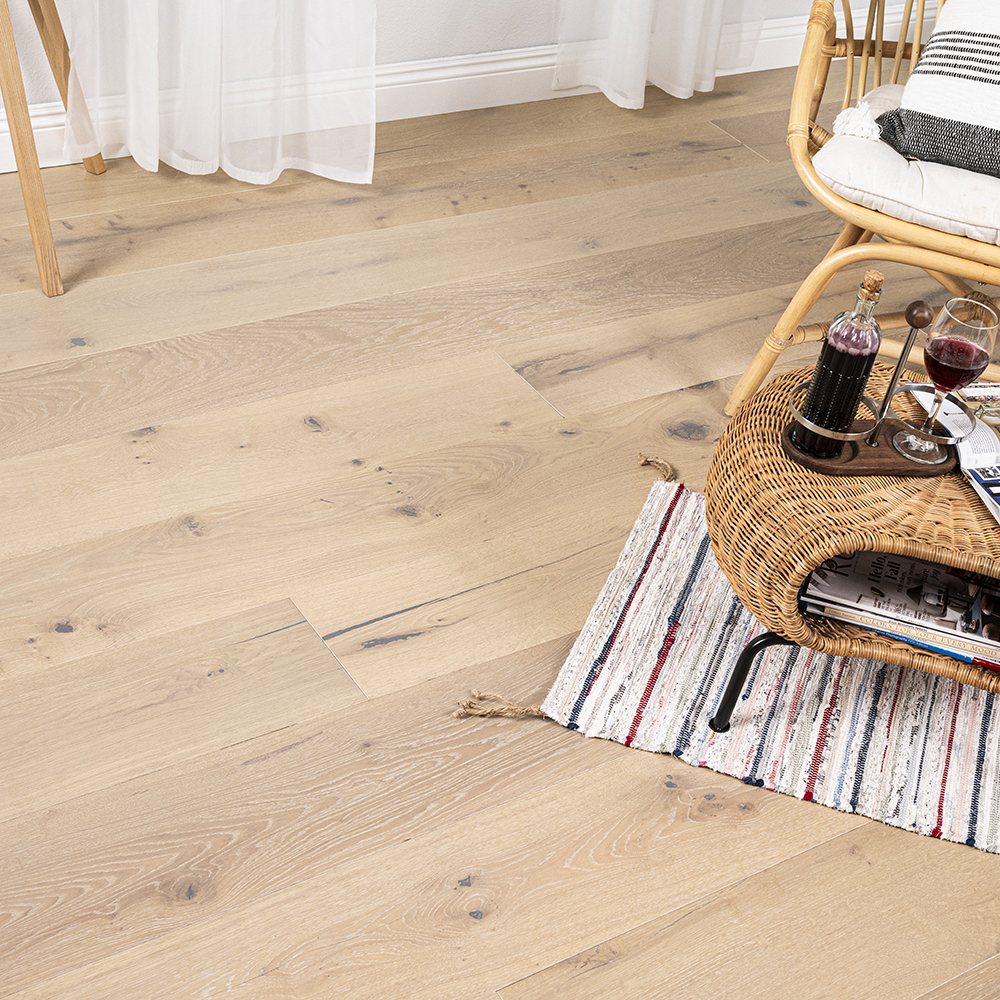
McCarran® Whitlock Engineered Hardwood Flooring
When shopping the flooring market, many customers include popular wood look-alikes in their search. This quick-reference guide illustrates the key differences across the hardwood vs engineered vs laminate flooring spectrum:
| Feature Specification | Engineered Hardwood | Solid Hardwood | Laminate / Luxury Vinyl Tile (LVT) |
|---|---|---|---|
| Real Natural Wood? | Yes | Yes | No (Utilizes a high-definition photographic print layer) |
| Refinishable Surface? | Yes (0–4× depending on veneer thickness) | Yes (4–7× over its lifetime) | No (Damaged sections must be replaced) |
| Waterproof Performance? | No (Offers good structural water resistance) | No (Highly sensitive to moisture exposure) | LVT: 100% Waterproof Laminate: Water-resistant only |
| Expected Lifespan | 25–50 Years | 75–100+ Years | 10–20 Years |
| Below-Grade Basement Use? | Yes (Approved for below-grade installation) | No (Not recommended for basements) | LVT: Yes Laminate: Moisture-dependent |
| Investment Profile | Mid – High | Mid – High | Low – Mid |
The best flooring option for you between engineered hardwood, solid hardwood, laminate and luxury vinyl flooring (LVT) is based on the moisture level of the room, how long you want it to last, how much maintenance you want to do, and your budget. Solid hardwood provides the longest lifespan and refinishing ability, while engineered hardwood gives you the real wood appearance with added dimensional stability and flexibility to install below grade. Luxury Vinyl Tile (LVT) offers the best moisture protection and lowest maintenance needs, making it the ideal choice for bathrooms, basements and high-traffic areas. MSI has premium engineered hardwood and luxury vinyl flooring collections that allow homeowners to choose a flooring solution that fits the performance needs and design goals of each room.
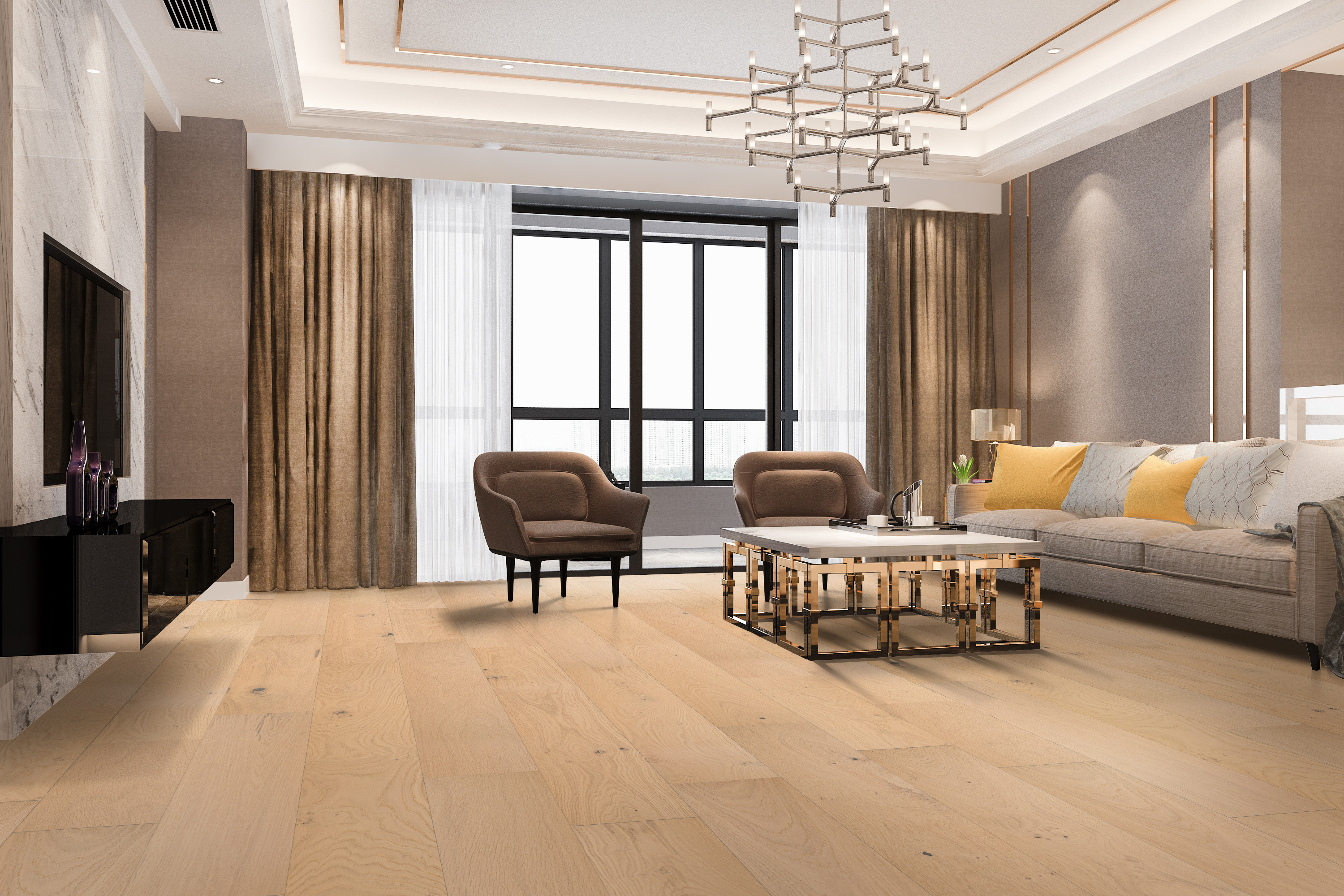
Ladson® Bramlett Engineered Hardwood Flooring
Climate Zone + Subfloor + Floor Level Descision Matrix
| Climate Zone Profile | Subfloor Substrate | Floor Level | Recommended Product Specification | Engineering Reasoning |
|---|---|---|---|---|
| Dry Continental (Mountain West, High Desert) |
Plywood / OSB | Above Grade | Solid or Engineered (Either Type) | Ideal structural conditions for solid wood; choose based on your budget and plank width preference. |
| Humid Coastal (Florida, Gulf Coast, PNW) |
Plywood / OSB | Above Grade | Engineered Preferred | Significant seasonal humidity variations make solid wood prone to movement; engineered offers better stability. |
| Any Climate Zone | Concrete Slab | Ground Level | Engineered Only | Concrete slabs cannot accommodate traditional nail-down methods; moisture protection requires an engineered core. |
| Any Climate Zone | Concrete Slab | Below Grade / Basement | Engineered Only | Below-grade areas are exclusively engineered territory; solid wood is highly susceptible to structural failure here. |
| Dry or Mixed Climate | Plywood / OSB | Above Grade (With Radiant Heat) | Engineered Preferred | Radiant heating systems create floor temperature fluctuations that often exceed solid wood warranty tolerances. |
| Coastal High-Humidity | Any Subfloor | Any Floor Level | Engineered Only | Sustained regional humidity averages above 70% RH disqualify solid hardwood from maintaining stable performance. |
When assessing the manufactured hardwood flooring pros and cons for a project, always consider your space subfloor-first, climate-second, and design preference-third for a flawless, long-lasting installation.
Looking for the Perfect Floor?
Whether you are looking for engineered hardwood vs. solid hardwood for a total house remodel or just for a single below-grade room, the engineered vs solid hardwood decision boils down to your subfloor, your climate and the floor level, not which plank is the more authentic piece of wood.
Choosing the right flooring is about finding the balance between beautiful design and the technical requirements of your home’s environment. Whether you opt for the classic look of solid wood or the versatile, wide-plank stability of a Ladson™ European White Oak Engineered Hardwood floor, selecting the right option requires expert guidance. Learn more about these innovations, read Rise Of Engineered Hardwood to see how modern engineering matches style with everyday durability.
For alternate water-resistant solutions in high-moisture rooms, shop a hybrid rigid-core flooring collection for extra protection against moisture-related expansion and daily wear.
Want to see the materials for yourself? Locate the nearest MSI Locations to look at samples, have your questions answered and receive immediate help or visit an authorized dealer near you and choose the appropriate floor for your project.
Frequently Asked Questions
Is Engineered Hardwood the same as solid hardwood?
No. Both options have a surface of 100% real wood but the construction underneath is very different. Solid hardwood is a single piece of timber milled directly from a chosen tree species. To put it directly, engineered hardwood vs solid wood is a contest of construction, not authenticity.
In engineered hardwood vs. solid hardwood, engineered flooring features a real wood veneer attached to cross-laminated layers of plywood or HDF. The distinction lies not in the visible surface, but in the structural layers beneath that influence the flooring’s response to temperature and moisture. For most consumers, selecting between engineered and solid hardwood flooring depends on the subfloor and climate.
How long does engineered hardwood last?
The longevity of an engineered floor is highly dependent on the thickness of the top wear layer. Entry level 2mm veneers can typically last 15 to 20 years before replacement is needed. Mid-range 3mm choices can last 20 to 30 years with just one thorough refinishing cycle.
Proper maintenance with periodic refinishing allows for 30 to 50+ years of life from premium 4mm to 6mm options. Solid wood outperforms engineered hardwood flooring vs hardwood in longevity (75 to 100+ years), but only in environments where it is structurally suited for installation, when comparing how long engineered hardwood flooring vs hardwood lasts.
How thick should engineered hardwood be?
When shopping for flooring, look at the thickness of the top veneer layer, not the thickness of the entire board. Answering how thick wood are wood floors in the engineered category, the overall thicknesses of the board are usually between 3/8-inch to 3/4-inch but a thick board may have a thin 2mm veneer.
If you want to be able to totally refinish your floors down the road, be sure to specify a minimum wear layer of 3mm. For premium, long-term installations, seek for a veneer that is between 4mm and 6mm.
Does engineered hardwood scratch as easily as solid?
Yes. The scratch resistance of a wood floor depends solely on the Janka hardness score of the wood species chosen, regardless of how the plank is manufactured. To answer the popular question: Does engineered hardwood scratch more easily? The data shows it depends completely on the species: a premium 4mm engineered hickory plank (Janka 1,820) is far harder and more scratch resistant than a 3/4-inch solid walnut board (Janka 1,010). Always pick a wood species based on your lifestyle and household traffic, not just the plank style.
What are the disadvantages of engineered wood flooring?
The disadvantages of engineered hardwood flooring includes having a thin top veneer that limits the number of times it can be sanded and refinished and susceptibility to edge delamination caused by standing water. Furthermore, lower priced products tend to have very thin wear layers and like solid wood, engineered planks are not recommended for wet environments such as bathrooms.
Is engineered wood waterproof?
No. Engineered options are designed to be very stable with humidity shifts but not waterproof. When you ask the question, is engineered wood waterproof against flooding or plumbing leaks? The answer is a resounding no, long exposure to standing water will ruin the wood fibers and the adhesive layers will separate.
If you need a fully waterproof wood look for your room, luxury vinyl tile with a stiff core is a fantastic choice. Engineered hardwood flooring in kitchens and basements that need excellent moisture tolerance is generally the best choice.
Is engineered hardwood the same as solid in resale value?
Yes. Premium engineered hardwood can provide a comparable resale value and buyer appeal as solid wood, especially when it has a thick wear layer (4mm +), high-quality construction, and a desirable species such as white oak. Contemporary appraisers and home buyers consider high-quality engineered flooring to be a premium, durable product. The overall condition, choice of wood species, and installation quality will have a far greater impact on your home’s resale value than the decision of whether the planks are solid or engineered.
Can you put solid hardwood in a basement?
No, this is not advisable at all. Since basements are below ground level, moisture vapor is always migrating upward through concrete slabs. Solid hardwood installed directly over concrete will soak up the moisture and start to cup, warp and buckle badly after just a few seasons. For below-grade applications, an engineered hardwood floor installed over a quality vapor barrier is the technically correct choice.
 SHARE
SHARE
 PIN
PIN
 TWEET
TWEET