Large Format Porcelain Tile: When It Works And Fails In Real Projects
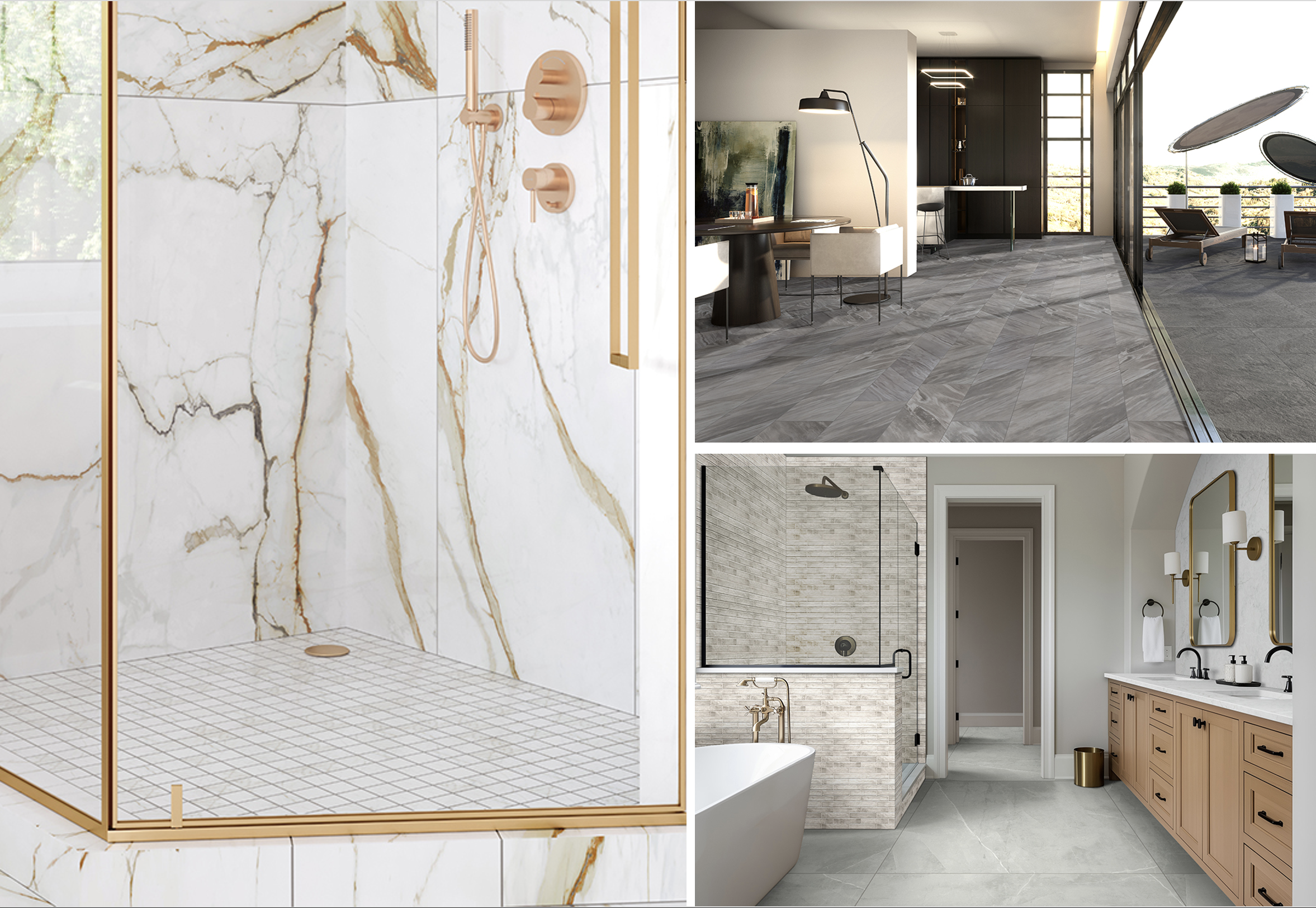
Here’s what we’ve learnt from supplying large format tiles for thousands of projects: when done well, it drastically alters environments. Done wrong? When? You're looking at rip-outs twice the original budget.
Most homeowners don’t know the large format porcelain tile pros and cons. Well, you get that beautiful seamless effect. But you also get installation requirements that will humble even an experienced DIYer. Treat it as a discipline in its own right. Its techniques diverge from those of normal tiling at every level.
We’re telling the true story: where these tiles shine, where they fail, and what separates successful projects from pricey disasters.
Large Format Tile Pros and Cons at a Glance
| Factor | Large Format Tile | Standard Tile |
|---|---|---|
| Grout lines | Far fewer, cleaner aesthetic | More frequent |
| Visual spaciousness | Strong illusion of larger space | Less impactful |
| Maintenance | Easier, less grout to clean | More grout maintenance |
| Installation complexity | Higher, subfloor must be flawless | More forgiving |
| Installation cost | Higher labor cost | Lower labor cost |
| Lippage risk | High if substrate is imperfect | Lower |
| Shower floor use | Requires linear drain system | Standard drain works |
| DIY-friendliness | Not recommended | More accessible |
| Best spaces | Open floor plans, modern bathrooms, feature walls | Small spaces, shower floors, DIY projects |
What Counts as Large Format Tile: Why It’s Important, Sizes, and Types
Standard Large Format Tile Sizes
What is large format tile? What is considered large format tile by installers? Any tile 15 inches or larger on one side qualifies. Anything over 32×32 is in extra big porcelain tile territory. We do 12×24, 18×18, 24×24 and 24×48 often on residential works. Commercial jobs are going into 32×32, 48×48 and big slab formats that go up to 64×128 inches.
But here's what the fabricators WON'T tell you: size makes a huge difference in terms of complexity. That leap from 12×12 to 24×48 isn’t just visual; it alters everything from weight handling to adhesive needs. Crew abilities are required. If you’re looking at sizes, you’re choosing between different trades.
We’ve seen far too many homeowners put 32×32 tiles in a little bathroom, thinking more is better. Scale is more important than size charts show. That big tile needs room to breathe, or it will just dominate the room.
| Size Format | Typical Use | Skill Level Required |
|---|---|---|
| 12×24 | Bathrooms, kitchen floors, walls | Intermediate |
| 24×24 | Living rooms, open-plan floors | Professional recommended |
| 24×48 | Feature walls, large bathrooms | Professional required |
| 32×32 + | Commercial, luxury residential | Professional only |
| 48×48 and above | Hotels, lobbies, large-format feature walls | Specialist installer |
Large Format Tile – Rectified vs Non-Rectified
Large format porcelain is fired and then cut to exact size, so the edges are laser straight. That means you can have tile grout lines as narrow as 1/8 inch for that ultra-clean look everybody likes.
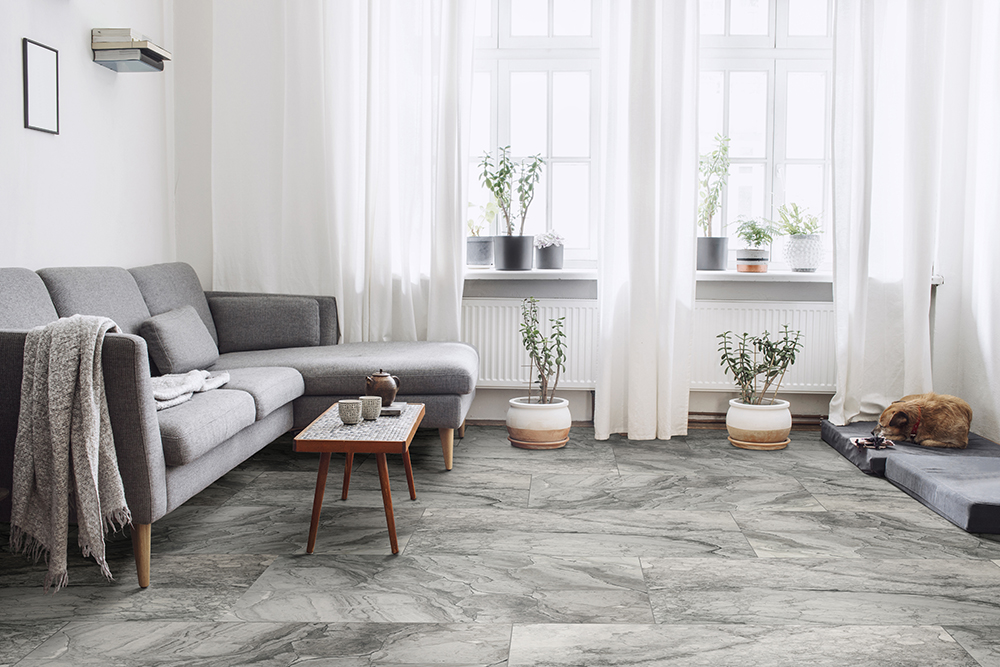
Non rectified versions? They work great for regular tiles, but on a large-format scale such firing inconsistencies are blatantly visible. To cover the imperfections, you need larger joints, which negates the aesthetic objective.
Before purchase, always check the state of rectification, and review Rectified vs Non-Rectified Porcelain Tile to understand how tile edges affect grout lines and final appearance. It defines everything about how your tile will look in the end and what the minimum grout line widths are for your tile.
The Actual Benefits of Large Format Tiles
These tiles are more than just a pretty face. Fewer grout lines imply less scrubbing on a big format tile floor, a calmer visual field, and fewer seams for water and filth to collect.
Fewer Grout Lines: Aesthetic and Practical
The constant-surface effect is remarkable. Instead of hundreds of grout intersections, you are looking at wide planes that read like genuine stone slabs. With proper color matching, the grout nearly vanishes when tiling with large format tiles. Less grout surface area also means correspondingly less upkeep.
But the true benefit? Fewer places of moisture penetration. In the moist sections, every junction of grout is a possible failure point. You cut those down, and you’ve increased long term durability greatly.
Roominess in Smaller Spaces
Are large format tiles good for small rooms? Yes, and Large Format Porcelain Tile Can Help Transform Small Spaces explains why fewer grout lines can make compact rooms feel more open. The effect is just a function of reducing visual clutter – there are fewer grout lines, so the eye doesn’t break the floor up into bits.
The eye interprets the floor as a continuous plane, not a crowded grid pattern. A 5×8 bathroom with a common 12×12 tile arrangement on the floor might instead be tiled with 24×24 tiles, thus decreasing the amount of grout lines that can be seen. Compared to 12×12 tiles, a 24×24 arrangement has around 6 grout intersections, as opposed to around 28. This cleaner, more seamless visual look can help make the area feel more open and unified. Large format tile in smaller bathroom applications generally works best when the design is kept simple without additional pattern changes, borders or visual breaks that can shrink the space.
Easier Long-Term Maintenance
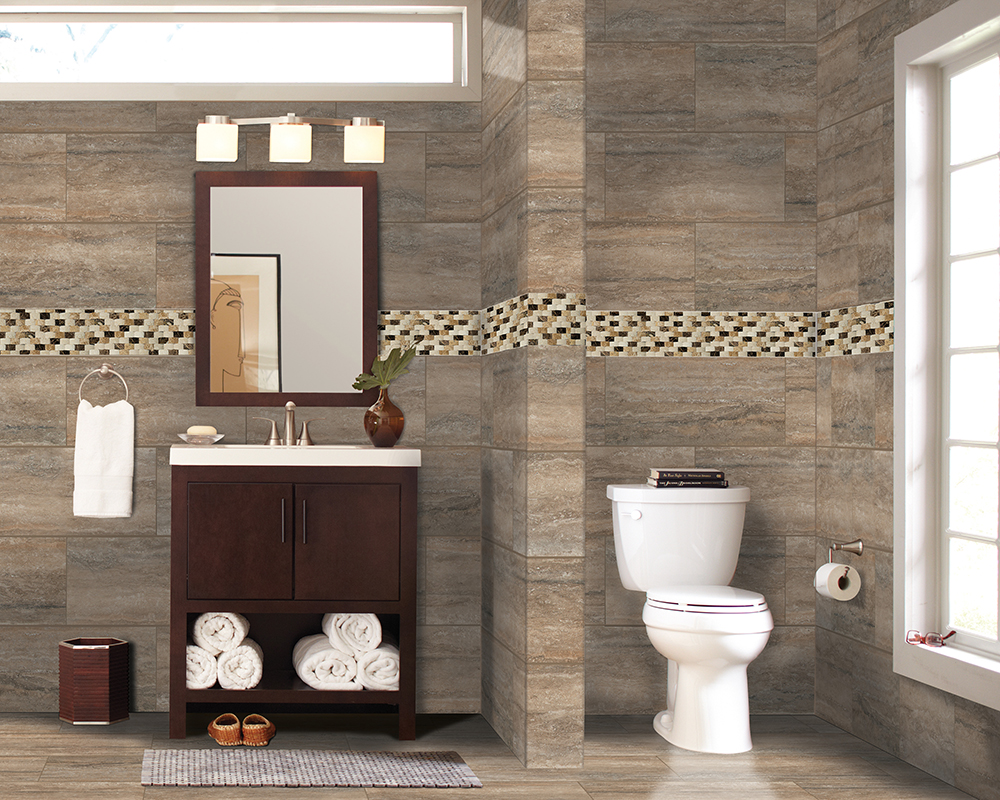
Standard installations require grout-cleaning every few months. Large format porcelain floor tiles extend that to twice a year. The arithmetic is simple: less grout, fewer maintenance issues.
Also, sealing schedules improve. While 12×12 may require annual maintenance, these setups can go 2-3 years between sealing cycles.
Liquids like oil disperse on smooth surfaces rather than running into dozens of grout lines, so it really helps to tidy up the kitchen.
Design Versatility: Styles and Applications
With modern printing, we can get very realistic wood, marble, concrete and metal effects on a wide scale. One material runs from floor to shower wall to backsplash, something that can't be done with natural materials.
Finishes range from matte to textured to sophisticated surfaces, so comparing Polished vs Matte Porcelain Tile can help guide the right choice for each space. Each will have a dramatic effect on slide resistance and the maintenance needed. Select according to real use, not appearance, and review the Different Grades Of Porcelain Tile before finalizing materials for demanding spaces.
Large format tile layout patterns. The choice of pattern greatly influences the perceived proportions of a room.
For suggestions on format and finish, see MSI's compilation of 5 Modern Large format porcelain tile floors and its profile of Stile Large Porcelain tile slabs to see how far large-scale porcelain printing has come.
Real Project Failure Points: When Large Format Tile Goes Wrong
Real failures are predictable. We have seen the same mistakes made over and over in hundreds of projects. Tiling with large format tiles fail predictably, not randomly, and they have patterns experienced contractors identify quickly.
The three major categories of failure are dominant: substrate preparation shortcuts, adhesive selection faults, and drainage incompatibilities. Each causes a whole chain of problems with costs that grow rapidly.
Temperature failures happen when the tiles exceed design tolerances in expansion. Outdoor tiles buckle from season changes without expansion joints every 8 to 12 feet.
Oversized tiles are necessary for structural loading. The weight of a 32×64 inch chunk is 45-60 lbs. Multiply it across an entire floor, and you might easily exceed the limits of normal home building. We always look for structural adequacy first.
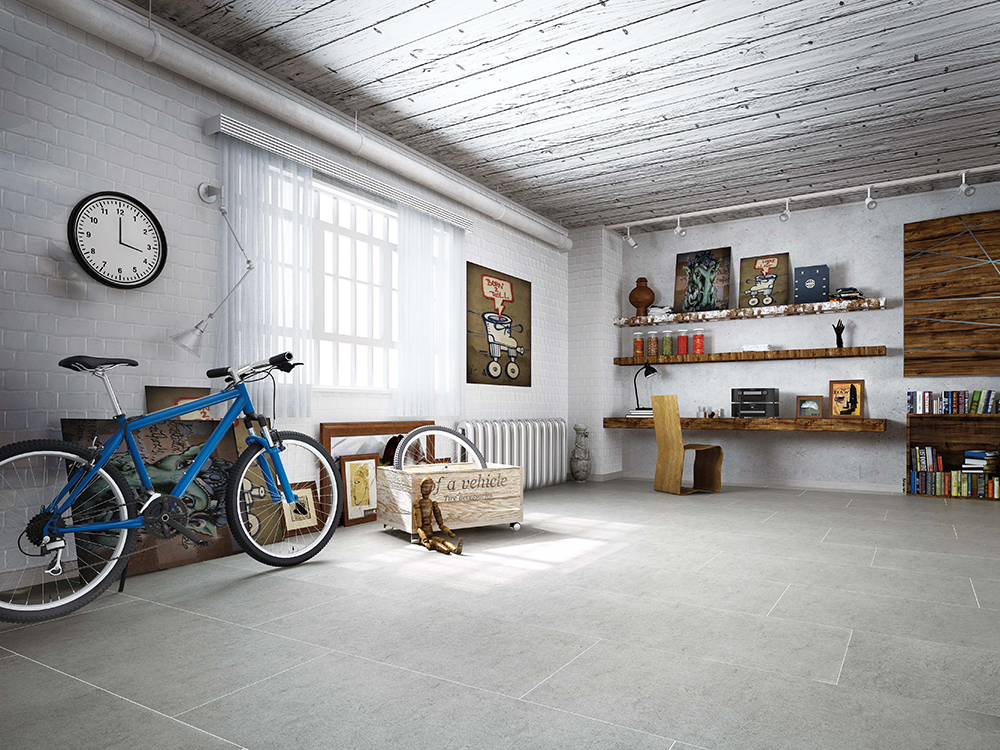
Moisture vapor transmission causes delayed failures appearing months later. These tiles trap more moisture than smaller forms. Adhesive bonds weaken in stages and are expensive to repair when the moisture in the substrate surpasses 3 pounds per 1,000 ft per 24 hours.
Lippage: The 1 Installation Failure
The most obvious calamities are large size tile and lippage difficulties. If adjacent edges are at different heights, you create ridges over the surface. They look awful, and they cause people to trip and wear out faster.
Lippage will magnify any defect in the substrate. A 1mm low point bridging little tiles becomes a 3mm problem on 24×48 layouts. Industry norms limit narrow joint installations to a maximum 1/32 inch lippage (in addition to the inherent warpage of the tile).
Prevention requires the substrate to be flat within 1/8 inch in 10 feet prior to installation. Use a self-leveling compound to address minor unevenness, but for major subfloor difficulties, structural correction is necessary. Once the adhesive cures, lippage correction is a total removal job.
Professional setters use sophisticated leveling systems built exclusively for large size work. These keep the same height during cure time to help prevent lippage from developing.
Incorrect Substrate Preparation
Large format tile subfloors have harsh requirements. Any flaw is reproduced at the surface and produces a crack or bond failure. This simple distinction is what makes large tile different from a normal installation.
Wood substrates should meet deflection requirements of L/360. Most residential floor joists will not pass unless reinforced. Concrete must be fully cured, clean and moisture tested. Moisture trapped will eventually lead to failure.
Large format tile subfloor prep requirements usually demand self-leveling underlayment for concrete and cement board over wood construction. Typically, standard plywood subfloor is not stable enough over an 18×18 inch area.
You need an uncoupling membrane. They also protect the tile surface from the movement of the substrate and reduce cracking in regions of seasonal movement or settlement.
Wrong Adhesive and Back-Butter Skipping
These require a medium-bed mortar rather than conventional thin set. Standard adhesives do not have the body to get complete covering below huge tiles and leave hollow places that crack under point loads.
There is no option to fully butter-back. In wet areas, mortar must cover 95% of tile backs; in dry places, 80%. Often large format tile installation problems are caused by not having enough covering. These voids will break under load.
Are large size tiles harder to install? Sure. The bigger it is, the less room for error there is. Professional remediation is often the outcome of amateur attempts.
Choice of adhesive impacts the strength and flexibility of the bond. These tiles need adhesives that have been updated with polymer additives to handle thermal movement and still hold strong bonding.
Shower Floor Drainage Failure
The traditional center drain causes catastrophic failure in large format tile shower floor installations. The physics simply don't work. The physics simply doesn't work. A 24×48 tile can't conform to more than one pitch line needed for center-point drainage without producing structural difficulties.
For large format tile shower drainage, you need linear drainage systems at one end of the shower, which allows the shower floor to be sloped in a single plane. Not a design preference, but function. If not, flooring will accumulate water and break structurally.
Weight becomes a problem, too. Standard shower pans may not be rated for the distributed loads of bigger formats without reinforcing.
The criteria for a linear drain go beyond the functionality of a drain. Special reinforcement and waterproofing elements are needed for concentrated loading on linear edges.
Room-by-Room Guide: Where Large Format Tile Shines
Bathroom Walls and Flooring
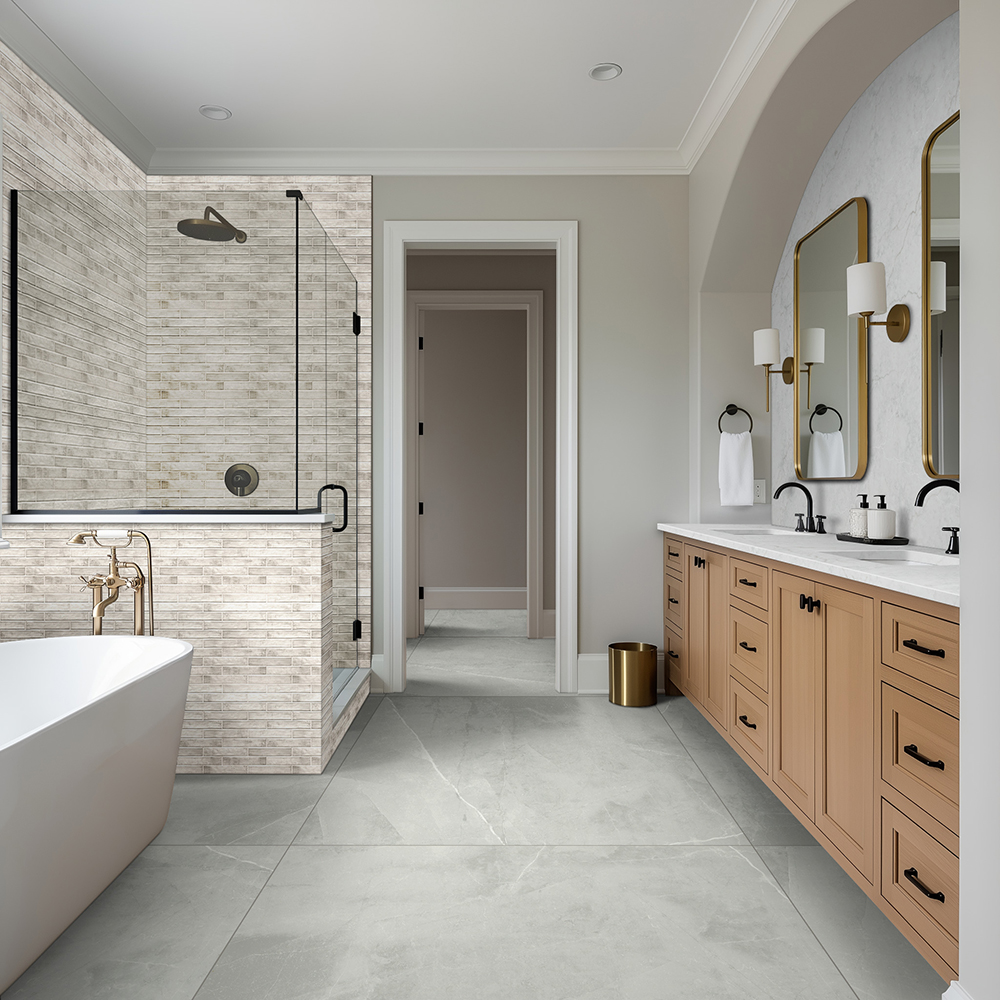
Large format tile bathroom applications are good since there is less grout to gather moisture points. The continuing surface offers luxury looks house owners want in master bath upgrades.
Can you put large format tile in small bathroom? Yes, and it works often spectacularly. Large format tile in bathrooms offers visual cohesion and makes small areas look much larger. For traditional home bathrooms, stick with 12×24 or 24×24 sizes.
Pros and drawbacks of large format tile bathroom include substantially simpler cleaning versus much higher installation complexity. Wall applications require mechanical fixing in addition to the normal adhesive bonding due to the weight.
The best large format tile for bathroom has slip-resistant surfaces for safety and adequate moisture ratings for longevity. Honed or textured finishes offer better grip than refined finishes in damp conditions.
Kitchen Flooring
Advantages of Over-Sized Porcelain Tile for Household Applications: Easy to clean, stain-resistant and tough enough for high-traffic kitchen areas.
It works best in open plan kitchens flowing into living spaces. It has artful movement throughout connected spaces with continuous flooring and no interruption of busy grout patterns.
The kitchen floorboards close to the appliances often shake. Ensure adhesive bonds in these high stress areas are of commercial quality to prevent long term failures.
Open-Plan Living and Living Areas
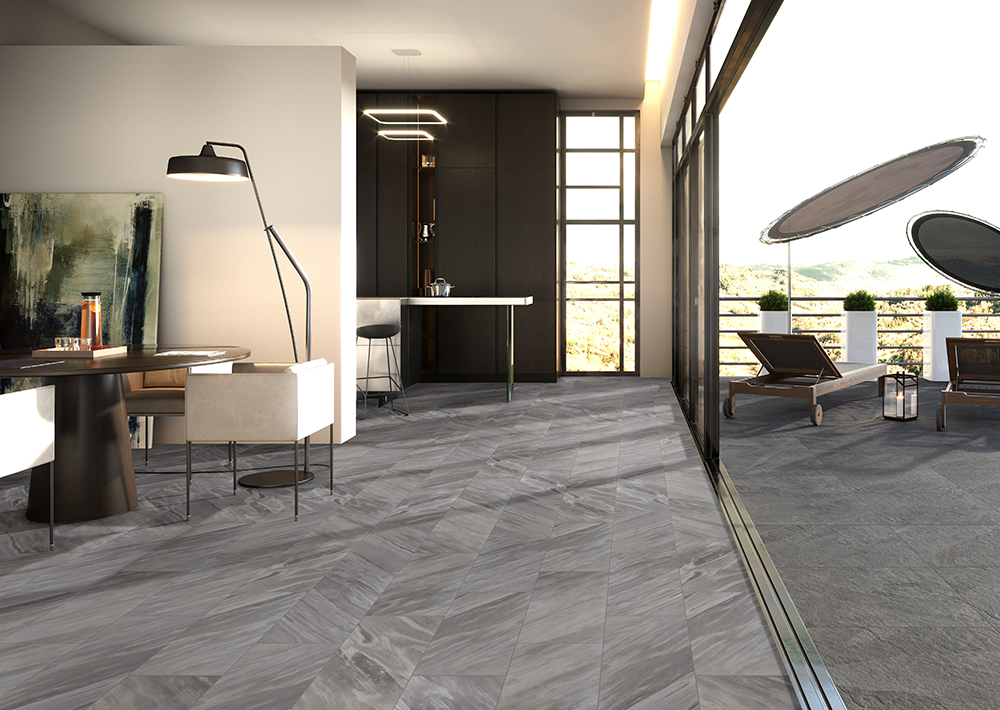
In domestic applications, the strongest use is large format tile in living rooms. Continuous flooring in open spaces creates a hotel-like refinement by reducing visual bustle.
24x24 and 24x48 sizes are on a common household scale and will not dominate a room. The scale has a strong impact but is livable and comfortable.
The underfloor heating system is functional but necessitates the use of manufacturer-approved flexible adhesives and temperature monitoring to avoid damage from thermal stress.
Shower Floors: Special Considerations
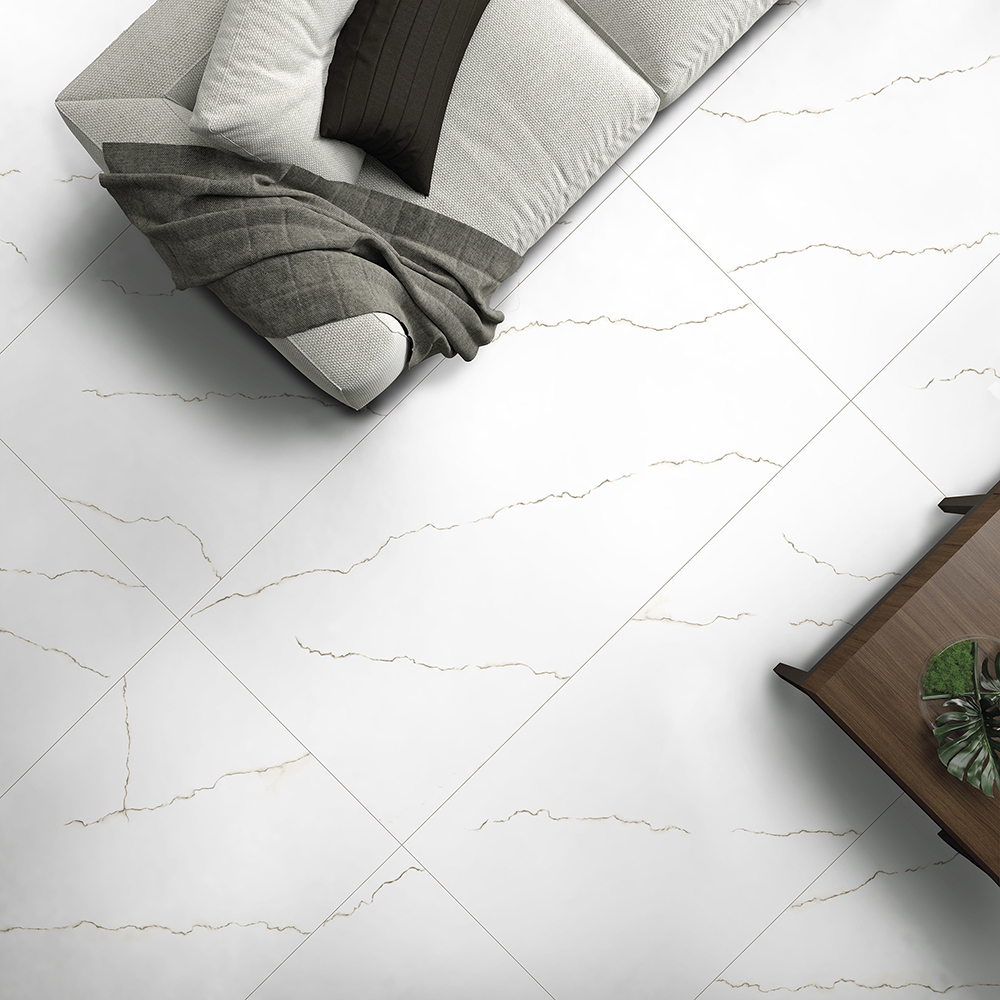
Large format shower tile changes the game in wet spaces if you choose large format tile for shower floor areas that you’ve committed to a linear drain. A big tile shower needs a single plane slope. On large format tile shower walls, the same panels look like natural stone, with a fraction of the grout.
In the 24×48 dimension, shower wall installations resemble genuine stone slabs, making Porcelain Slabs for Shower Renovation a helpful related read. Less grout means less moisture getting in, and less cleaning.
Slip resistance ratings and correct slope control are important for wet area applications. Never use shower floors with a smooth surface. Textured coatings are important for safety traction.
There are no exceptions to linear drain standards. Single-plane slope over-sized tiles need for proper drainage cannot physically be handled by standard center drains.
Why do large format tiles require a linear drain for showers? Drainage pitch lines mathematics makes center-point drainage difficult with huge layouts without producing structural weak points or water collection sites.
Outdoor Applications
Large format tile outdoor installations require exterior-rated porcelain with R10 or R11 slip ratings. Standard indoor porcelain is susceptible to cracking during freeze-thaw cycles when moisture enters the tile body.
More movement outdoors with heat: expansion joints along the edges and throughout broad sections avoid tile cracking and pop-up during temperature fluctuations.
The weight of large format tile is significant in elevated installations. Rooftop terraces and decks above may require structural engineering approval for load calculations.
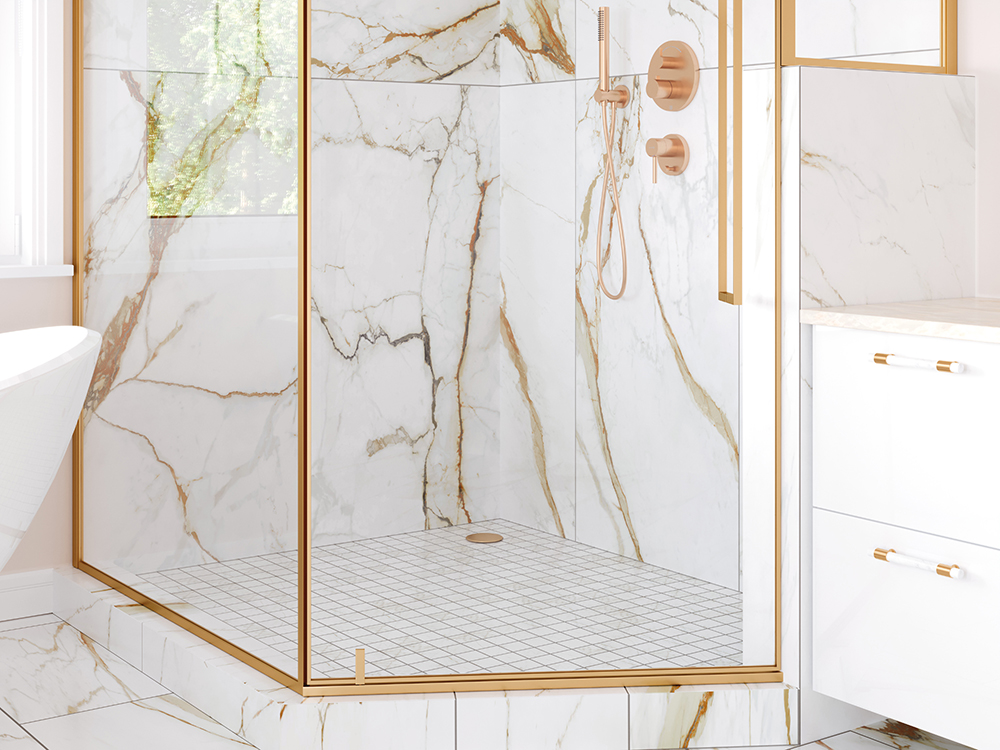
Calacatta Marbella Porcelain Tile
Cost Considerations: The True Cost of Large Format Tile
How much does Large format floor tiles cost? Material expenses vary widely based on format, finish, and design complexity. Installation expenses typically increase proportionally with tile size due to specialized requirements.
It’s with the budget that large format tile flooring projects often go wrong. The tile itself can cost anywhere from a few dollars a square foot to thirty or more, but it is seldom the material that surprises people.
The true premium is labor, mortar and prep. Setting large format porcelain panels costs extra since they require medium-bed mortar, a flat base, and typically a self-leveling pass before the first tile is laid. The table below depicts the cost comparison with regular tile.
| Cost Factor | Large Format Tile | Standard Tile |
|---|---|---|
| Material (per sq ft) | $3–$30+ | $1–$15 |
| Installation labor | Higher (+25–50%) | Standard |
| Adhesive / mortar | Medium-bed required (costs more) | Standard thinset |
| Substrate prep | Often required (self-leveling) | Less frequently needed |
| Long-term maintenance | Lower (less grout) | Higher (more grout) |
Find the Perfect Large Format Tile for Your Room
Ignoring the basic requirements leads to problems with large format tiles in real projects. Success brings amazing solutions that convert ordinary areas into sophisticated places. MSI collections come in a variety of shapes and finishes suited for the most demanding situations where quality matters. Ready to view your options? For expert advice, chat with us online, visit MSI Locations to see these collections in person, or call local MSI retailers for professional installation advice.
Frequently Asked Questions
What is considered a large format tile?
Large format tiles are tiles that are 15 inch or larger on one or more sides.
What are the downsides of large format tile?
More demanding installation requirements, more demanding subfloor flatness standards, and more sensitive to installation faults.
Is large format tile suitable for small bathrooms?
Yes, less grout lines makes small bathrooms look bigger through visual uniformity.
Why use a Linear Drain for Showers with Big Tiles?
The tiles require a single-plane slope that standard center drains can't accommodate.
Large Format Tile Lippage – What is it and how can you prevent it?
Lippage is the difference in height between consecutive tiles and is prevented by ensuring that the substrate is level before installation.
Should you hire a professional to install large format tiles?
Professional installation is required for tiles larger than 12 by 24 inches due to the technical expertise needed, while Porcelain vs Ceramic Tile can help explain key material differences before selection.
Is it OK to use large format porcelain tile outside?
Yes, if you use outside tiles with the right slip and freeze-thaw ratings.
What is the cost of large format installation versus normal tile?
Special materials and preparatory needs generally mean installation costs are far higher.
What are the most popular floor tile materials?
Ceramic tile and porcelain tile are the most popular types of floor tile. They are durable, water-resistant, available in a wide range of styles, and easy to maintain. They are used in both home and commercial applications.
 SHARE
SHARE
 PIN
PIN
 TWEET
TWEET