Best Porcelain Tile For Bathrooms: What Works Well Long-Term (Moisture And Slip Performance Guide)
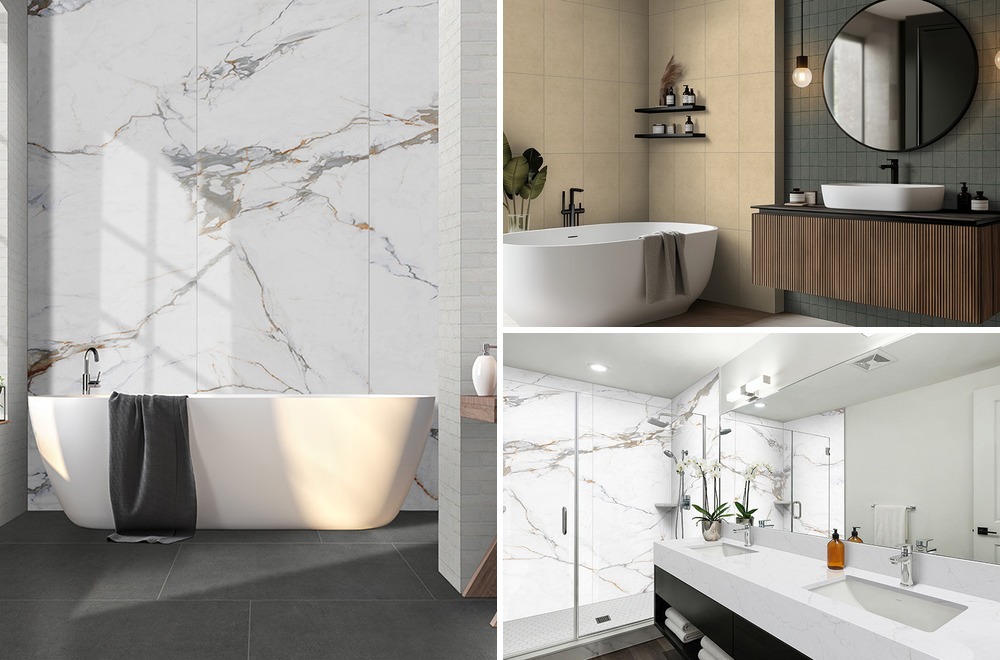
The best porcelain tile for bathroom floors fulfills three non-negotiable specs: DCOF ≥ 0.42 for wet area slip safety, PEI III or higher for floor durability, and water absorption ≤ 0.5% per ANSI A137.1 (the impermeable classification). Matte or textured finishes are more grippy than glossy ones. Showers with sloped drain floors do better with mosaics sized 2×2 to 4×4 rather than huge sizes.
Why Porcelain Tile Is the Smart Choice for Bathrooms in the Long Run
Porcelain tile in bathroom applications lives up to its name with water absorption of less than 0.5% (per ANSI A137.1), which is classed as “impervious,” the highest level of moisture resistance for any type of tile. For contrast, a ceramic tile typically absorbs 3-7% of water by mass. And that gap is huge in a place where there is constant dampness.
Impervious porcelain tile is defined by ANSI A137.1 as having a water absorption rate of ≤0.5%. Being made of dense baked clay, this construction is resistant to swelling, warping and mold growth in continuous moisture applications such as shower enclosures, steam rooms and wet-room bathroom designs. Porcelain, unlike natural stone, does not require sealing – the surface and body are naturally moisture-resistant because of the firing process in the kiln.
Five long-term performance advantages make porcelain tile in bathroom environments the correct specification:
- No sealing required on the tile face — ever
- Inherent resistance to mold and mildew growth within the tile body
- Stands up to repeated exposure to bleach-based and soap-scum cleaning products
- Fully compatible with in-floor radiant heating systems
- Realistic lifespan of 50+ years with standard maintenance
MSI's porcelain bathroom floor tile collection spans finishes, formats, and aesthetics — all manufactured to meet the performance thresholds a bathroom demands.
Moisture Performance – A Detailed Look at the Specifications
Is porcelain tile good for bathroom floors? Yes—but only if you understand what the specs cover, and more importantly, what they don’t.
Water Absorption and the Waterproofing Misconception
Most product descriptions don’t make this part of the difference at all: Porcelain tile is resistant to moisture at the tile level. You still need a specific waterproofing membrane (like Schluter-KERDI, Redgard, or something similar) for the wall or floor structure directly beneath the tile, to prevent water from migrating through grout joints and reaching the subfloor or framing below.
The math is easy. Porcelain tile + no waterproofing membrane = water damage that discreetly builds up over months and years. Porcelain tile + correctly installed waterproofing membrane = decades of trouble-free functioning. This difference is not a trivial installation issue; it is the single most common cause of shower failures and bathroom tile deterioration. It is almost seldom the tile itself that fails. Missing or deteriorated substrate waterproofing is a.
Porcelain tile doesn’t need a sealer. Most certainly the grout lines between tiles. Apply a penetrating grout sealant at the time of installation and reseal every 1-2 years.
Humidity Cycling and Thermal Expansion
Bathrooms go from nearly dry to near 100% relative humidity, sometimes several times a day. The low coefficient of thermal expansion of porcelain ensures the tile body won’t move, buckle or break at the grout joints during those repeated cycles. In technical terms, this is the best tile for bathroom floor moisture humidity performance, not just marketing talk.
Natural stone and some lesser grade ceramic tiles expand and contract more forcefully as the humidity cycles. That movement becomes evident over a period of years as cracked grout joints, loose tiles and water penetration routes. Porcelain is used over stone for both high-use residential and commercial bathroom applications primarily due to its stability in dimension under thermal and moisture cycling.
Slip Resistance Explained — DCOF, PEI Ratings and The Importance of Finish Type for Safety
Matte and textured porcelain surfaces are more slip resistant than polished surfaces because the micro roughness of the finish creates friction under foot. Polished porcelain DCOF ratings for bathroom floor tile applications normally are below the 0.42 threshold when wet — the 0.42 number is the minimum required in the ANSI A137.1 and recommended by the TCNA Handbook for wet interior floor surfaces. Is porcelain tile slippery in bathrooms? Only if you pick the wrong finish.
The specification is correct for matte porcelain tile for bathroom floor and shower applications. Polished surfaces are for walls.
| Bathroom Zone | Minimum DCOF Required | Recommended Finish |
|---|---|---|
| Bathroom floor (residential, dry-to-wet) | ≥ 0.42 | Matte or honed |
| Shower floor | ≥ 0.42 residential; ≥ 0.60 commercial | Textured matte or mosaic |
| Shower wall | No floor DCOF requirement | Polished, matte, or textured |
| Tub surround wall | No floor DCOF requirement | Any finish |
| Threshold / transition strips | ≥ 0.42 | Match floor finish |
| Commercial/ADA wet floor | ≥ 0.42 (ADA mandate) | Textured with verified test data |
PEI ratings measure a completely different variable: wear and abrasion resistance at the tile surface. PEI III is the minimum for residential bathroom floors. PEI IV is suitable for high traffic residential use or light commercial use. PEI V is required for commercial public bathrooms.
PEI and DCOF are not interchangeable. A PEI V rated tile with a polished finish may still fail the DCOF 0.42 wet threshold. You need both ratings confirmed before finishing a floor specification. For a deeper look at how surface texture influences safety, visit our anti-slip flooring safety and style guide.
Porcelain Tile for Bathroom Floors, Shower Walls, and Shower Floors — Zone-by-Zone Application
First rule of buying: wall tile and floor tile aren’t the same thing. Wall tiles are often thinner, lighter, and made without the DCOF or PEI ratings required for foot traffic. Always confirm floor-rated status on the product info sheet before purchasing. Using a floor-rated porcelain tile on walls is permissible; the reverse is not always safe.
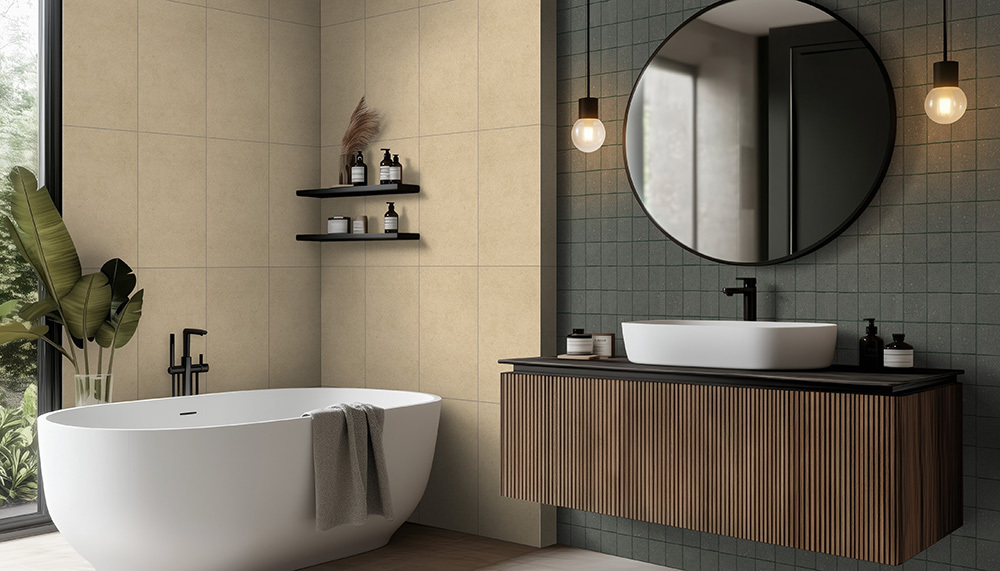
Bathroom Floor. Specify matte or honed finish, PEI III minimum, DCOF ≥ 0.42. The 12×12 to 24×24 range covers most home bathroom flooring. Larger forms give a more spacious look by lowering the number of visible grout lines per square foot.
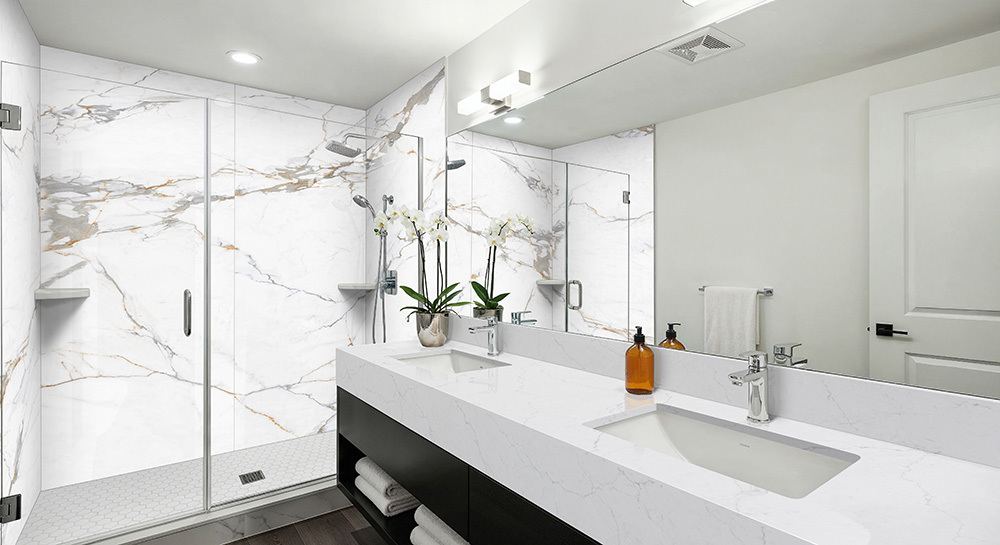
Shower Walls. This is your design-freedom zone. Polished, glossy, textured, and matte finishes are all acceptable because no floor DCOF criterion applies. Larger format tiles — 12×24 or 24×48 — give a polished design with minimum joint disturbance. Marble look porcelain tile for bathroom shower walls is always one of the most specified solutions for luxury and spa-style installations.
Shower Floor. The highest slide risk zone. Smaller format tiles — 2×2, 3×3 or 4×4 mosaics — function better than large tiles here because more grout lines mean more surface friction on a sloped drainage plane. Recommend DCOF ≥ 0.60 for commercial settings or aging in place projects. And, since mosaic tiles with mesh backing are organically conforming to the drain slope, there are no uneven cuts.
Epoxy grout is more resistant to mold, discoloration and moisture intrusion than normal cement grout when making a selection. Epoxy grout extends maintenance interval for shower floor and high usage bathroom porcelain bathroom floor tile installations substantially. Cement grout needs sealing every year to work as well.
For a more extensive look at how porcelain tile performs as a slab application for bathroom shower renovations, read through our porcelain slabs for shower renovation guide.
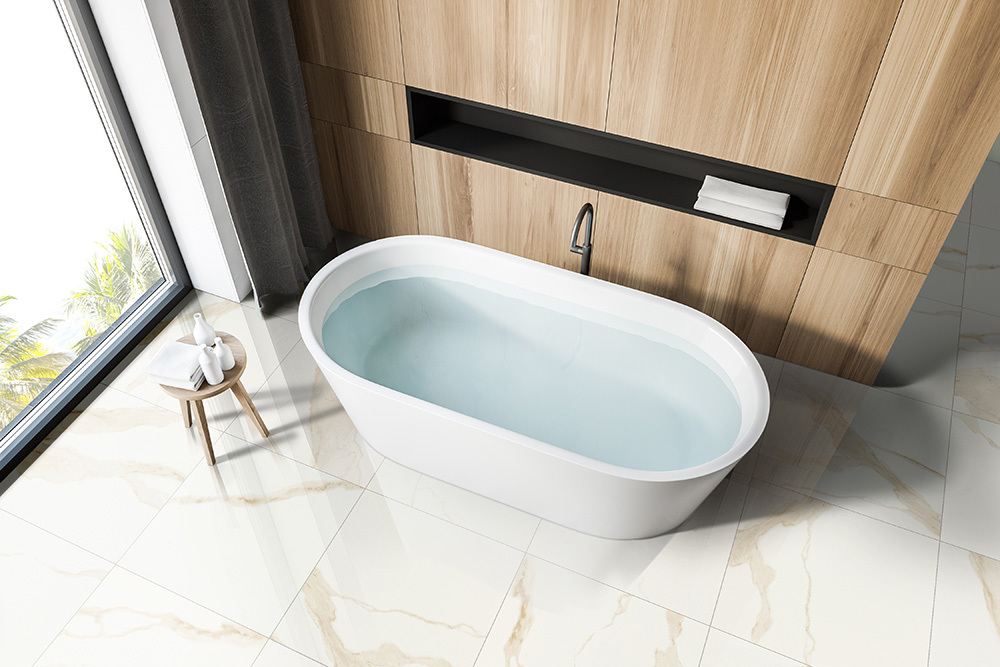
Bathroom Performance Over Time: Tile Size and Format
12×24 — The Benchmark for Bathroom Flooring
What size porcelain tile for bathroom floor applications do designers prefer? Many residential projects the answer as 12×24. It provides enough visual scale to make the room feel larger without the subfloor flatness requirements larger slabs require.
If the bathroom is long, a 1/3 offset running bond will maximize the perception of length and minimize the visible lippage. ANSI A108.02 minimums allow 1/8" grout joints for rectified 12×24 porcelain tile bathroom installations. Non-rectified tiles require a minimum joint width of 3/16" because of dimensional variation in the fired edge. Tighter joints also mean less grout surface area to maintain over the life of the installation.
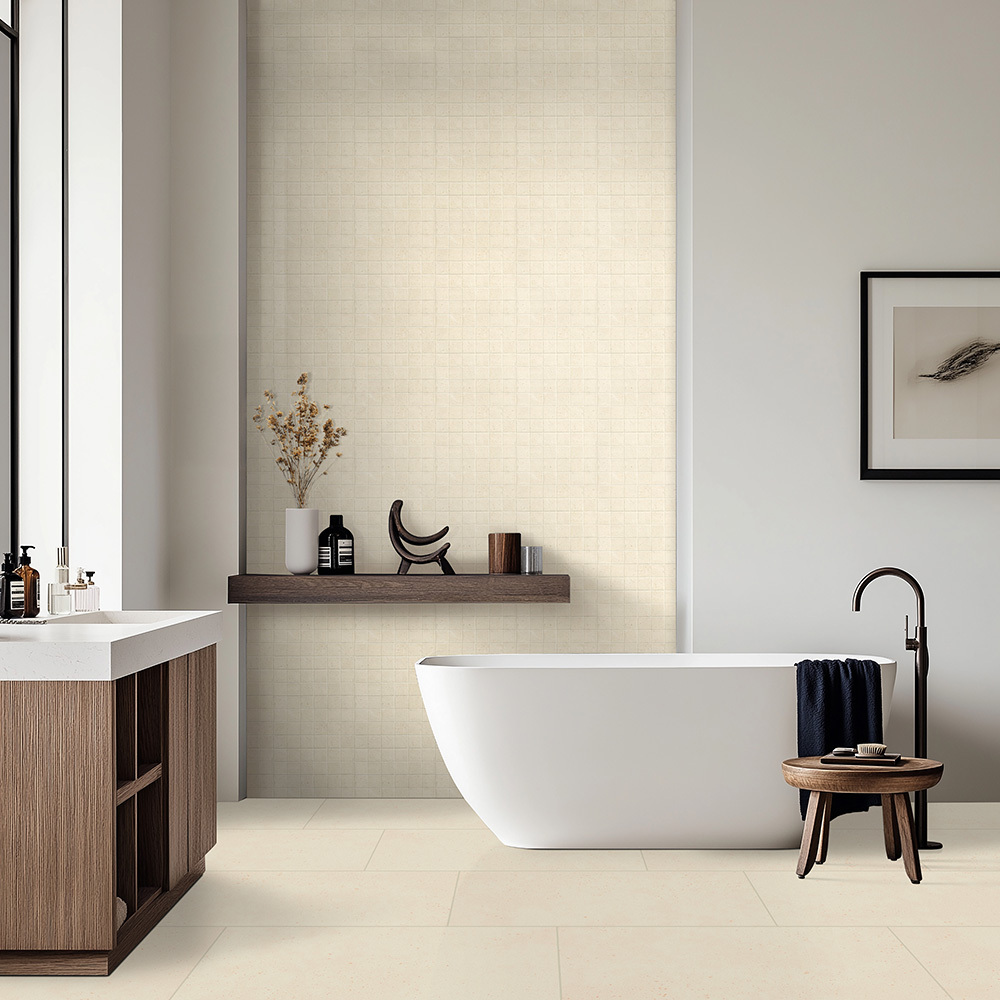
Large Format (24×24 and up) — Fewer Grout Lines, Higher Subfloor Requirements
Large format porcelain tile bathroom floors are often specified for master bathrooms and wet rooms in 24x24, 24x48 and full slab formats today. The primary benefit is fewer grout lines, which reduces both cleaning frequency and the number of potential moisture infiltration points at joint level.
The trade-off is subfloor tolerance. Large format tiles require a flatness criterion of 1/8" variation in any 10-foot run, compared to 1/4" for conventional forms. Subfloors that do not exceed that threshold must be leveled before installation begins. Lippage danger increases proportionally with tile size when support is inconsistent.
For an overview of current large format porcelain tile collections, read our large format tile collections post. MSI's large format porcelain bathroom floor tile collection covers configurations up to full slab dimensions, with finish options suitable to home and commercial bathroom demands.
Small Format and Mosaics — The Shower Floor Specification
On shower floors specifically, 2×2, 3×3, and 4×4 mosaic tiles beat bigger shapes for one solid reason: more grout lines provide greater friction on a surface slanted toward a drain. Mosaic tiles set on mesh backing also conform naturally to the slope, minimizing the angled cuts and lippage risk that large tiles bring on a pitched surface. Specify full-coverage mortar beneath the mesh — no voids — for structural integrity and bond strength over time.
Porcelain vs. Ceramic for Bathroom Floors — The Moisture Performance Difference
When comparing ceramic or porcelain tile for bathroom moisture performance, the decision comes down to a single figure. Porcelain absorbs ≤0.5% water by mass; ceramic commonly absorbs 3–7%. In a shower enclosure, wet room, or any bathroom floor with regular moisture exposure, that discrepancy compounds over years. Porcelain is the correct long-term standard for those situations. Ceramic tile is suitable for bathroom walls, powder rooms and spaces where pooling water is not a problem.
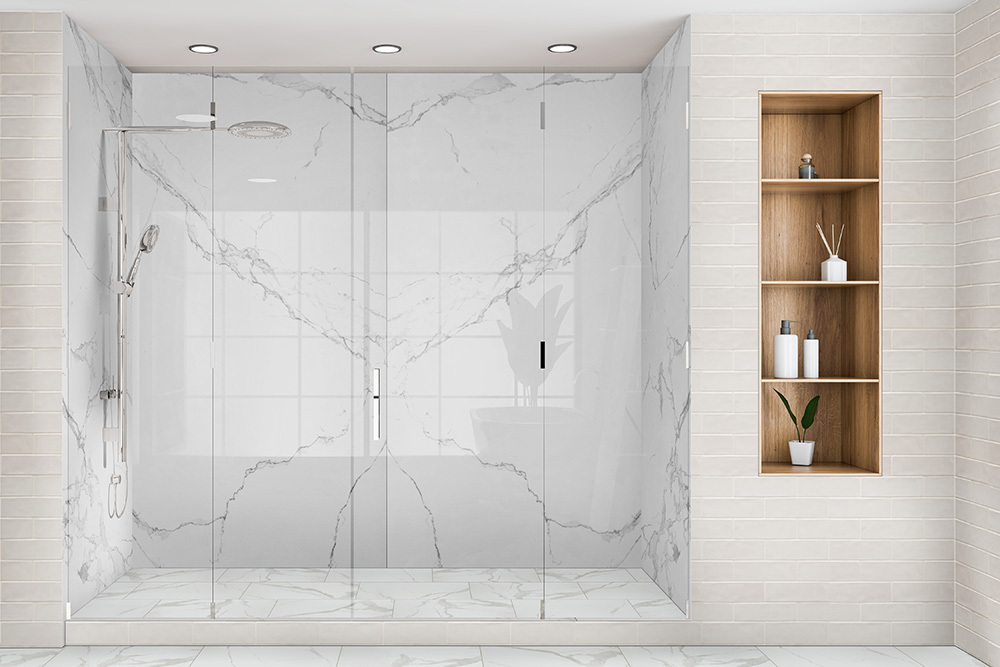
Porcelain is the safest, low-maintenance choice for floors in any bathroom where exposure to moisture is a common thing. For a thorough comparison of materials, including pricing, installation and design range, check MSI's guide to porcelain or ceramic tile for bathrooms.
Bathroom Design Ideas That Don’t Skimp on Performance
Performance standards and design ambition are not mutually exclusive. The porcelain tile collection has a wide selection of looks – all of which can be supplied with the finish types and ratings necessary for bathroom grade installation.
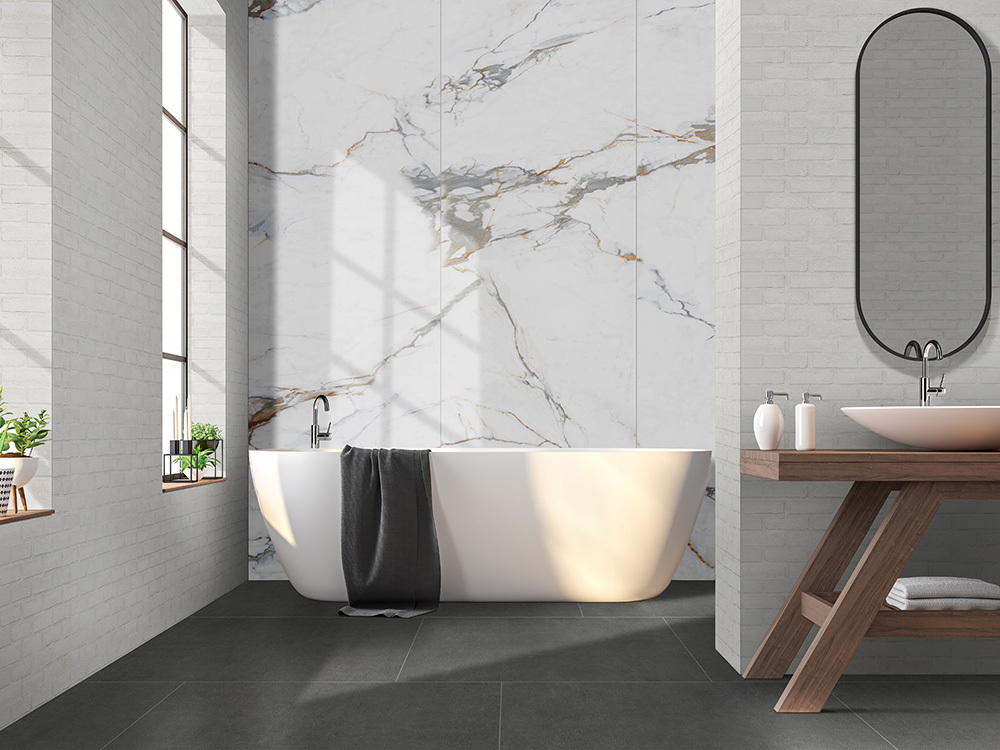
Marble look porcelain tile bathroom installations offer the aesthetics of natural marble without the maintenance hassle. The DCOF and PEI ratings are identical to any porcelain tile. Always specify matte marble look for floor surfaces – the stone-like surface variation reads wonderfully in a low-sheen finish. Unlike actual marble, the color and veining will not fade, and the surface of the tile will never need to be sealed. See our hotel shower surrounds and spa-style bathroom guide for spa style application inspiration.
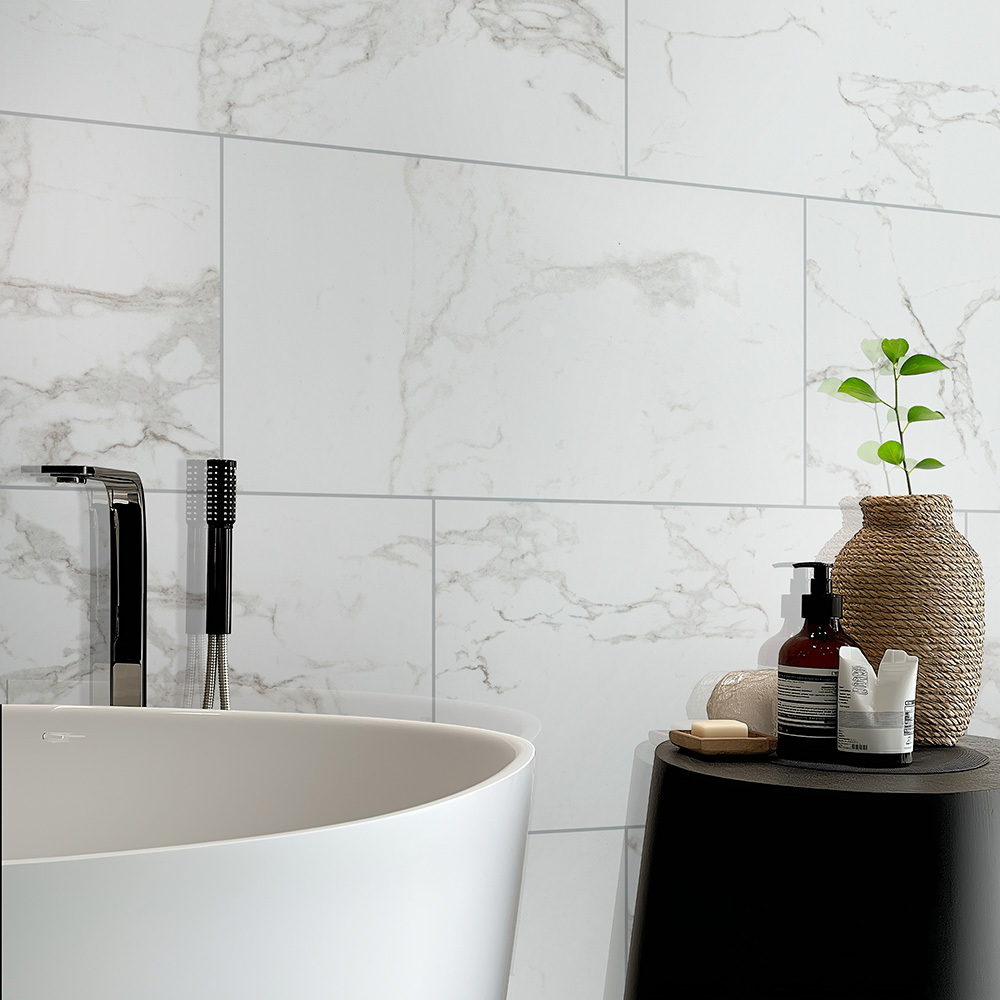
For tiny bathrooms, choosing white porcelain tile bathroom selections is a sure design choice for compact layouts, as they will make the space appear larger. However, water spots and soap scum appear faster on lighter hues than mid-tone choices. For floor applications, use a matte finish – it hides small spots between cleanings better than a shiny surface.
Bathroom floor installations with wood look porcelain tile give you the warmth of plank aesthetics without the moisture susceptibility of real or engineered wood. Specify for floors only, and confirm the planks have a matte or textured finish. Lay planks lengthwise through a small bathroom to create a visual runway effect and make the space appear longer. Explore the complete range of wood look porcelain tile bathroom formats and finish possibilities.
Glazed versus unglazed? Glazed porcelain is the most common choice for most bathroom applications. It gives you a consistent surface that is easy to maintain. Unglazed porcelain is a more natural grip but is more porous and does require sealing. See our guide on glazed vs unglazed porcelain tile for a detailed breakdown.
For a more comprehensive look at porcelain in hospitality environments, check out our guide to hotel bathroom flooring and shower tile options.
The Porcelain Bathroom Tile Spec Checklist — What to Check Before You Buy
A buying decision for the best porcelain tile for the bathroom floor should not be taken without validating all five parameters below. Get the product data sheet for each tile you are considering and read through each line.
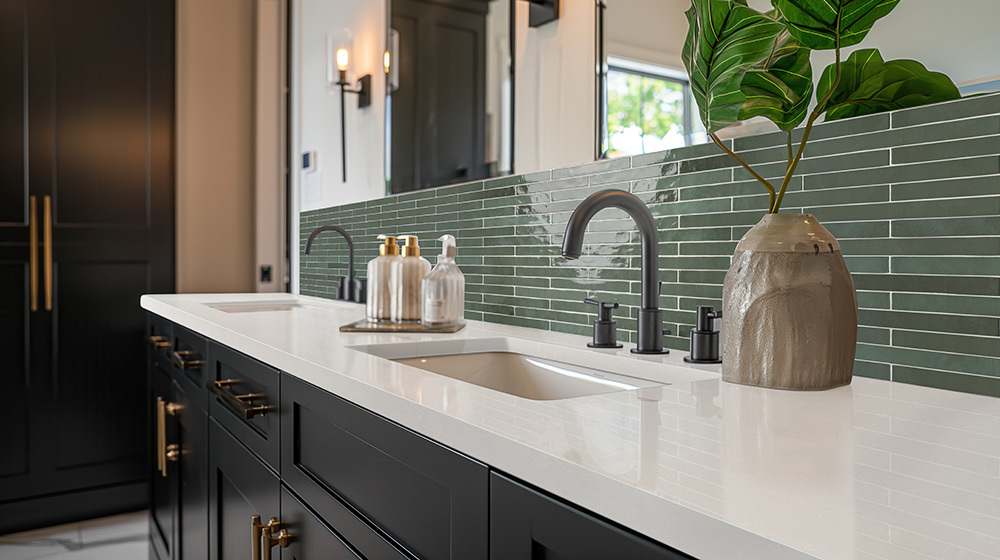
Flamenco Racing Green 2x18 Glossy
- Water absorption: ≤0.5% per ANSI A137.1 impervious classification — confirm on the product data sheet, not just the product description
- DCOF: ≥0.42 for all floor zones; ≥0.60 recommended for shower floors — request the actual wet DCOF test report from the manufacturer
- PEI rating: III minimum for residential bathroom floors; IV for high-traffic residential or light commercial; V for commercial public bathrooms
- Finish type: Matte or textured for all floor surfaces; polished or glossy finishes are safe for walls only
- Rectified or non-rectified: Rectified tiles support grout joints as tight as 1/8", per current ANSI A108.02 minimums, reducing grout maintenance over time; required for proper large-format installation
For commercial and institutional projects, evaluate MSI’s commercial tile specifications and determine if you need GreenGuard Gold certification – some public and hospital bathroom projects require this at the spec stage.
MSI's porcelain tile collection comprises of comprehensive product data sheets, DCOF test documentation and finish and format specifications for each tile in the range.
Quick-Reference Guide to Best Porcelain Tile Specification by Bathroom Zone
| Bathroom Zone | Min DCOF | Min PEI | Recommended Finish | Recommended Format | Notes |
|---|---|---|---|---|---|
| Bathroom floor (residential) | ≥ 0.42 | III | Matte or honed | 12×12 to 24×24 | Rectified for tight grout joints |
| Shower floor | ≥ 0.42 res.; ≥ 0.60 com. | III | Textured matte or mosaic | 2×2 to 4×4 mosaic | More grout lines = more grip on slope |
| Shower walls | No floor minimum | I or above | Any finish | 4×12, 12×24, 24×48 | Design-first zone; large format preferred |
| Tub surround walls | No floor minimum | I or above | Any finish | 4×12 to 12×24 | No floor DCOF required |
| Wet room (floor) | ≥ 0.42 | IV | Textured | 12×12 to 12×24 | Confirm waterproofing membrane is installed |
| Commercial bathroom floor | ≥ 0.42 (ADA mandate) | V | Textured with test data | 12×12 to 24×24 | Request DCOF test report from manufacturer |
| Powder room / vanity area | ≥ 0.42 | III | Any | Any | Lower traffic — design-focused zone |
Ready to Specify Porcelain Tile for Your Bathroom?
Whether you’re designing a single residential bathroom or specifying porcelain tile for bathroom floors throughout a full commercial project, we’re here to help you get the spec right the first time. Chat with us online for product data sheets, DCOF documentation and finish recommendations, visit an MSI showroom to see full-size format samples in person, or connect with a local retailer or supplier to source the right tile for your timeline and budget.
Frequently Asked Questions
What is the best porcelain tile for bathroom floors?
Bathroom floor porcelain tile must have DCOF ≥ 0.42 for slip resistance in wet areas, PEI III or higher for floor durability, and water absorption ≤ 0.5% under ANSI A137.1. Matte or textured surfaces are better for gripping than polished finishes, which are better for walls.
Is porcelain tile good for bathroom floors?
Yes – porcelain tile is one of the most durable long-term specifications for bathroom floors. Its water absorption rate of less than 0.5% prevents swelling, mold growth and moisture damage; and it does not require sealing like natural stone. With a matte or textured finish and DCOF ≥ 0.42 rating, it can last for 50 years or longer with minimal maintenance.
What is the difference between matte vs polished porcelain tile for bathroom use?
Matte porcelain tile is micro-textured, providing traction when wet – it is the correct specification for bathroom and shower floors. Polished porcelain has a smooth, reflective surface that typically falls below the DCOF 0.42 wet safety threshold, making it a slip hazard underfoot. Polished finishes are appropriate for shower walls and bathroom walls only.
What is the perfect size of porcelain tile for bathroom floor?
12×24 is the most popular size for residential bathroom floors, large enough to make a roomy look yet workable at ordinary subfloor sizes. For shower floors, go for 2×2 to 4×4 mosaics — the extra grout lines give traction on the sloped drain surface.
Should I seal porcelain tile in the bathroom?
No porcelain tile doesn't need to be sealed. Grout lines do require a penetrating grout sealer at installation and resealing every 1-2 years. The structure behind the tile also needs a separate waterproofing membrane—porcelain's moisture resistance applies to the tile only, not the substrate beneath it.
Are porcelain or ceramic tiles better for bathroom floors?
In terms of bathroom flooring, porcelain is the more suitable specification for areas where high moisture levels are a concern as it has a water absorption rate (≤0.5%) much lower than ceramic (normally 3-7%). For a full comparison, see MSI’s porcelain vs ceramic tile guide.
What is the lifespan of porcelain tile in a bathroom?
Porcelain tile on a properly waterproofed substrate will last 50 years or more. The grout is the maintenance point – sealing it regularly and replacing any damaged sections before water infiltration occurs prevents the most common failure mode in otherwise well-specified porcelain bathroom installations.
Can I use the same porcelain tile on the bathroom floors and walls?
Only if it’s floor rated. Floor-rated porcelain tiles can be used on walls safely, creating visual continuity and removing the need to order additional material, but wall tiles are thinner, lighter and don’t have the DCOF or PEI ratings necessary for foot traffic. Always check the floor-rated designation on the product data sheet before specifying.
 SHARE
SHARE
 PIN
PIN
 TWEET
TWEET