Glue-Down Vs. Floating Vinyl Plank Flooring: Loose Lay, Click-Lock, And Which Saves The Most Time
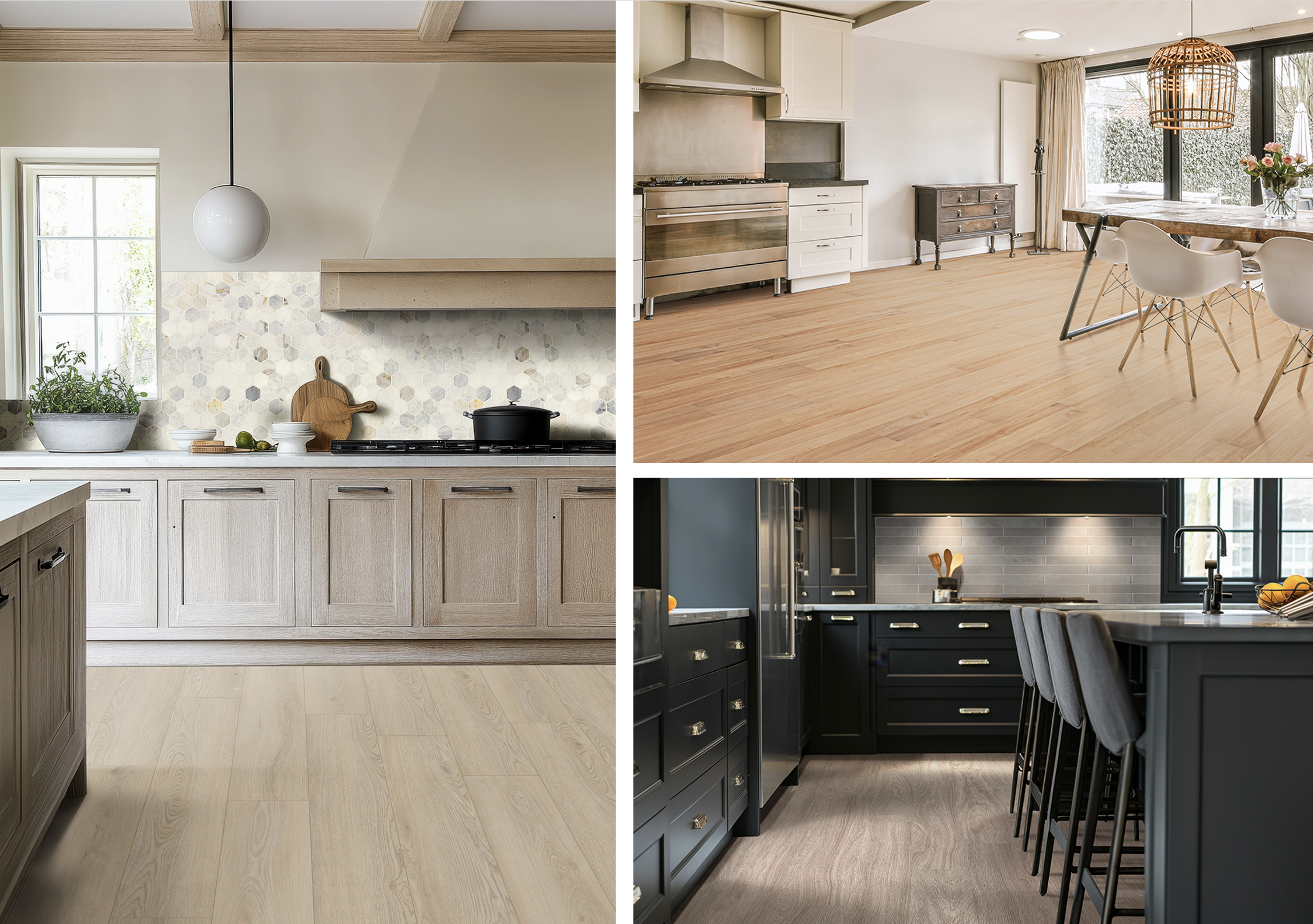
Once you've decided on luxury vinyl tile for your space, the next big decision is how to install it. The terminology can confuse many homeowners. Floating refers to both loose lay and click-lock methods. Neither is bonded to the subfloor. There are two basic choices: permanent attachment or a removable installation: glue down vs floating vinyl plank flooring.
This guide answers the main question: which of these three methods installs fastest, and which one works best for your space? The type of installation method significantly impacts cost, repairs, DIY difficulty, and project timeline. We provide real-time estimates based on real projects so you can see the pros and cons of loose lay vs click lock flooring for yourself.
| Factor | Loose Lay (Floating) | Click-Lock (Floating) | Glue-Down |
|---|---|---|---|
| Installation Time (200 sq ft) | 2–4 hours | 3–5 hours | 6–10 hrs + 24hr cure |
| DIY-Friendly | Yes — easiest | Yes | No — professional recommended |
| Adhesive Required | No | No | Yes |
| Underlayment Required | No (built-in backing) | Optional (some attached) | No |
| Expansion Gaps Required | No | Yes | No |
| Subfloor Tolerance | Moderate | Moderate | Strict — must be flawless |
| Plank Replacement | Very easy | Moderate | Difficult |
| Thickness | Thickest (~5–8mm) | Medium (~4–8mm) | Thinnest (~2–3mm) |
| Best Suited For | DIY, residential, temporary | Residential, most rooms | Commercial, high-traffic, radiant heat |
For the quick answer on glue down vs floating LVP, see the table. Glue down LVP vs floating is a tradeoff between speed and permanence. Floating goes down faster and comes up later. Glue down locks the floor down for good. The next sections contain cost, durability, and repair details for floating vs glue down LVP comparison.
Both floating methods, loose lay and click-lock, are faster to install and work better for DIY vinyl plank flooring installation than glue-down. The glue-down method is the most permanent and stable, but it requires professional expertise and considerably more time.
Keep reading for a more in-depth explanation on each flooring type and their installation times.
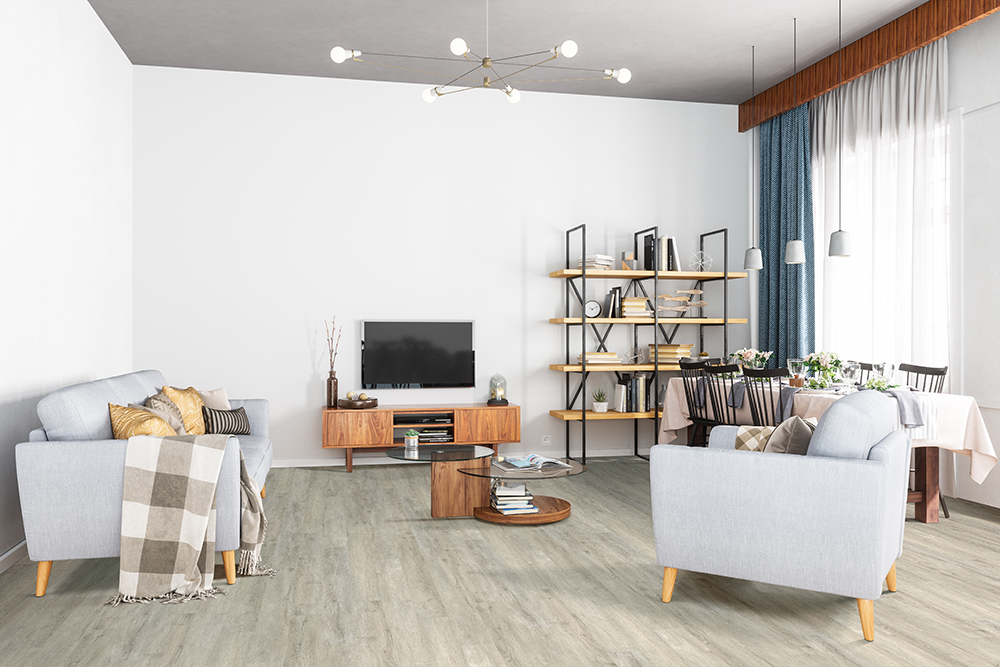
Three Installation Methods You Need to Know
Before we compare install speeds, it helps to clear up some terminology. The difference between LVT vs LVP and the formats within each can get a little fuzzy. MSI's explainer on LVT vs LVP the difference sorts out the naming, and a primer on What is luxury Vinyl Flooring covers the category overall.
Loose Lay: The Quickest Floating Option
What is loose lay vinyl flooring? These planks simply lay down on the subfloor. No glue. No locking systems. Planks are held in place using a special rubber or fiberglass friction backing that relies only on weight and surface tension. This is the thickest of the three options and usually 5–8mm thick.
There’s no acclimation time or cure time, so you can use your floor immediately after installation. Loose lay vinyl flooring is perfect for areas that will need subfloor access in the future because it can be completely removed and reused. These planks can be literally picked up and moved to another room. Laying loose lay vinyl planks provides the fastest installation and easiest repair of all LVT installation methods.
Click-Lock: The Most Common Floating Method
Click lock vinyl flooring installation is a tongue and groove interlocking system that snaps together without glue, nails, or staples. This assembled floor acts as one continuous unit above the subfloor and requires expansion gaps at all perimeter walls for seasonal movement.
This is the most popular residential format, and many products are sold with underlayment attached. Floors can be lifted and replaced in new locations, which is fantastic for homeowners who move house. The most frequent complaint is a hollow sound underfoot when the correct underlayment is left out.
Glue-Down: The Permanent Bond Method
Some LVP installation is glue down, meaning it uses pressure-sensitive adhesive to adhere each plank directly to the subfloor. This creates the most stable connection where the planks cannot move, lift, or buckle under heavy traffic or furniture loads. When you have constraints with floor height, glue down LVT flooring is the best option. LVP flooring is available in the thinnest profile, usually 2-3mm.
Installation requires a totally flat, dry, contaminant-free subfloor, as any imperfection will telegraph through the finished surface. Allow 24 hours of cure time prior to foot traffic and 48-72 hours for full bond strength.
Comparing all three types of LVP flooring side by side is crucial to figuring out how much time you are willing to put into your installation.
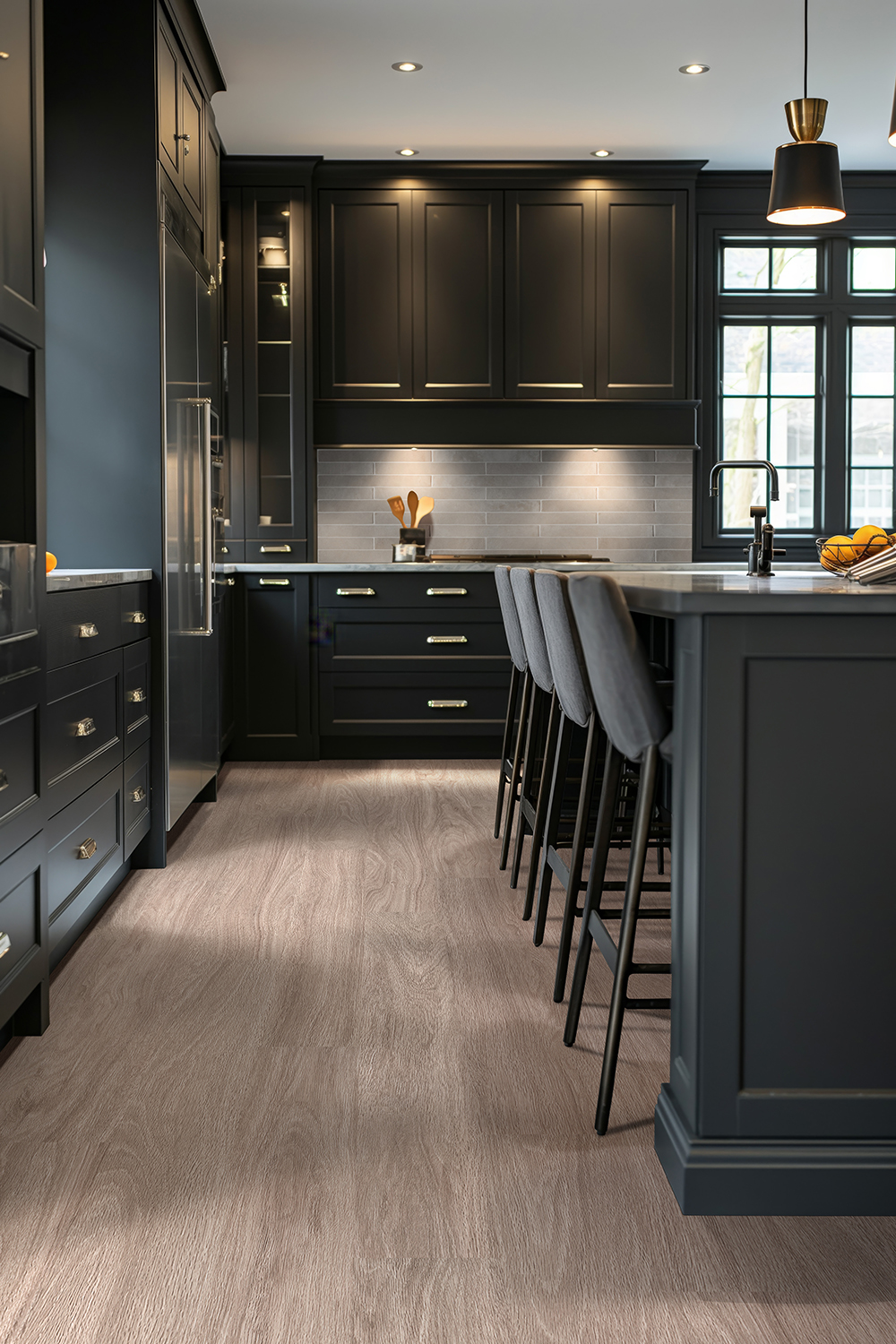
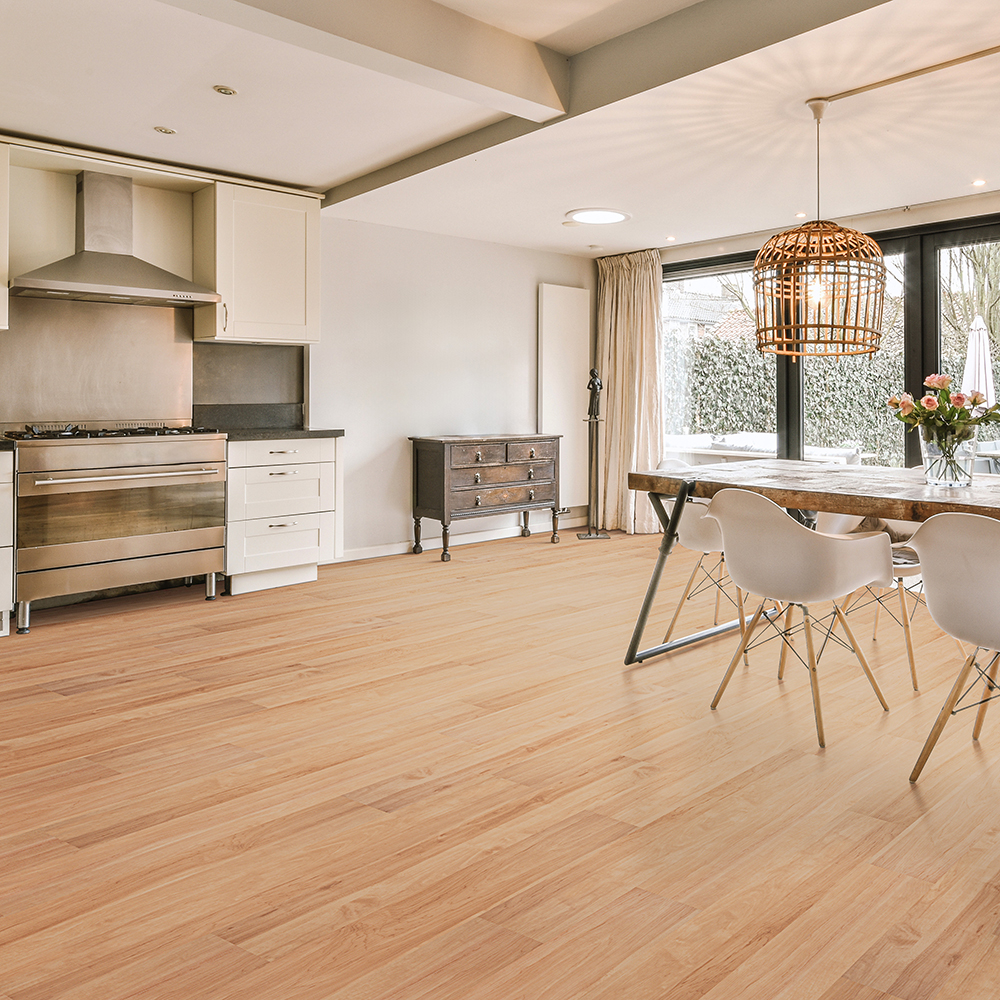
Kallum Bleached Elm® Luxury Vinyl Planks
Installation Time: The Real Comparison
These are the real numbers that make the glue down vs floating LVP question go from vague to concrete. Loose lay and floating methods save most of a day before cure time even begins.
The loose lay method is clearly the winner for speed. Here are the time estimates for a typical 200 square foot room:
Loose Lay: 2–4 hours (incl. subfloor sweep and layout planning). No adhesive application, no cure time, no acclimation needed. When the last plank is down, you can walk on the floor. Therefore, loose lay LVT is an attractive option when quick turnaround is important.
Click-Lock: 3-5 hours including layout planning, managing expansion gaps, and making precise perimeter cuts around obstructions. The interlocking system is more planning intensive than loose lay but still allows for immediate use.
Glue-Down: 6-10 hours active installation and a 24-hour cure window before normal foot traffic. Full furniture placement is a minimum of 48 hours.
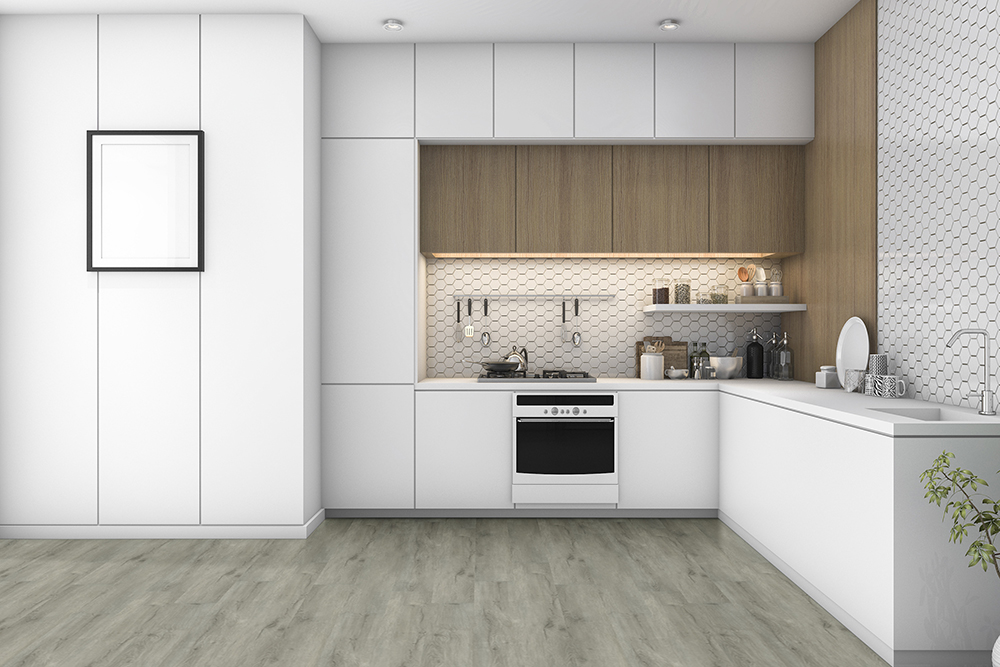
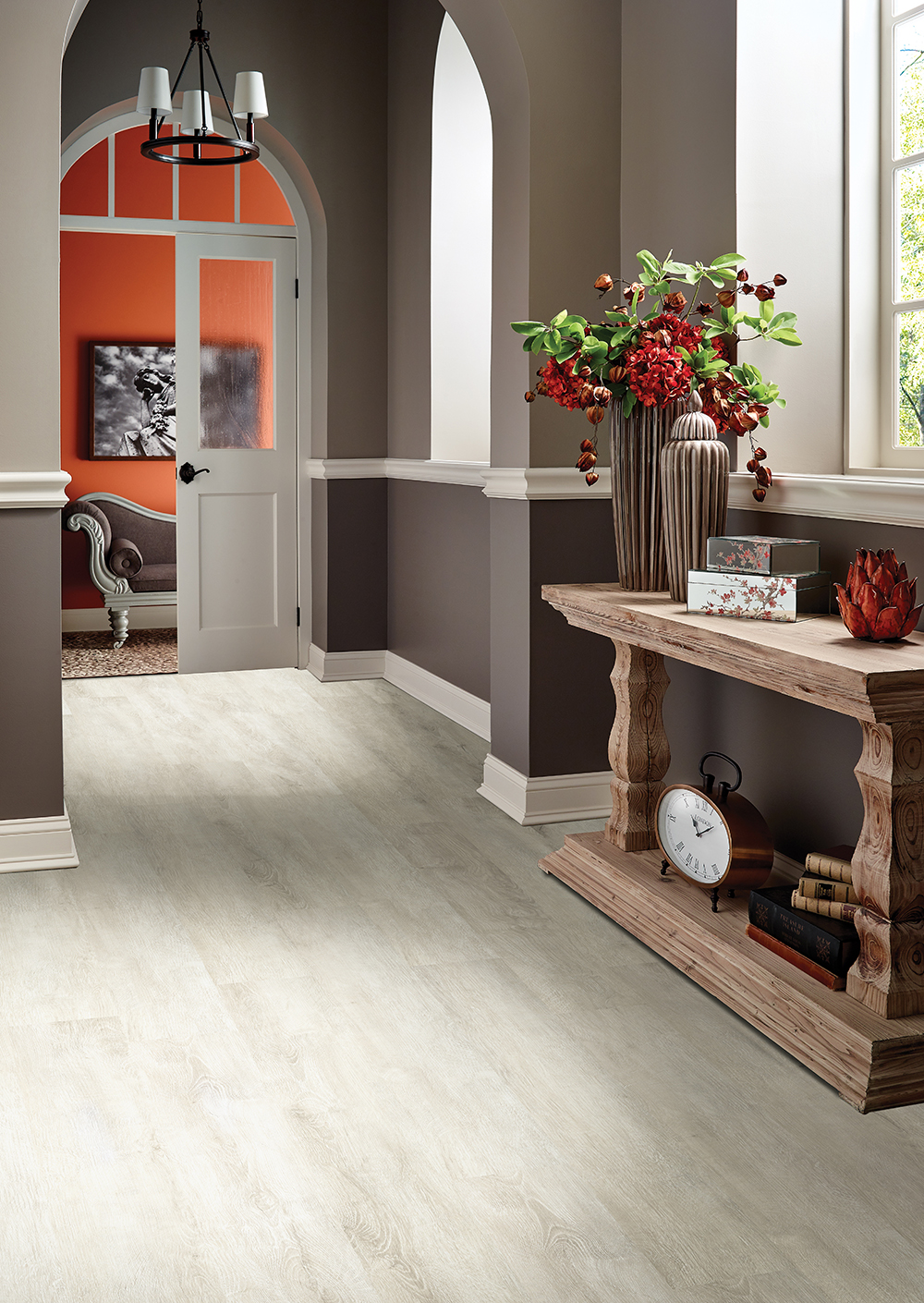
Wilmont® Twilight Oak® Luxury Vinyl Planks
The one factor of time that most guides skip when comparing how long it takes to install vinyl plank flooring between methods is the subfloor prep for vinyl plank flooring. Taking off glue down vinyl flooring and prepping the subfloor takes 1-3 hours that floating methods rarely need.
Subfloor Requirements: What You Need for Each Method
The installation time for floating floors also depends on the subfloor requirements. A loose lay flooring option will accept fairly flat, clean surfaces with little irregularities up to about 3/16 in per 10 ft. The rubber back takes up the small surface variations which would be transmitted through thinner materials.
Click-lock needs the same degree of tolerance. The subfloors should be clean and dry, but the expansion gaps are more important than absolute flatness, as the floating system allows for minor variations through the gap allowance.
The most demanding of the three methods is glue down vinyl tile installation. All surfaces must be dry, clean, and level and free of all contaminants including old adhesive, wax, paint, oil, and sealers. Any surface flaw is visually carried over to the look of the finished floor. This is partly why glue-down flooring takes the longest time to install, as it is less forgiving than the others in terms of surface inconsistencies.
Installation Cost Comparison (and How Installation Time Affects It)
Knowing the cost of each flooring type will put the installation timing even more into perspective. Glue down vinyl plank flooring has the thinnest plank profile and is usually the least expensive per square foot. Loose lay has the highest material price due to its thicker construction and rubber friction backing. The cost of LVT click-lock flooring typically falls in the middle of the cost range.
Because glue-down takes the longest to install, its labor cost will be more. After the costs of installation rates and other fees, such as adhesive and underlayment costs, glue-down ends up being more for the total project.
Loose lay and click-lock floors are much faster to install, so even if a professional is hired to complete the project, the price will be less than glue-down flooring. DIY installation is also possible for residential installations, making the cost even less.
| Cost Factor | Loose Lay | Click-Lock | Glue-Down |
|---|---|---|---|
| Material Cost (per sq ft) | Higher | Mid-range | Lower |
| Labor Cost | Lower | Lower | Higher (+30–50%) |
| Adhesive Cost | None | None | $0.50–$1.50/sq ft |
| Underlayment Cost | None (built-in) | $0–$0.75/sq ft | None required |
| Total Project Cost | Mid | Mid | Highest |
Flooring Longevity
Knowing the installation time is one key to choosing your flooring but knowing how long they will last before you need to re-install is another. One of the major differences among these three installation methods is in the long-term performance characteristics. Knowing floating vinyl plank vs glue down stability will help you make the right choice for your particular application.
Twilight Oak® Luxury Vinyl Planks
Stability Under Traffic and Furniture
Is glue down LVP superior to floating for heavy sustained use? Yes, the permanent bond prevents movement at commercial traffic levels. There is no edge lift or plank shift under heavy furniture or rolling loads, which is great for high traffic commercial areas.
Thermal Expansion and Radiant Heat
Click lock flooring pros and cons: Good compatibility with radiant heat where surface temperatures do not exceed manufacturer limits (typically 85°F). The floating system has expansion gaps for seasonal movement.
The loose lay option has the same expansion behavior without the stress on the interlocking seam and is suitable for radiant heat systems within temperature specifications.
Glue down planks do expand and contract, however, the adhesive bond severely limits expansion and has the best radiant heat performance of the 3 methods. Glue-down is the professional specification for in-floor heating installations.
Plank Replacement Time and Long-Term Repair
What kind of vinyl installation is easiest to repair? Even while having loose lay vinyl flooring pros and cons, the easy repairs are undeniable. You can replace the damaged plank with a matching one in less than 15 minutes. Loose lay is therefore very useful in rental properties where you need to fix them quickly.
The glue-down method is most difficult and takes the most time. Glue down flooring does have some issues such as the difficulty of replacing individual planks. One plank taken away by cutting or prying can damage the ones next to it.
Which Method Is Best for Your Project?
Choose Loose Lay If...
You want the fastest install with instant results and the easiest do-it-yourself flooring. If you want ultimate speed and simplicity, the difference between loose lay and click lock vinyl is obvious. In rental properties, temporary installations, or spaces that need access to the subfloor, the floor may need to be removed in the future.
Choose Click-Lock If...
Both loose lay and click-lock vinyl plank flooring are easy to install, but it’s a matter of whether you want individual planks or a continuous floating system. Click-lock provides stability over loose lay but still allows for reasonable repair access.
Choose Glue-Down If...
Most buyers will reach this point in the glue down vs floating LVP decision: choose glue-down when permanence and stability trump speed. For commercial floors, radiant heat, and below-grade moisture control, the glue down LVP versus floating tradeoff is on the glue-down side. The LVP floating vs glue down answer usually comes back to loose lay or click-lock everywhere else.
Expert Installation Support
Whichever way your glue down vs floating LVP decision lands, MSI carries products for all three methods, from loose lay LVP to glue-down tile. Browse the Luxury Vinyl Flooring collection or a design-forward line like Trecento® Luxury Vinyl Tile to compare options in one place. For background and ideas, MSI also covers the Benefits Of MSI Luxury Vinyl Tile Flooring and the Benefits Of Stone Look Luxury Vinyl Tile Vs. Natural Stone, along with a roundup of standout Installations Of Luxury Vinyl Tile Flooring.
Whether you're weighing an LVP installation comparison or need guidance on specific installation methods, MSI provides comprehensive installation support. Our expertise covers everything from loose lay vinyl flooring benefits to understanding glue down vinyl plank flooring vs floating and which is better for your specific project.
Chat with us online for immediate technical questions, visit an MSI Locations to see installation demonstrations and sample materials, or connect with local retailers who specialize in professional MSI installations.
Frequently Asked Questions
Can I install floating vinyl plank flooring myself?
Yes, both loose lay and click-lock floating methods are DIY-friendly. The least skill required is the loose lay option where planks merely sit in place.
Is loose lay or click-lock better for a basement?
Click-lock with moisture barrier underlayment performs better in basement applications because the connected floating system provides more stability.
Which Method Is Right for Your Project?
The right method depends on your installation timeline, skill level, traffic expectations, and long-term plans based on your specific glue down vs floating vinyl plank flooring needs.
What is the difference between glue-down and floating vinyl plank flooring?
Floating vinyl plank flooring is secured by weight, friction, or interlocking connections laid on top of the subfloor. Glue-down flooring is permanently adhered to the subfloor with glue.
Which vinyl plank installation method is fastest?
Loose lay is the quickest method, a typical 200 sq ft room usually takes 2-4 hours with no cure time.
Is glue down LVP better than floating for high-traffic areas?
Yes, glue-down is the most stable and permanent bond, and it performs best under heavy foot traffic and commercial use.
Can You Glue Down Luxury Vinyl Plank Flooring Yourself?
We strongly recommend professional installation for glue-down because the timing of adhesive application and subfloor preparation requirements are critical.
Does glue down LVP expand and contract?
Hardly, because the glue holds the planks to the slab. Another point of comparison between glue down LVP and floating is expansion: floating floors need gaps around the perimeter, but glue down does not, as the bond of the adhesive prevents thermal movement and creates no need for expansion gaps.
What are the main problems with glue down vinyl plank flooring?
Finished floor shows imperfections in the subfloor, they are more complex to install, and they are hard to remove or replace individual planks once cured.
Which vinyl installation method is easiest to repair?
The loose lay option is the easiest, because damaged planks can be lifted and replaced without the use of tools or disturbing the planks next to it.
What is the best glue down vinyl flooring or floating LVP for basements?
For below-grade installs, glue-down provides the tightest moisture seal, but click-lock with a moisture-barrier underlayment also works well.
 SHARE
SHARE
 PIN
PIN
 TWEET
TWEET