MSI Troubleshooting Guide: How To Remove Marks, Stains, And Water Spots From Quartz
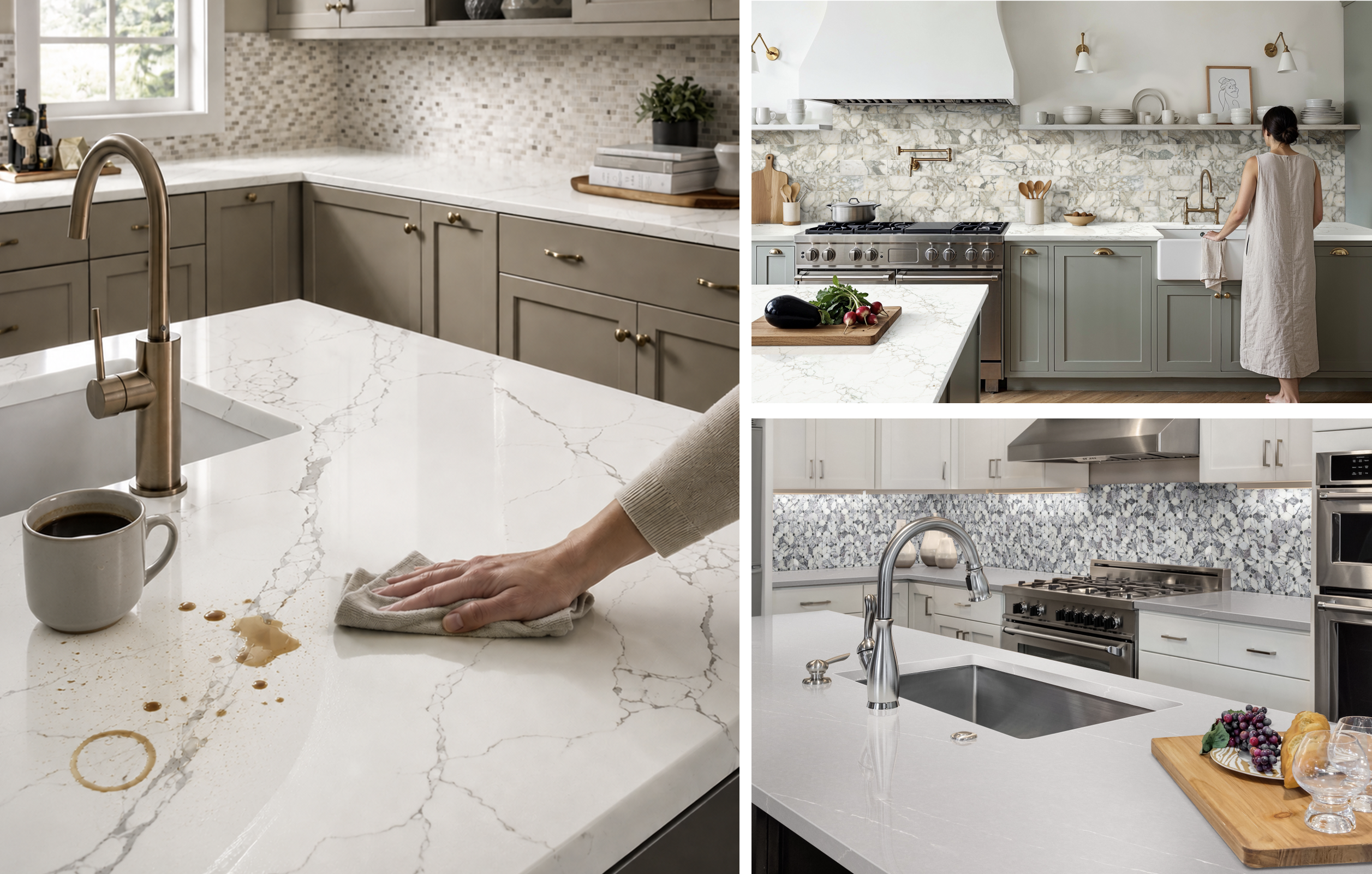
Quartz countertops are manufactured for strength. However, over time, even the most durable materials can develop marks, stains, and water spots. The secret is knowing how to remove stains from quartz countertops and make your investment look pristine. With the right techniques, you can remove even the most stubborn coffee rings, scuff marks, or mineral deposits and restore the surface to its original luster without causing lasting damage.
Quick Fix: The "First Response" to Quartz Accidents
When spills happen, blot immediately with a clean cloth—don't wipe. For most messes, warm water and a drop of dish soap is all that's needed to prevent residue from setting. For 90% of daily messes, a simple mix of warm water and a drop of dish soap is the safest "first response" to prevent a mark from becoming a stubborn residue.
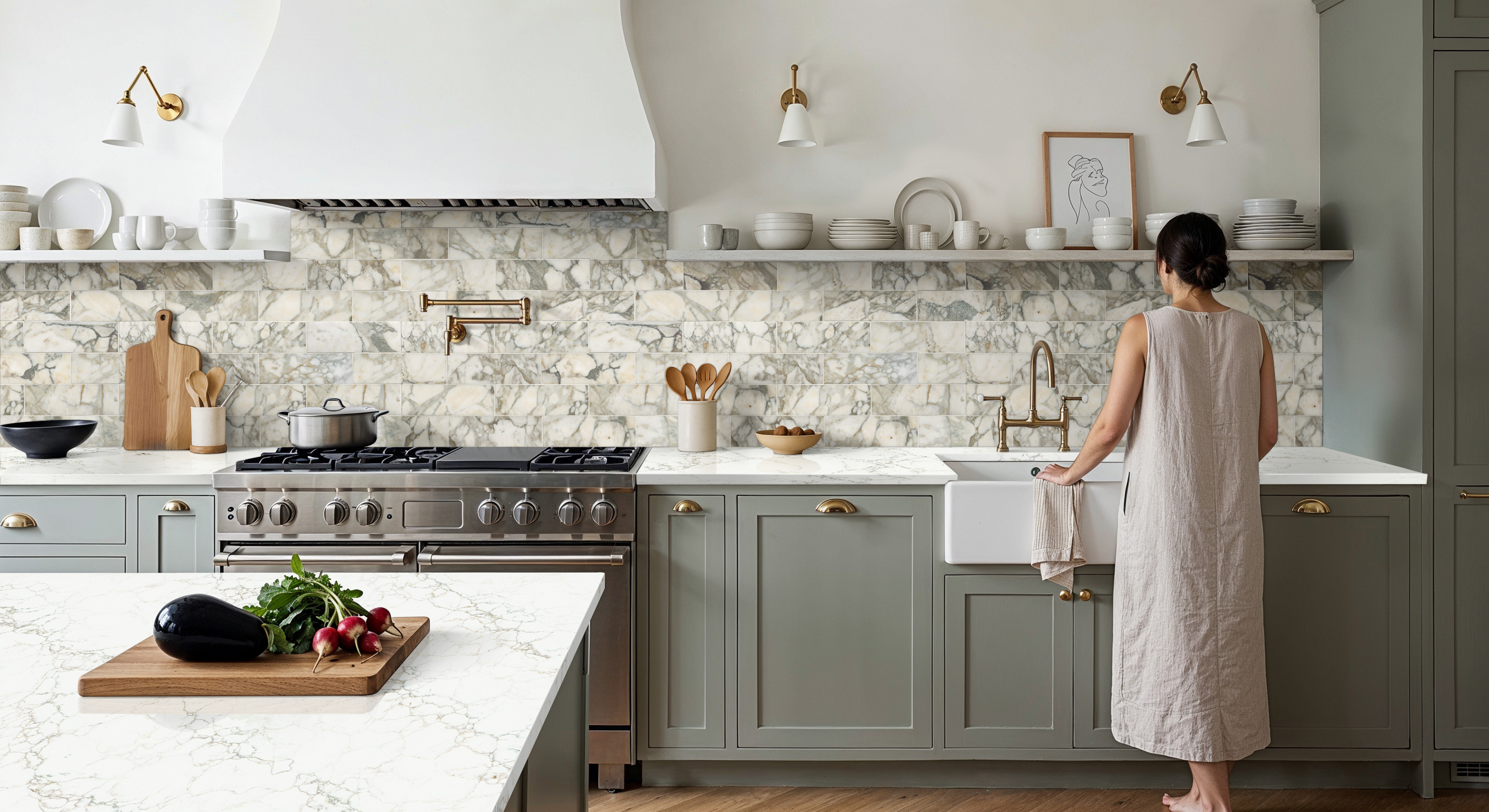
Understanding the Difference Between a Mark, a Stain, or a Water Spot?
The first step to proper maintenance is a proper diagnosis. For example, a chemical solvent on a mechanical mark or an abrasive tool on a chemical reaction can cause permanent damage or a dulled finish. To restore the surface while preserving the integrity of the resin binder, first you need to determine the physical nature of the blemish.
Surface Marks (The "Add-On")
Surface marks are deposits that are on top of the quartz like metal transfer, rubber scuffs, adhesive residue, or dried spills. They are external deposits and can usually be removed without affecting the quartz itself.
Stains (The "Reaction")
Quartz is non-porous, so stains generally do not penetrate the stone itself. The problem is frequently caused by pigments, dyes, or chemicals reacting with the resin binder, resulting in discoloration on or just below the surface.
Water Spots (The "Buildup")
Water spots are mineral deposits (mostly calcium and magnesium) left behind when water dries up. They are usually found as cloudy films or white marks around sinks, faucets, and other places where hard water is present.
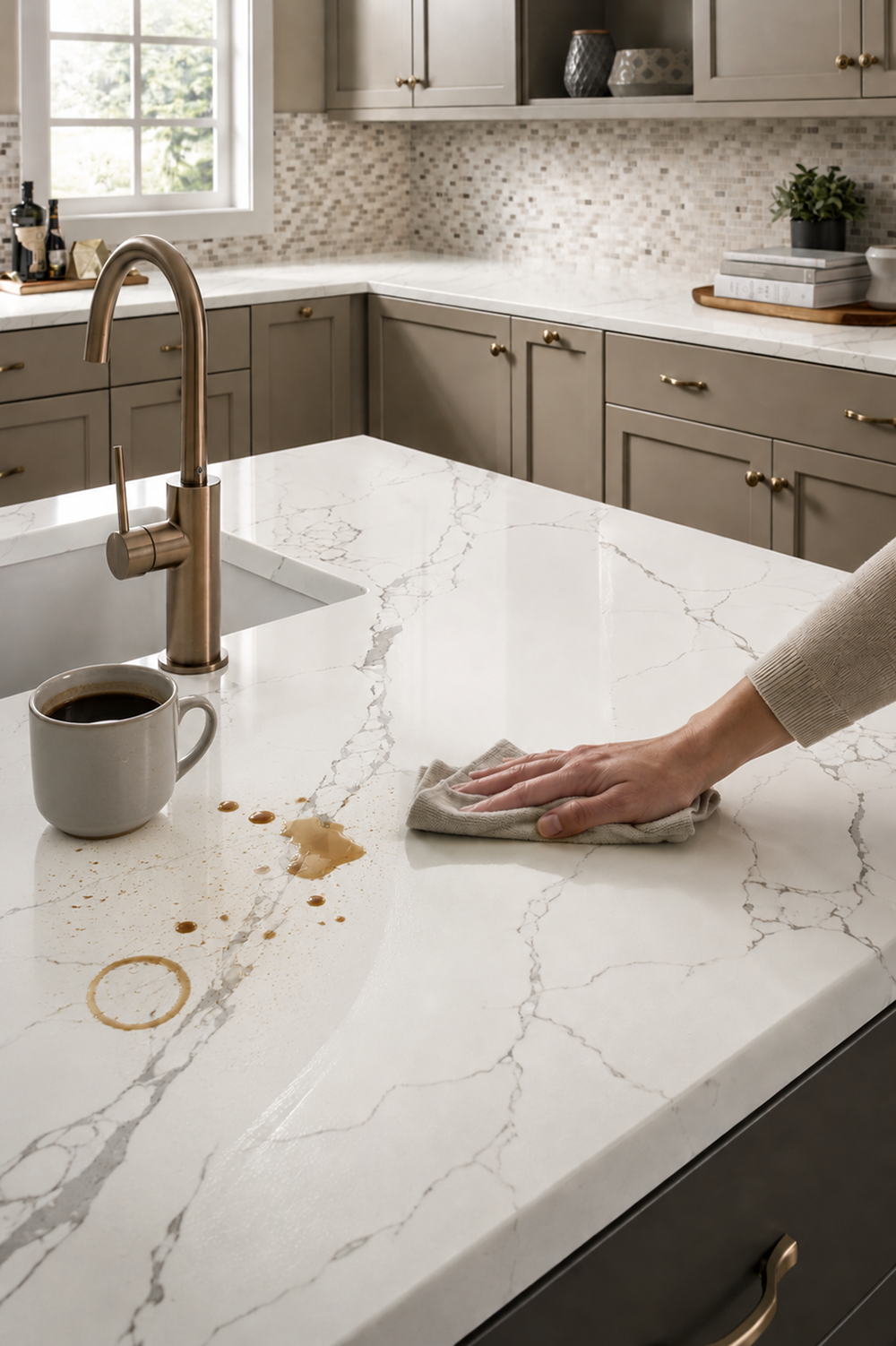
How to Remove Marks from Quartz Countertops (Metal and Scuffs)
Surface marks are to be removed by mechanical means, not chemically. These aren't true stains; they are deposits sitting on the quartz, not soaking into it—think metal transfer from cookware, rubber scuffs from appliances or adhesive residue. These marks are often perceived as streaks that feel a little raised.
It is a process of friction, and it must be done with precision so that the factory finish of the countertop is kept. The goal is to apply enough specific pressure to lift the residue without abrading the resin binder or changing the surface luster. Quartz is an engineered surface with a specific polish at a micron level, and the only way of avoiding leaving a permanent “haze” or dull spot is to use the right tool.
Getting Rid of Metal Transfer
White erasers will often take away gray lines made by metal objects. Rub the mark with a soft eraser in circular motions, the eraser will lift the metal transfer without scratching the quartz. Always try this method on an inconspicuous area to make sure it won’t affect the finish.
Using Melamine Sponges Safely
Melamine sponges can work, but use them carefully. Only use water with these sponges, and use light pressure. The finish will be permanently dulled by over pressure or dry use. Apply in sections and rinse thoroughly after each application. Do not use melamine sponges on gloss finishes unless you test it first.
How to Remove Stubborn Stains (Food, Wine, & Ink)
Sometimes when finding out how to clean quartz countertops stains, you realize standard cleaning is not enough, and you will have to use chemical agents for pigment removal. Quartz is non-porous, so stains like wine, coffee, or ink don’t often penetrate deeply, but the pigment reacts with the resin binder. This generates a "reaction" where the discoloration appears to be embedded, but it's really a chemical interaction at the molecular level. To break these bonds without damaging the surface, you need a solvent that specifically targets the pigment.
The Isopropyl Alcohol Method
Ink and dye stains can be removed with 70% isopropyl alcohol very effectively. This quartz countertop stain removal method works by dissolving pigments safely without damaging the quartz structure beneath.
- Use the alcohol on a soft cloth.
- Dab gently on the affected area.
- Let the solvent work for about 30 seconds, then wipe it off with clean, damp cloth.
Using Baking Soda Paste to Remove Organic Stains
Combine three parts baking soda with one part water to make a paste. Let the mixture sit on the organic stain for 10 minutes. The baking soda removes stains, and its alkalinity breaks the bonds of the pigments. Brush and rinse with water.
Why You Should Not Use Bleach on Dark Quartz
White spots on dark quartz can be caused by bleaching the resin binder with bleach. This effect is permanent and generally requires professional repair or replacement. Always check labels and avoid cleaners with bleach, especially on darker quartz colors.
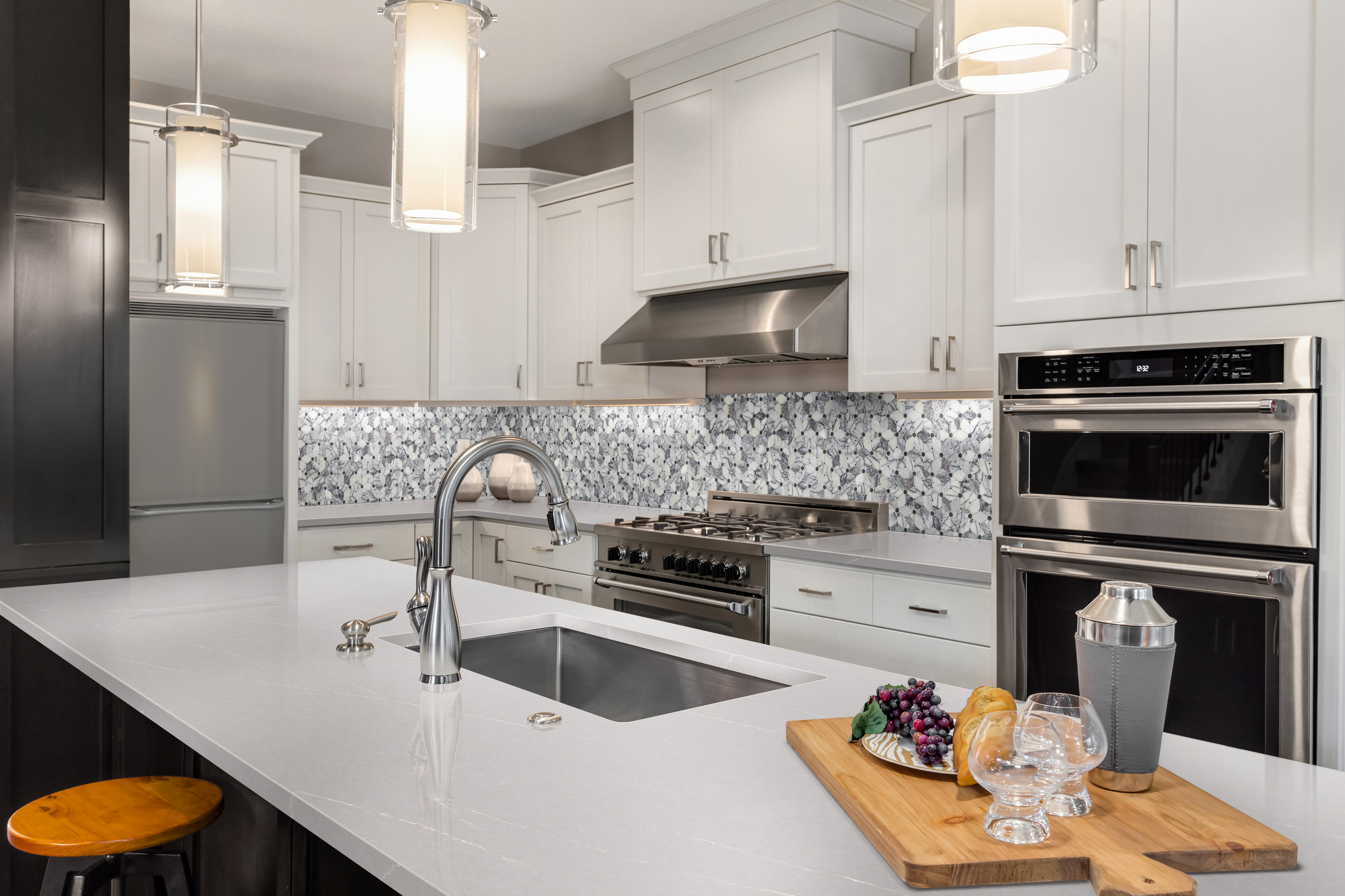
No More Cloudy Film: How to Remove Hard Water Stains from Quartz
A cloudy film or localized spotting is typically caused by a buildup of mineral deposits or soap residue. These marks are often caused by the evaporation of “hard water,” which leaves behind inorganic minerals (like calcium and magnesium) and not physical markings. If left in place, these deposits can calcify into a textured surface that traps dirt and permanently dulls the finish. To fully understand how to clean cloudy quartz countertops, you’ll need to restore the slab to its clear state by neutralizing these deposits without affecting the resin binder.
How to Remove Mineral Deposits with Diluted Vinegar
Mineral scaling happens more often in areas with hard water, which gives a chalky textured appearance. For cloudy quartz countertops, clean and remove these deposits with a diluted vinegar solution (1 part vinegar to 1 part water).
- Application: Use the solution only to the affected areas.
- Time Sensitivity: Do not leave the solution on the surface for more than two minutes, as the acidity can eventually etch the resin.
- Final Step: Rinse well with clean water and dry right away with a microfiber cloth to prevent new spots.
How to remove soap scum and film?
Generally, the whole slab is often cloudy from using too much soap. This buildup creates a microscopic film that attracts dirt and masks the natural luster of the stone. This residue can be removed by rinsing the surface with warm water and rubbing vigorously with a dry cloth. Cut back on the amount of detergent used in daily wipe downs in order to stop it from happening again in the future.
Best Cleaner for Quartz Countertops (Safe & Effective Options)
Choosing the best cleaner for quartz countertops is essential to maintain the structural integrity and factory finish of engineered stone. Quartz surfaces are held together with a resin binder, and the use of incompatible chemicals can lead to permanent surface degradation, “ghosting,” or etching. Using authorized products that are pH neutral will guarantee the surface is free of contaminants and will not affect the long life of the material. This section highlights the solutions particularly tailored for quartz maintenance and draws attention to the high-alkaline and solvent-based substances to prevent irreparable damage.
Safe and Approved Cleaners
The most reliable cleaning performance is achieved by pH-neutral stone cleaners that are specifically labeled quartz-safe. For the overwhelming majority of cases, daily maintenance is simply warm water and a microfiber cloth. Use special cleaners for specific issues or for weekly deep cleaning.
Chemicals That Will Damage Your Quartz
Do not use paint thinner, oven cleaner, or degreasers. They will damage the resin and cause discoloration or etching. Also, stay away from cleaners that contain:
- Pumice
- Steel wool
- Abrasive powders
Why Do Quartz Countertops Get Stains and Water Spots?
Food and Liquid Residue
Left to their own devices, coffee, wine, oils, and sauces all have pigments that will bind to quartz resin. These substances do not enter the surface, but they cause chemical reactions that manifest as discoloration. Immediate cleanup stops these reactions.
Hard Water Mineral Deposits
As the water evaporates, it leaves deposits of calcium and magnesium. These minerals build up over time to form spots and films. The biggest buildup is around faucets and dispensers.
Metal Transfer and Surface Residue
Cookware and appliances can leave marks when pulled across surfaces. Mats, labels, and tools leave a staining-looking residue. The marks are on the surface, not in the material.
Chemical Reactions and Harsh Cleaners
If you have marks on your quartz countertops that you want to remove, you might be tempted to use bleach, but be careful. Bleach and solvents can alter the resin binder, leading to discoloration or “ghosting”. These reactions appear in dark quartz as spots or in lighter quartz as discoloration.
Protecting the Shine: How to Prevent Stains
Keeping it clean is easier with routine maintenance.
The Importance of Trivets and Cutting Boards
The heat can discolor the resin in a way that looks like a stain, but which is actually thermal damage. Use trivets under cooking utensils and cutting boards for food preparation; they prevent damage and scratches that can harbor stains.
Daily Maintenance Routine
Wipe the surface with a cloth, rinse with water, and dry well. This process helps to prevent the formation of residues, deposits, and particles that cause cloudiness.
Maintain the Longevity of Your Quartz
Knowing how to remove stains from quartz countertops is key to protecting the longevity of your investment, making it the best countertop for your money and creating opportunities for eco-friendly quartz countertops. Whether you require maintenance advice or wish to explore collections like Calacatta Lapiza™ with its prominent veining, or IvoriTaj™ with its beige and cream tones, we are ready to assist. Chat with us online or use our Visualizer Tools to find inspiration, visit an MSI showroom to see our collections in person, or find quality quartz countertops from a local retailer near you.
Frequently Asked Questions
Can quartz countertops stain?
Quartz countertops can stain. While quartz is non-porous and resists most stains, some chemical reactions can cause permanent discoloration. Proper cleaning techniques can usually correct surface-level pigment bonding. Chemical damage from bleach or harsh solvents produces irreversible “ghosting” that cannot be corrected with cleaning. Want to learn more about stain-resistance and quartz? Check out MSI’s blog discussing Are Quartz Countertops Stain Resistant?
What stains quartz countertops the worst?
Be on the lookout for high-risk substances such as permanent markers, turmeric, red wine, and strong chemicals like drain cleaner or bleach. The materials contain either strong pigments that bond with the resin, or chemicals that damage the quartz structure itself.
How do you remove a burn mark from quartz?
Burn marks from excessive heat usually need professional restoration, including buffing and refinishing the affected area. Home remedies rarely work because the resin structure (not just the surface appearance) has been thermally damaged.
Why does my white quartz have yellow spots?
White quartz or off-white quartz like Calacatta Castana® can turn yellow due to the accumulation of oil-based residue from cooking or the exposure to UV light over time. Yellowing can also be a sign of thermal damage from too much heat.
Will vinegar ruin my quartz?
A brief application of diluted vinegar to remove hard water spots will not damage quartz, but frequent use or prolonged contact can etch the resin surface. Avoid using vinegar as a daily cleaner for quartz.
Can I use Bar Keepers Friend on quartz?
In extreme cases, you can use the liquid version of Bar Keepers Friend, but test it in an inconspicuous area first. The powder version is abrasive and can cause permanent damage to quartz surfaces.
Why does my quartz look cloudy after cleaning?
Cloudiness is most often due to soap film buildup from too much detergent or mineral deposits in hard water. Meticulous rinsing and proper drying techniques prevent this problem.
How do I remove permanent marker from quartz?
Soak a cotton ball with 70% isopropyl alcohol and dab the marked area gently. The alcohol safely dissolves the marker pigments without harming the quartz surface.
 SHARE
SHARE
 PIN
PIN
 TWEET
TWEET