Quartzite Vs Marble: Which Is Best For Kitchens And Bathrooms?
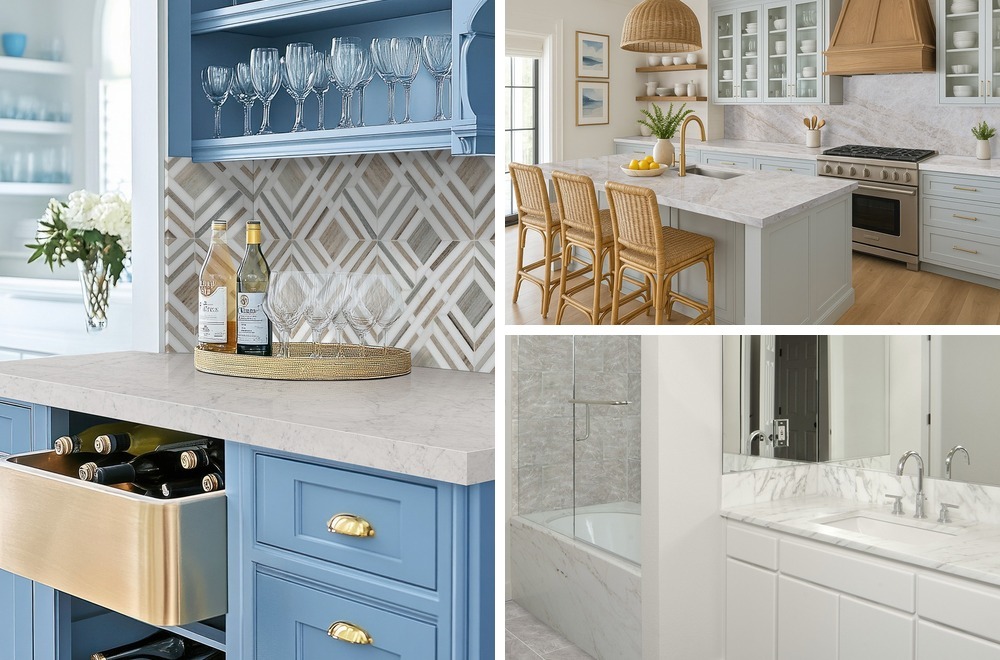
Both quartzite and marble have that smooth, radiant, white-with-veining look that we all associate with luxury kitchens and bathrooms. They may look alike, yet each contributes their own character, maintenance requirements and qualities to a room. When comparing the MSI quartzite countertop collection to the MSI marble countertop collection, consider not just how you want the area to look, but how you use it. You may also explore our granite vs quartzite vs marble comparison to see how these natural stones compare. This guide offers a closer look at durability, upkeep, cost, appearance and the rooms in which each material performs best.
Quartzite vs Marble: at a Glance
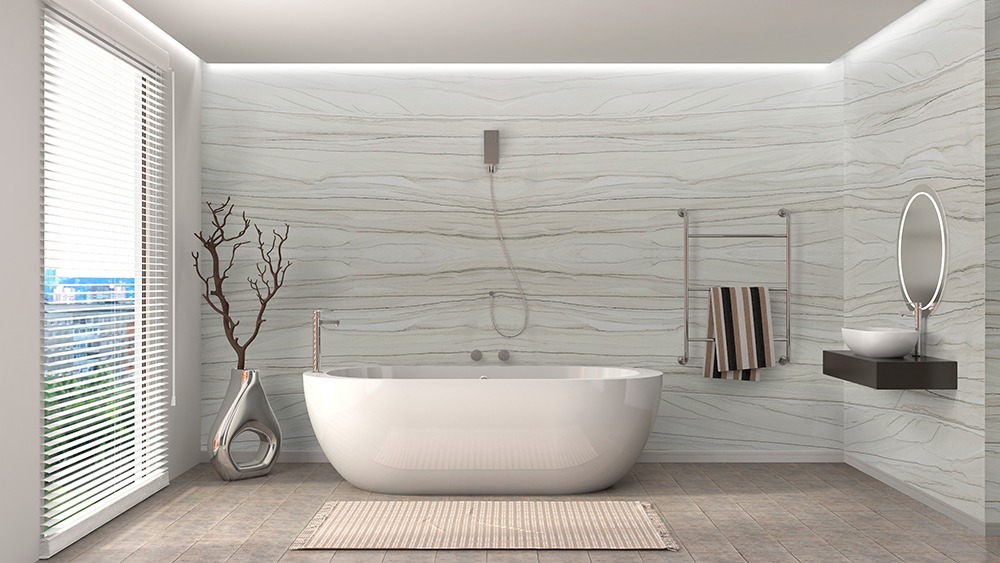
Quartzite is generally the harder choice for kitchens. It earns a 7 on the Mohs hardness scale, the mineralogy grade that runs from 1 to 10, with 10 being diamond, compared to marble's 3-4. It is resistant to scratches and heat and will not etch from acidic spills. Marble still works well in bathrooms, where it is less exposed to acids and its luminous surface is great for quieter, design-focused environments. Quartzite is still the lower-maintenance choice for busy bathrooms.
| Factor | Quartzite | Marble |
|---|---|---|
| Kitchen recommendation | Strong choice | Best for low-traffic or baking-focused kitchens |
| Bathroom recommendation | Excellent | Excellent |
| Hardness (Mohs scale) | 7 | 3–4 |
| Etching risk | None to minimal | High |
| Sealing frequency | Typically, every 2–3 years (per manufacturer / water-bead test) | Typically, every 6–12 months (per manufacturer / water-bead test) |
| Best for | Active households, high-traffic kitchens | Design-forward spaces, bathrooms, baking stations |
What Is Quartzite?
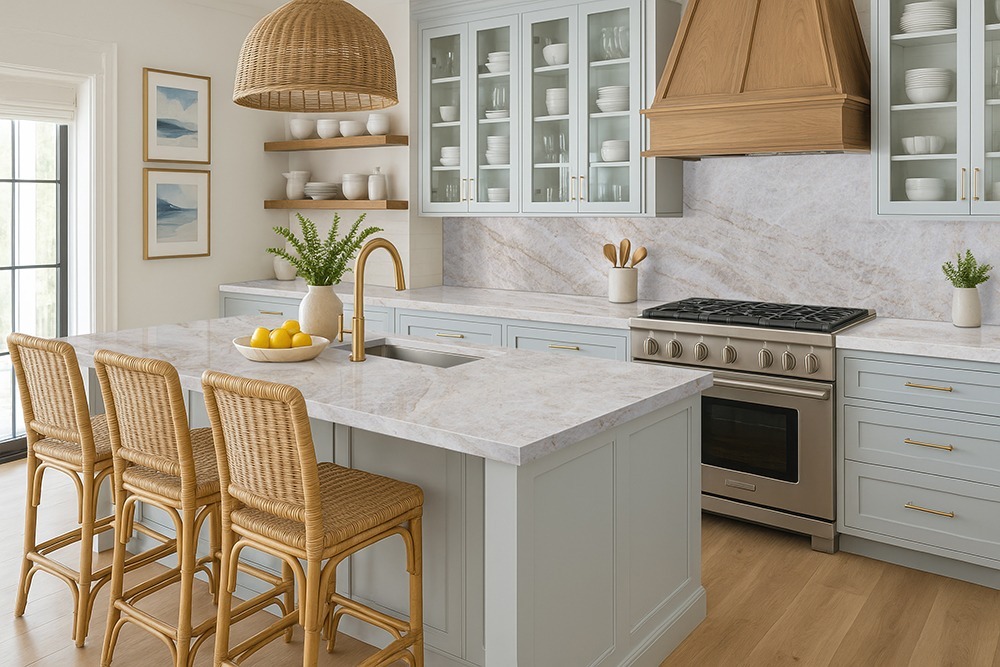
Quartzite is a natural stone that is created by metamorphosis. It starts as sandstone, then high heat and pressure deep in the earth’s crust turn it into a thick, quartz-rich material.
Many quartzites have light backgrounds and gentle veining much like marble. The two can seem quite similar on a showroom slab. Quartz and quartzite, however, are entirely distinct substances. Quartzite is a natural stone, and quartz is a produced, engineered product. Ask for clarification before you commit if a fabricator uses those names interchangeably.
Quartzite comes in several colors and veining patterns, from soft and delicate to extremely spectacular. See what we have to offer in our selection of quartzite countertops.
What Is Marble?
Marble is limestone that has been heated and pressurized over geological time. The calcium carbonate in the stone recrystallizes to create the depth, movement and natural diversity that have made marble a defining material in architecture and interiors for ages.
Its comparative softness also allows fabricators to more easily mold marble into fine edge profiles and elaborate decorations.
Every kind has its own individuality. Carrara White is a traditional, understated style, featuring gentle gray veining on a white base. The white backdrop of Calacatta is accented with more robust gold and gray veining. Statuario marble is a classic stone quarried in a classic location of Italy. With a bright white background and strong gray veining, Statuario marble is a classic. Fantasy Brown provides warmer earthier movement for an entirely different look.
If you need more help picking the correct slab, see our marble countertops buyer’s guide.
Durability and Heat Resistance: The Gap In Performance
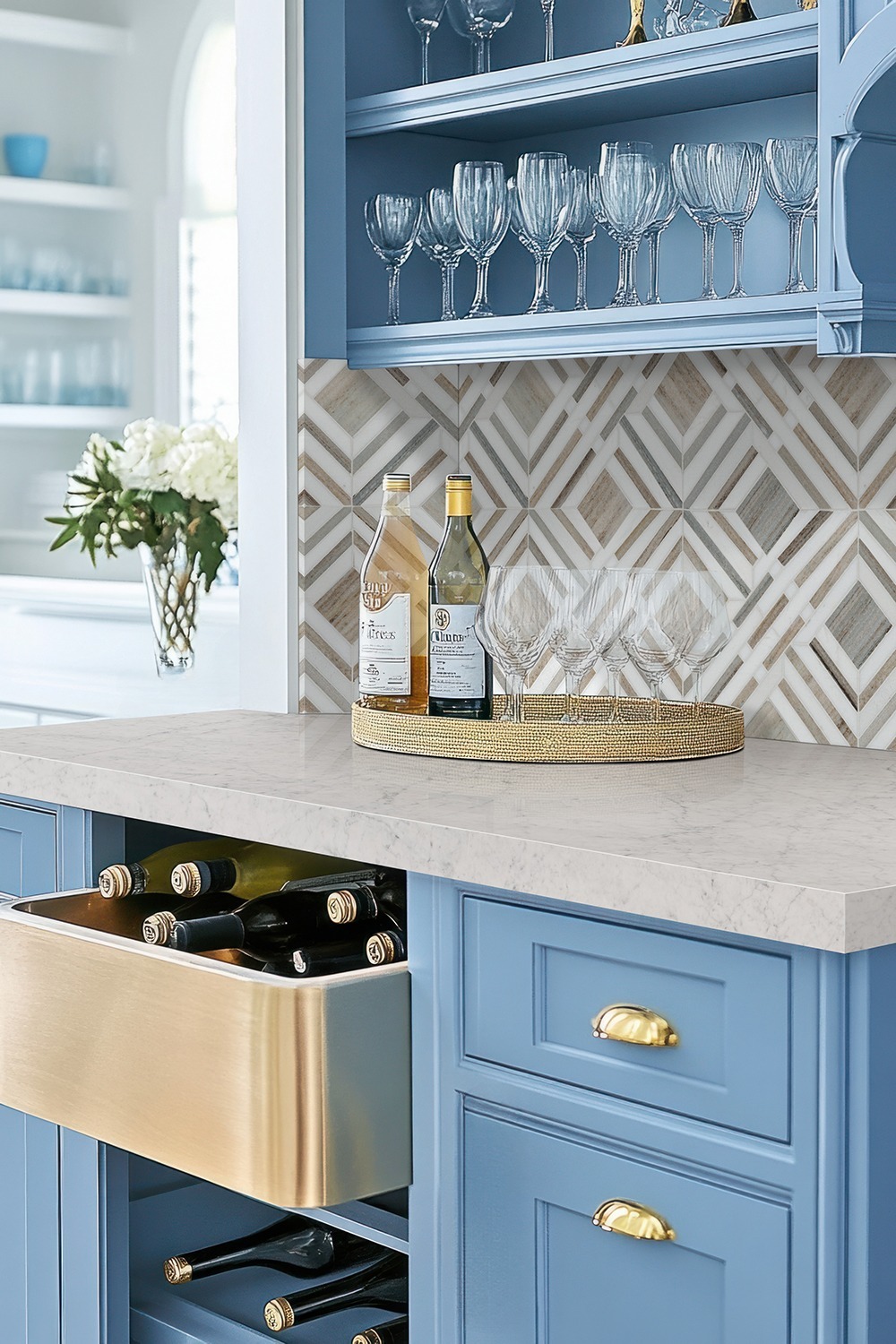
Here the contrasts between quartzite and marble are considerably more evident. Marble has a Mohs hardness of 3 to 4, whereas quartzite has a Mohs hardness of 7. That makes quartzite a clear winner in terms of scratch and ordinary wear on surfaces.
Another key difference is etching. Marble is mostly calcium carbonate, which reacts with acids such as lemon juice, wine, tomato sauce and vinegar. This reaction may cause a dull spot on the surface rather than a regular stain. Quartzite is mostly quartz crystal therefore household acids do not have the same chemical reaction.
Both materials withstand the heat of everyday kitchen use, but trivets are always a good idea for hot cookware and cooktops.
Marble is more likely to display scratches, etching and surface wear with time, while quartzite is more likely to retain its original finish longer.
A Day in the Life: Marble vs Quartzite Maintenance
- Life with Marble Countertops: You mop up a spill of lemon juice or wine right away. Cutting boards, trivets and coasters are part of the usual routine. Very little evidence of wear can, over time, become part of the character of the surface.
- Living With Quartzite Countertops: Cleanup is often more laid back. Most common household spills are dealt with using mild soap and water and the surface normally requires little maintenance during normal cooking and entertaining.
| Maintenance Factor | Marble | Quartzite |
|---|---|---|
| Sealing frequency | Typically every 6–12 months, per manufacturer / water-bead test | Typically every 2–3 years, per manufacturer / water-bead test |
| Daily cleaning | pH-neutral cleaner | Mild soap and water |
| Spill response | Prompt cleanup recommended | Normal cleanup |
| Scratch risk | High, cutting boards required | Low, cutting boards still sensible |
| Heat tolerance | Moderate, trivets recommended | High, more forgiving with hot cookware |
| Surface aging | Develops visible character over time | Maintains its original appearance longer |
Some homeowners like how marble aged. Soft etching and surface wear can become part of the character of the stone as time goes by. For advice on caring for the surface, visit our guide to marble countertop maintenance.
Veining, Movement, & Visual Drama
Mineral impurities compressed during metamorphosis create the signature veining of marble — organic, fluid, unpredictable patterns that have characterized luxury design for millennia. Every slab is unique. The subtle gray strokes of Carrara White marble make carrara marble kitchen countertops a traditional choice. If you’re looking for a stronger palette, black marble kitchen countertops are a dramatic choice, while Fantasy Brown marble provides softer, earthier movement for contemporary rooms.
The veining is formed from iron oxide, mica and other trace minerals as sandstone changes to quartzite. Patterns appear more linear and layered, yet dramatic variants can equal the movement of marble in actual installations. White quartzite kitchen countertops are a compelling alternative to marble with names such as Taj Mahal, Sea Pearl and White Macaubas. In side-by-side showroom comparisons, most customers can’t identify the difference at first glance.
Marble has a visual edge under direct light, when modest translucency provides depth and luminosity, quartzite doesn’t quite match the same manner. Marble remains the benchmark whether you’re after maximum visual flair in a bold Calacatta or classic Statuario marble installation. However, for a quartzite kitchen where performance counts, the best forms of quartzite give you the protection you need, with the style you want.
Is Taj Mahal a Quartzite or Marble?
Taj Mahal is made of quartzite, not marble. The misconception is largely because of its appearance. Its delicate flowing veining on a warm white backdrop can appear astonishingly like common marble variations.
The nomenclature is another source of uncertainty. Historically, dealers have used the term “marble” quite indiscriminately to describe white-veined natural stone even when the stone is made up of several minerals.
That difference important when buying for Taj Mahal versus Carrara or another marble. They may look identical yet they are different natural stones with different qualities. The practical advantage of Taj Mahal quartzite kitchen countertops is evident. The stone is a better match for active kitchens than a similar-looking marble because of its Mohs 7 hardness and substantial resistance to scratches and acid etching.
Taj Mahal quartzite is one of the most popular natural stone selections in our collection. Explore design pairings and slab shapes in our ultimate guide to Taj Mahal quartzite.
Cost Comparison: Initial vs Long-Term
For a sensible quartzite vs marble price comparison, consider both the slab itself and the upkeep it may require over time.
- Initial Cost: Pricing depends on the stone type, where it is sourced, its availability, pattern and local market. A marble-look quartzite may be priced near easily available marbles at equal levels of visual quality, such as Taj Mahal to Carrara. Rare Calacatta marbles and unusual quartzites can also command premium prices. Don’t assume one material is higher cost, compare the actual slabs you’re looking at.
- Long-Term Costs: Marble could incur more maintenance expenditures over time because it requires more frequent sealing and sometimes professional honing. Quartzite is normally less upkeep on the surface, which means you will have less chance of having to pay for refinishing down the road. A 6 to 12 month marble sealing schedule over a 10 year term of ownership can equate to approximately 10 to 20 sealing cycles vs about 3 to 5 cycles for quartzite on a 2 to 3 year schedule before any marble honing or repolishing is required.
- Quartzite vs. Marble Resale Value: Both of these materials are able to create the look and feel of luxury natural stone. Quartzite may appeal to purchasers who value its pragmatism, whereas marble can be especially attractive in design-driven areas. For more information on budget and materials, check our countertop selection guide.
Quartzite vs. Marble for Kitchens
Quartzite vs Marble for Kitchen Countertops: The Verdict
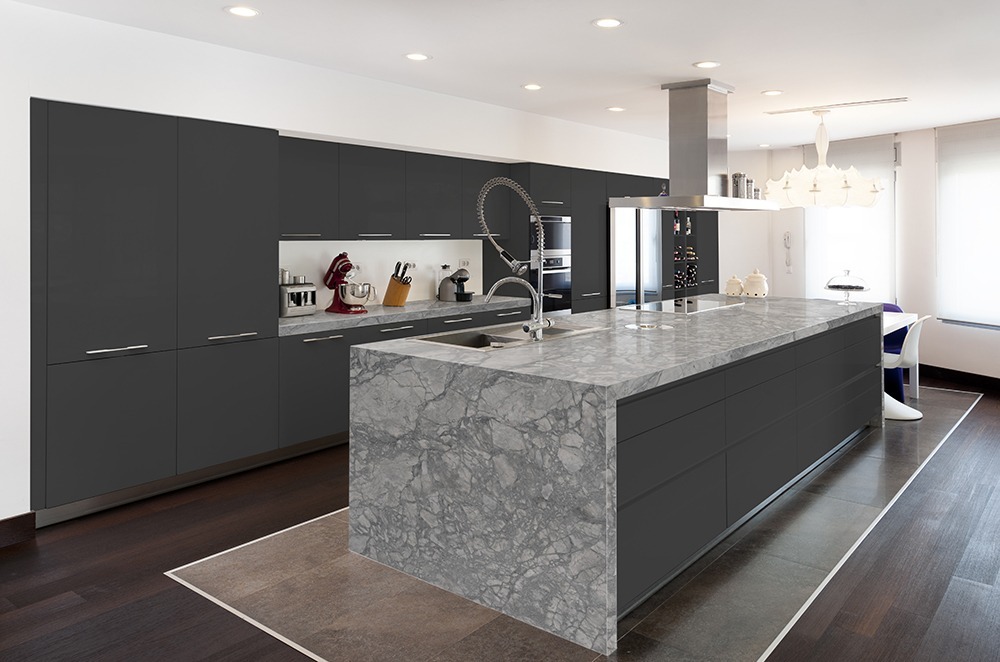
Quartzite is the more practical choice for most active kitchens. Quartzite kitchen countertops is especially good for homes where the counters will see consistent use for cooking, entertaining, and everyday life.
Marble still has a place in some kitchens:
- Low-Traffic Kitchens: Marble might be a good choice for homes with lower kitchen traffic and owners who are willing to pay a bit more care to the surface.
- Baking Stations: Many bakers prefer the natural cool surface of marble for rolling and preparing dough.
You can also combine both. Quartzite can handle the primary work surfaces, while marble lends its particular character to a dedicated baking island or similar lower-use area.
Quartzite vs Marble for Bathrooms
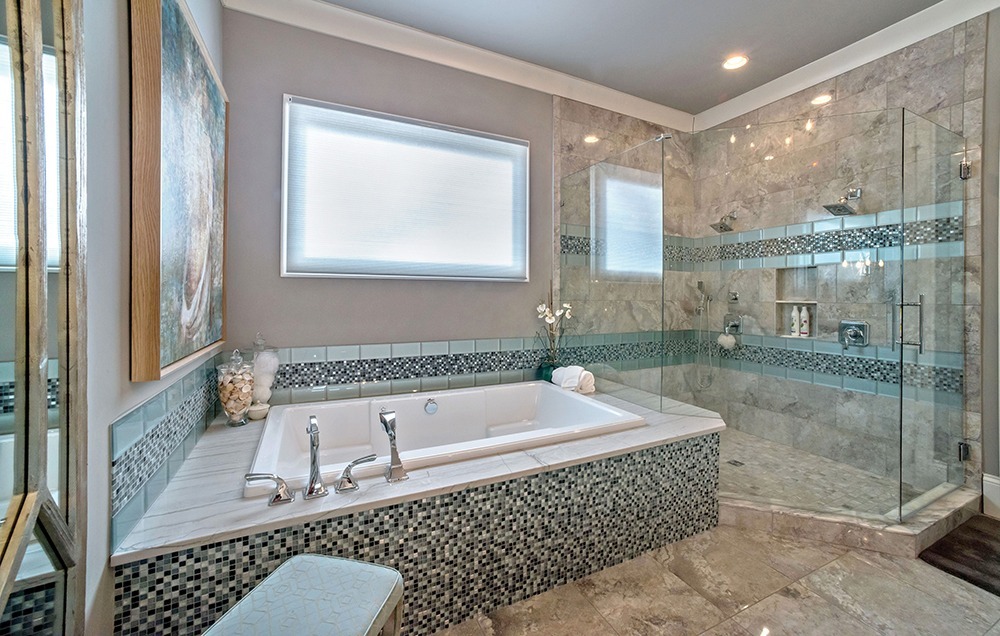
The selection between quartzite and marble is different in a bathroom since many of the stresses seen in a working kitchen just aren’t there.
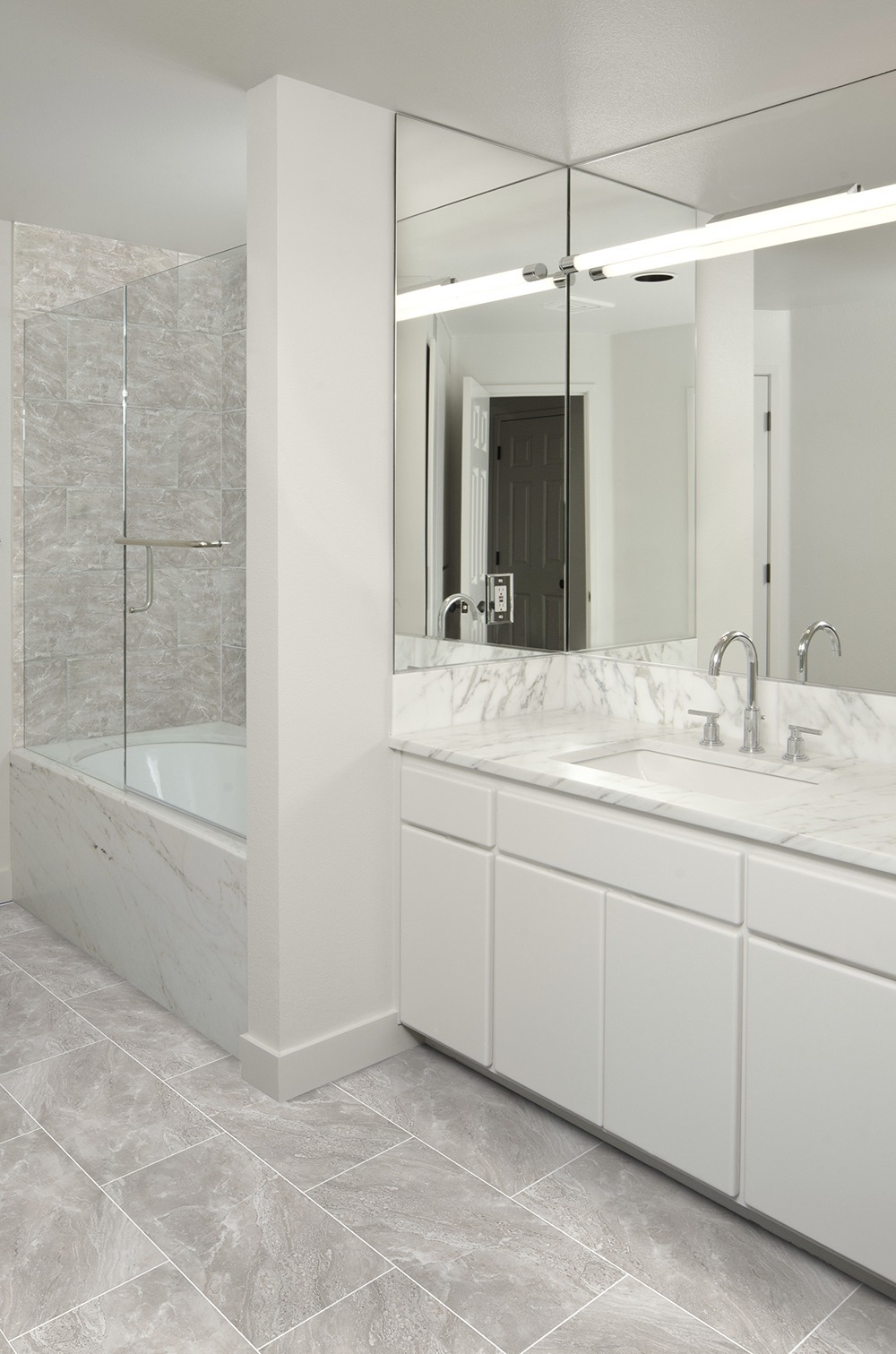
Marble may be a particularly powerful design choice for powder rooms and principal bathroom vanities where its depth, veining and gentle glow can become a center of attention.
Quartzite is also a sensible solution for busy family bathrooms, kids’ quarters or for homeowners who choose to utilize the same lower-maintenance natural stone throughout the house. In bathrooms, appearance, traffic and maintenance choice are sometimes of greater importance than durability alone.
What Is the Most Popular Countertop Right Now?
Among natural stone options for kitchens, white quartzites, softly veined and led by Taj Mahal, are widely requested by homeowners. Their warm whites and gentle movement blend seamlessly with many of the light, natural interior palettes of today.
Engineered quartz remains a popular alternative, especially for homeowners wanting a constructed surface that is easy to care for. Quartzite is a top choice among natural stones for high-end kitchen renovations, while marble is a favorite in design-centric areas, traditional interiors and chic bathroom vanities.
Quartzite vs. Marble: Full Comparison Table
Here’s a side-by-side look at the quartzite vs marble countertops comparison, looking at the variables that matter most:
| Factor | Quartzite | Marble |
|---|---|---|
| Composition | Metamorphosed sandstone, quartz-rich | Metamorphosed limestone, calcium carbonate |
| Mohs Hardness | 7 | 3–4 |
| Etching Risk | None to minimal | High, reacts with acids |
| Scratch Resistance | Excellent | Moderate, cutting boards recommended |
| Heat Resistance | Excellent | Good, trivets recommended |
| Sealing Frequency | Every 2–3 years | Every 6–12 months |
| Daily Cleaning | Mild soap and water | pH-neutral cleaner |
| Veining Style | Often linear or stratified, with some varieties resembling marble | Organic, flowing, classic |
| Best For | Kitchens, high-traffic areas, active households | Bathrooms, low-traffic kitchens, baking stations |
| Upfront Cost | Comparable to marble at similar tiers | Comparable to quartzite at similar tiers |
| Long-Term Maintenance | Lower ongoing maintenance | More frequent maintenance with potential honing |
| Patina Development | Tends to retain its original appearance longer | Develops visible character over time |
Which One Is Right for You?
Choose quartzite if:
- You cook a lot with acidic foods and require good etch resistance.
- You are living in a busy home. The kitchen gets used on a daily basis.
- You want the beauty of marble with less demanding daily care.
- You want to have heat and scratch tolerance near cooking zones.
Choose marble if:
- You bake often and like a cool-feeling surface for kneading dough.
- You’re building a low-traffic kitchen or a modern-day bathroom vanity.
- You like natural stone to create its own patina as it matures.
- You adore the depth and history that real marble brings.
Choose both if: You want to put each material where it will work best. Think quartzite for your main kitchen counters and marble for a bathroom vanity or a separate baking island. Try out the MSI countertop visualizer to play with different slab patterns in your room layout and get a sense of how these surfaces would look in different settings.
Ready to Pick? Let's Find The Perfect Stone
Quartzite is for durability, marble is for traditional elegance, but the perfect stone is about your daily routines and your design vision. And when deciding between quartzite versus marble for your project, seeing the slabs in person might be a game changer. MSI carries a large selection of quartzite and marble counter tops including the Taj Mahal quartzite. Visit an authorized dealer or MSI showroom to view natural stone possibilities under realistic lighting or contact us to assist you with your fabrication and installation selections.
Frequently Asked Questions
Quick terminology note: quartzite is natural stone, quartz is a manufactured surface. Read our quartzite vs. quartz countertops guide for more information.
Which is more expensive, quartzite or marble?
Neither stone is necessarily more expensive. Prices are in line with the slab’s rarity and origin. Carrara, and famous quartzites such as Taj Mahal, are in a similar price range to start with. Rare Calacatta marbles and unusual quartzites are more expensive. Marble also tends to be more expensive to maintain over time since it requires more frequent sealing and, sometimes, expert honing.
H3: Is Taj Mahal made of quartzite or marble?
Taj Mahal is made of quartzite. It is a metamorphic sandstone, has a Mohs hardness of 7, and is very resistant to acid etching. The mineral composition is totally quartzite; however, the smooth veining and warm white background remind of marble. The look is puzzling.
H3: What is the current trend in countertops?
We have natural stone countertops that are popular for marble-look quartzite, notably Taj Mahal and other white-veined types. It offers the beauty of marble, with the durability busy kitchens require.
H3: Is Marble less durable than Quartzite?
Yes. Quartzite has a Mohs hardness of 7, which is harder than marble (Mohs hardness 3-4). It is harder to scratch than marble and will not be etched by household acids like lemon juice or vinegar.
H3: Quartzite vs marble: which is better for a bathroom?
It depends on the bathroom. Since bathrooms negate most kitchen acid and hot-cookware exposures, marble often becomes the more design-appropriate choice for powder rooms and principal vanities. Quartzite is still a good choice for high traffic family bathrooms, kids’ areas or if you want the same low maintenance stone throughout the home. Regardless, clean up standing water, handle acidic skincare products gently on marble, and reseal per sealer manufacturer and a water-bead test.
 SHARE
 PIN
 TWEET