Porcelain Slab Thickness Guide: 6Mm Vs 12Mm Vs 20Mm Explained
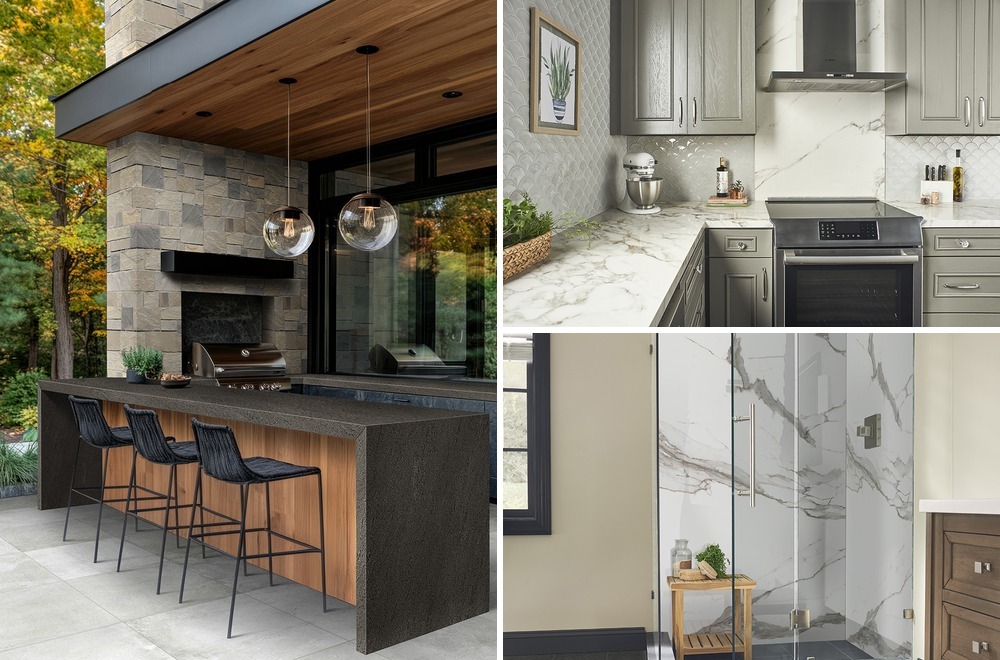
Porcelain slabs thickness is one of the most important decisions in any tile specification. Take your time, and the install will be good for decades. If you mess that up, there is no glue, no substrate and no manufacturing process that will make up for it. There are three commercial porcelain slab thicknesses categories, which correspond to three thicknesses of porcelain slabs: 6mm thickness for vertical and ornamental surfaces, 12mm thickness for countertops and indoor floors and 20mm thickness for outdoor and heavy-duty uses. Each has weight-per-square-foot values, substrate requirements and manufacturing capabilities that influence project outcomes.
What is the true thickness of porcelain slabs, then? The solution is always application-driven—and this guide explains every variable across all three grades, including substrate requirements, manufacturing thresholds and the specification checkpoints that separate a clean installation from a costly site problem.
| Thickness | Inches | Weight (lbs./sf) | Primary Use | Porcelain Slab Thickness / Typical Porcelain Tile Thickness |
|---|---|---|---|---|
| 6mm | ¼ in | ~7–7.5 | Walls, backsplash, furniture cladding | Porcelain wall tile thickness |
| 12mm | ½ in | ~14–16 | Countertops, vanities, interior floors | Porcelain countertop thickness / porcelain floor tile thickness |
| 20mm | ¾ in | ~25–27 | Outdoor, commercial, high-traffic floors | Outdoor porcelain tile thickness / porcelain pavers thickness |
How Does Porcelain tile Thickness Affect Performance?
Thickness controls three things: the amount of structural load it can support, manufacturing options such as edge profiles and unsupported overhangs, and the installation process for long term performance. The essential material specification remains the same. All three thicknesses are water absorption <=0.5% , UV stable , non porous, and heat resistant: these properties are intrinsic to porcelain itself.
BIa porcelain slabs shall be tested to a minimum breaking strength of ≥1,300 N (for tiles ≥9,000 mm2) and have a water absorption of ≤0.5%; ANSI A137.1 demands the same water absorption of ≤0.5% but with a minimum breaking strength of 250 lbf (1,112 N), for residential floor tile, regardless of thickness. Material engineering assessment is key to understanding distinction between full body porcelain slab countertops and other types of composition. Flexural strength increases with thickness: 6mm = ~40-45 N/mm2, 12mm = ~45-50 N/mm2, 20mm = 50+ N/mm2. Weight ranges from roughly 6mm at 7 lbs./sf to 20mm at 27 lbs./sf. 12mm is the practical structural minimum for spans exceeding 36” on a countertop without continuous support below (per TCNA installation guidelines).
Porcelain Wall Tile Thickness — 6mm Spec Profile and Uses
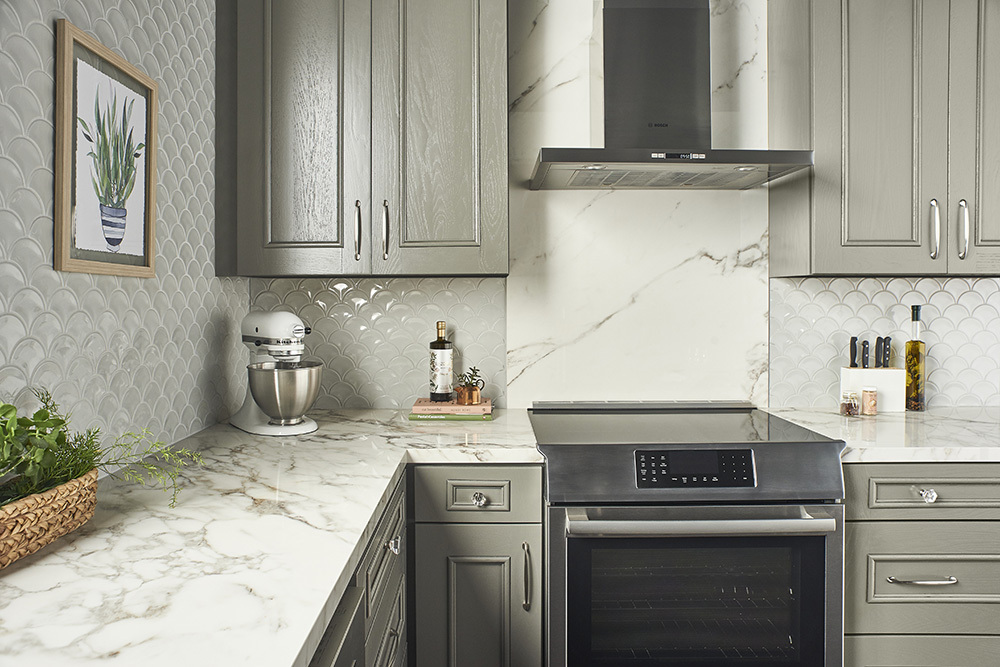
The thinnest standard grade of porcelain slab is six millimeters (approximately ¼ inch) and is intended for vertical and decorative applications where load bearing is not a factor. The primary advantage is the low mass: large panels which would be impracticable at 12mm are practical at 6mm.
Best Uses for 6mm Slabs
This grade of porcelain wall tile thickness is typically used for interior and exterior feature wall cladding. Applications include cabinet door overlays, furniture cladding, fireplace surrounds, and huge kitchen or bathroom backsplashes when bulk, rather than structural load, is the controlling variable. This ultra-thin porcelain wall tile thickness allows designers to deliver beautiful stone effects on vertical walls with no adjustment to structural framing.
6mm offers the complete visual impact for floor-to-ceiling wall coverage and the lightweight handling advantage is most apparent on project sites with limited elevator access.
You can't use 6mm as a countertop or floor surface. Any horizontal application with a 6mm profile will be structurally mismatched without suitable flexural resistance to horizontal point loads, irrespective of substrate rigidity.
Weight, Format, and Dimensions
- Approximate weight: 7.0–7.5 lbs. per square foot — roughly half the mass of a 12mm equivalent
- Common slab formats: 48×96 in, 60×120 in, up to 120×240 in
- Nominal thickness: ¼ inch (6.35mm)
Notes on Substrate & Installation
- Wall flatness: maximum 3mm deviation over a 2-meter span
- Adhesive: flexible thin-bed mortar meeting the full ANSI A118.11 standard (equivalent to EN 12004 Type C2)
- Field cuts: angle grinder with a diamond blade — no heavy tile saw required
- Overhang: zero — 6mm should never be installed at a leading horizontal edge
12mm Porcelain Countertop Thickness Spec Profile and Applications
Best Uses for 12mm Slabs
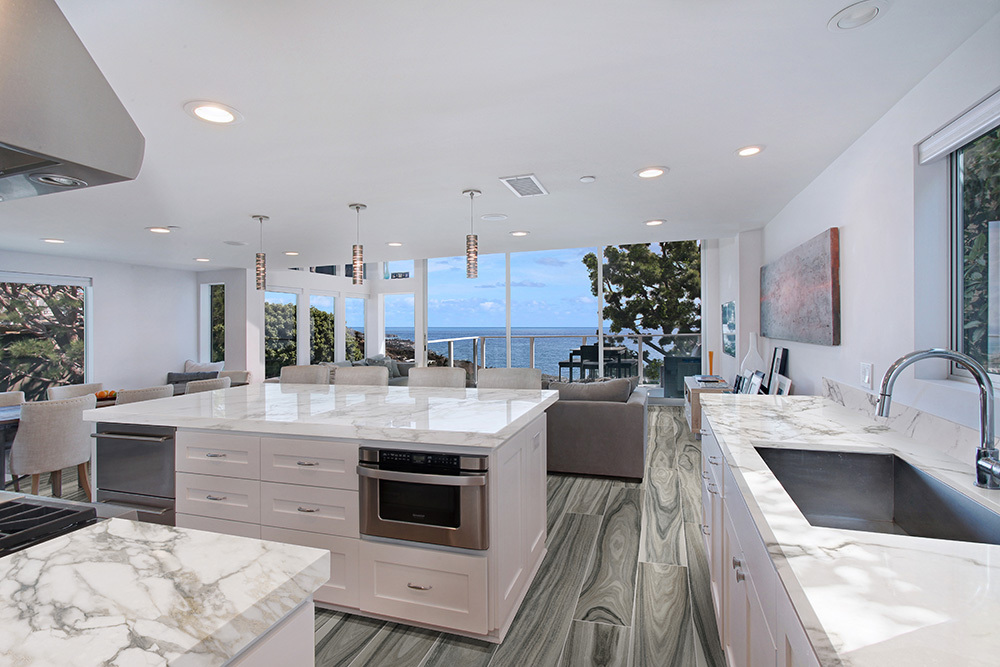
The most frequent specification is twelve millimeters. No other grade offers the blend of durability, weight and fabrication capability that it does. So, when talking about porcelain countertop thickness, this is where we almost always start. For additional design and application options, explore MSI’s Stile porcelain countertop collections.
For a house kitchen makeover, you should be looking at 12mm. It can be used every day on countertops, supports mitered edge profiles and keeps the installed weight within the structural range of a standard cabinet frame. Porcelain floor tile thickness of 12mm is accepted as the minimum for any residential interior floor installation, regardless of the level of anticipated usage.
Weight and format:
- Approximate weight: 14–16 lbs. per square foot
- Common slab formats: 60×120 in, 120×240 in
- Nominal thickness: ½ inch (12.7mm)
12mm is also used for bathroom vanities, hospitality and multi-family countertop installations and interior medium-traffic commercial flooring – restaurants, offices, retail spaces. Beyond kitchens, it’s also the right specification for porcelain slab for shower renovation projects, offering smooth, low-maintenance wet room walls.
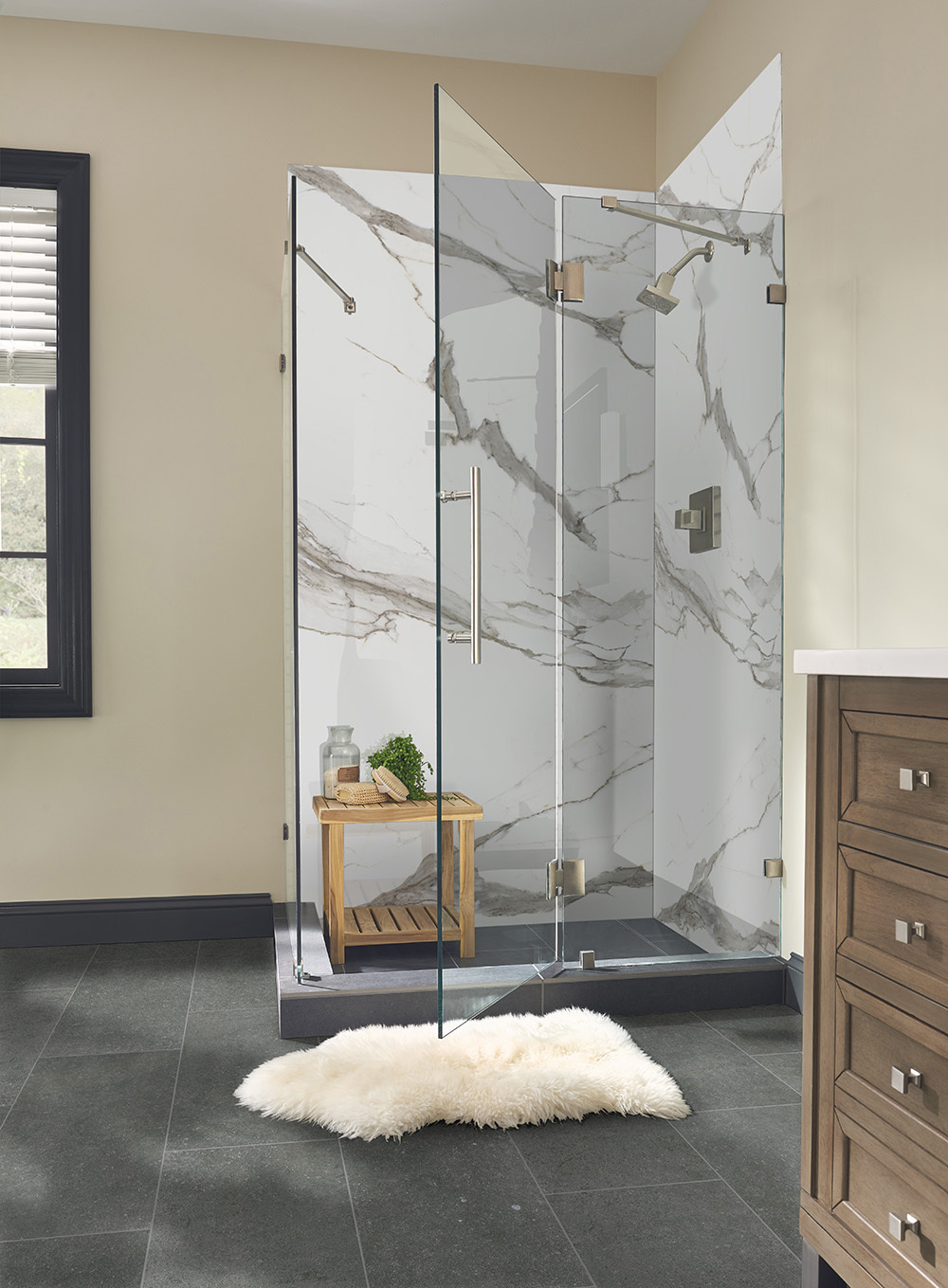
Statuario Bari Matte Porcelain
Fabrication reality of edge profiling:
Minimum mitered edge fabrication is 12 mm (0.47”). The typical waterfall style edges on countertops and islands are created by mitering two 12mm thick slabs at a 45° angle to create a 24mm visible edge profile, which looks very similar to a big natural stone slab. You can't make clean miters just by cutting the field, you need a CNC waterjet or bridge saw. Maximum overhang without corbeling is 6 to 8 in. Refer to the specs for each particular slab.
Notes on installation:
- Countertop substrate: 3/4-inch minimum plywood supported every 18-in.; silicone setting bed; movement joints caulked per TCNA EJ171 at all transitions
- Interior floor mortar bed: 3/8–½ inch flexible thin set per ANSI A118.4 or A118.11
- Large-format slabs (≥60×120 in): back-butter the slab and run an anti-lippage clip system throughout
Outdoor Porcelain Tile Thickness and Porcelain Pavers Thickness — 20mm Spec Profile
The typical maximum thickness is 20 mm, and the grade is designed for places where the principal requirements are impact resistance, outdoor weathering and constant foot traffic. In the 20mm category, the outdoor Arterra Pavers porcelain tiles' thickness is itself defined. Porcelain pavers thickness is the only viable alternative at this grade for external exposed installations.
Weight and format:
- Approximate weight: 25–27 lbs. per square foot — nearly four times the mass of a 6mm panel
- Common formats: 60×60 cm, 60×120 cm
- Nominal thickness: ¾ inch (19–20mm)
Outdoor Porcelain Tile Thickness Applications Where 20mm Slabs Are Specified
Outdoor kitchen counters & islands, patio flooring, pool areas installations on terraces, business lobbies, hotel corridors, high traffic retail floors and raised access flooring systems where sustained pedestrian pressure is a baseline condition that requires 20mm.
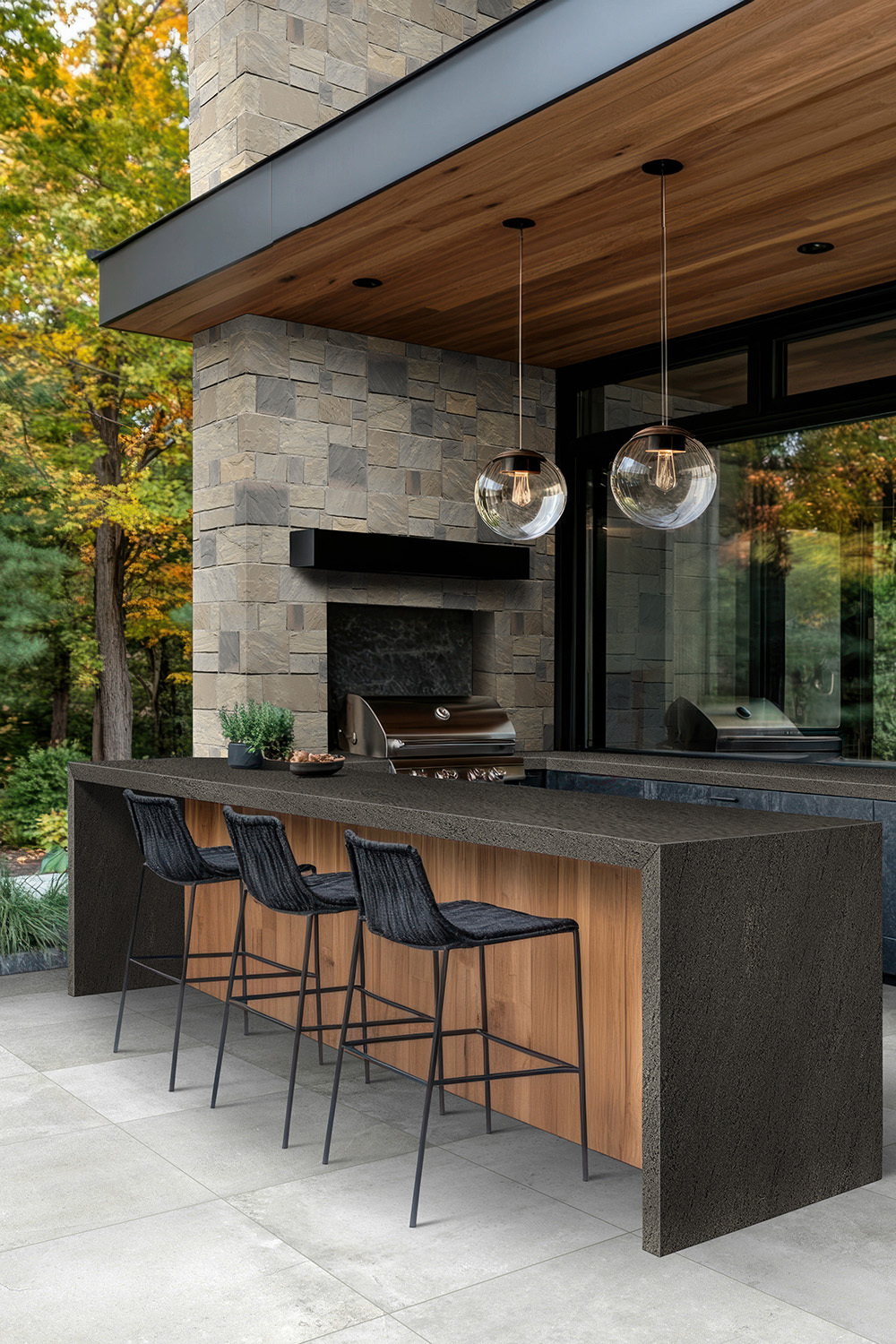
The outdoor kitchen island has Basaltina Nera Matte porcelain slabs in a charcoal, concrete-inspired color, with a PEI 4 rating for heavy residential and light commercial use, offering the necessary load capacity and weather resistance for external applications.
Climate Performance and Slip Resistance
The main advantage of this thickness is frost resistance. 20mm porcelain is resistant to the freeze-thaw cycling as defined by EN ISO 10545-12 / ASTM C1026 and is therefore the ideal choice for installations in the north and in the mountains. Color stability is absolute, and over time no change can be seen from UV exposure.
ANSI B101.3 – the standard for slip-resistance of commercial wet-area flooring – requires that the majority of 20mm outdoor porcelain have a Dynamic Coefficient of Friction (DCOF) of ≥0.42 in wet situations. ASTM C1026 freeze-thaw certification. It’s not an optional step, but an important confirmation before ordering for cold-climate projects.
Notes on outside installation:
- Bedded installation (patios/terraces): 40 – 50mm compacted sand-cement mortar bed
- Gravel-set installation: Direct-set on 4 to 6 inches of compacted gravel, glue not necessary
- Interior commercial: 3/8-inch flexible thin placed on a minimum 4-inch reinforced concrete slab.
- Freeze-prone climates: verify ASTM C1026 certification before specifying; refer to the spec sheet, not the actual test report
6mm vs 12mm vs 20mm — Side-by-Side Comparison
The table below matches normal porcelain tile thickness to Large format porcelain floor tile thickness: any slab 60x120 inches or greater installed on floors require 12mm minimum regardless of predicted traffic intensity, and anti-lippage compliance, not adhesive selection, is the dominating installation variable.
Specifier Note: For countertops, commercial flooring, or projects requiring LEED documentation, and for spans greater than 36 inches, please contact the MSI team directly.
| Spec | 6mm | 12mm | 20mm |
|---|---|---|---|
| Weight (lbs./sf) | ~7–7.5 | ~14–16 | ~25–27 |
| Thickness (inches) | ¼ in | ½ in | ¾ in |
| Primary Use | Walls, backsplash, furniture | Countertops, vanities, interior floors | Outdoor, commercial, high-traffic |
| Mitered Edge | ✗ | ✓ | ✓ limited |
| Mortar/Adhesive | 3–5mm thin-bed | 3/8–½ in thinset | 40–50mm mortar bed (exterior) |
| Freeze-Thaw Outdoor | ✗ | Limited | ✓ EN 12371 rated |
| Relative Cost | $ | $$ | $$$ |
Mortar Thickness for Porcelain Tile — Substrate Demands That Determine Results
Mortar thickness for porcelain tile is no secondary topic — a faulty mortar bed results in cracking regardless of what slab thickness is utilized, a fact that the TCNA Handbook addresses as the governing rule for all porcelain installation work. For proper bonding, limits of substrate deformation and coverage of mortar trowel, general contractors and tile setters should consult our entire porcelain slab floor installation guide.
Wall — 6mm: Max wall deviation is 3mm x 2m. Flexible adhesive conforms to ANSI A118.11 (Type C2 to EN 12004). No mechanical fasteners are required for residential setups ≤120 sf.
Interior Floor — 12mm: 12mm Deflection of substrate shall not exceed L/360. Use thin-set mortar per ANSI A118.4 or A118.11. Large-format installations go wrong when the checklist is overlooked – here is where anti-lippage clip devices are necessary for slabs ≥60cm in each dimension.
Countertop — 12mm: 3/4″ plywood @ 18″ support centers Silicone Building Plate and caulked all around the perimeter and field transitions at movement joints per TCNA EJ171.
Exterior Floor — 20mm: 40 to 50 mm compacted sand cement base or minimum 4-inch reinforced concrete slab. The sealant should be rated for frost. No exceptions for drainage. Minimum 1/8″ per foot. No pooling.
Using a 6mm slab on an under-stiff wall, or a 12mm countertop on under supported plywood, raises risk of structural collapse that no choice of adhesives can fix. Before any slabs are laid, ensure the substrate is correct.
Does Thickness of Porcelain Tile Matter — How to Select the Correct Specification
Yes, unconditionally. Thickness is the primary specification variable in determining application suitability, fabrication possibilities and installed output. The thickness of porcelain tile does matter in edge profiling. Mitered edges, waterfall islands and CNC contoured countertop edges are only available at 12mm and higher. If you’re still unsure, here’s the breakdown by project type:
- Vertical wall / backsplash / feature wall → 6mm
- Residential kitchen countertop → 12mm
- Commercial kitchen / heavy-use countertop → 12mm with reinforcement, or 20mm
- Bathroom vanity → 12mm (or 6mm overlay over an existing substrate)
- Residential interior flooring → 12mm minimum
- Outdoor patio / pool surround / terrace → 20mm
- Freeze-thaw climate, exterior installation → 20mm only
- Large-format slab (≥60×120 in) on floors → 12mm minimum
Wall mounted vertical applications exceeding 100 sf in 12mm or 20mm require confirmation of wall framing structural load before finalization of specification. In the case of choosing the thickness of large format porcelain tiles for flooring, anti-lippage compliance is the controlling installation variable—not the choice of adhesive.
Before you define a complete design preview, explore slab layouts in real room scenarios with MSI porcelain slab visualizer. When you’re ready to begin exploring your premium surface options, check out our full range of MSI countertop collection or consult with an expert to help you select the best material for your space.
Standard Porcelain Tile Thickness — B2B Spec Validation Checklist for Fabricators and Contractors
Thickness Tolerance: Ask for the mill certificate, not the product specification sheet. Floor grade material tolerance ±0.5mm (ISO 13006 Grade BIa) Wall grade tolerance ±1.0mm. Those figures matter when large-format anti-lippage compliance is on the table.
Water Absorption Certification: For countertop food contact surfaces, water absorption ≤0.5% per ISO 10545-3 is required. A spec sheet reference is not a substitute for the actual test report.
Flexural Strength: Test Results Full per ISO 10545-4 or ANSI A137.1, not a spec sheet with a target value. Test data is documented. Claimed targets aren't.
Warpage Tolerance: For big format anti-lippage conformance, the governing number is less than 0.5 % of the longest dimension per ISO 10545-8.
Food Safety: FDA compliant for food contact must be proved for matte and textured countertop finishes. Confirm with supplier before to specification not when material is on site.
LEED v4 MR Credit: Building Product Disclosure When submitting your RFQ, include Porcelain slabs in the Ask for a Health Product Declaration (HPD) or Declare label to ensure your project meets the minimum LEED-certified porcelain slab specifications.
Lead Time by Thickness: 6mm and 12mm are typically stocked locally, including our Architecta large format porcelain tile. Architecta, our large-format porcelain range, offers architects and commercial project teams more options in specifications. Meanwhile, 20mm molds might take between 2 and 4 weeks to make depending on the format and finish you have chosen - so factor this into your project program to avoid site delays.
Bringing It All Together
Three layers. Three distinct performance envelopes. The spec choice is made well before the first panel is dealt with on site. The starting point is a clear answer to the question, which application/load condition/fabrication necessity is involved.
Porcelain thickness is not a cosmetic variable. Therefore, this guide covers standard data such as flexural strength ranges, mortar bed depths, ANSI and ISO certification levels and anti-lippage compliance statistics. No matter what the project is, whether a 12mm home kitchen countertop, a 20mm high-traffic commercial terrace or a 6mm floor-to-ceiling feature wall, all installation results are based on this simple call.
Ready to move forward? For help with a specific project, talk with us online, or visit an MSI showroom to examine full slab samples and compare thickness options in person, or find high quality porcelain slabs available from respected local merchants near you.
Frequently Asked Questions
How Thick Are Porcelain Slabs in Standard Commercial Grades?
Porcelain slabs come in three typical thicknesses: 6mm (¼ inch) for vertical and decorative uses, 12mm (½ inch) for countertops and indoor flooring, and 20mm (¾ inch) for outdoor and extreme commercial usage. What is the thickness of porcelain slabs above these grades? While some manufacturers do make 3mm ultra-thin overlay panels, the three standard thicknesses for commercial-grade overlay panels are 6mm, 12mm and 20mm.
Does Thickness of Porcelain Tile Matter for Long-Term Performance?
Definitely. The thickness is closely related to the flexural strength, impact tolerance, edge profiling skills, allowed overhang and installation method needed. If you use the wrong grade, there is a structural problem that no adhesive or substrate can repair later.
How Thick Should Residential Kitchen Countertops Be?
12mm is the standard thickness for domestic kitchen countertops, tough enough for everyday use, allows for mitered edge profiles and keeps the installed weight within the limits of standard cabinet frames. 20mm can be utilized for greater impact and heat resistance in commercial kitchens or residential spans exceeding 36” without continuous substrate support. 12mm is the structural minimum for typical residential spans.
Can you use 6mm porcelain tiles for flooring?
No, 6mm is not a good option for floors. Due to the inherent density of porcelain, a 6mm profile does not have the flexural strength to resist repeated point loading from foot traffic, heavy furniture or impact, and is particularly susceptible to breaking. The minimum Thickness of residential interior flooring is 12mm slab, 20mm recommended for high traffic commercial spaces and all outdoor applications.
How thick should the mortar bed be for 20mm porcelain pavers?
For exterior 20mm porcelain pavers, a wet bedded technique usually employs a 40 to 50mm compacted sand-cement mortar bed. The slabs are installed directly on 4-6 inches of compacted gravel with no glue needed and a gravel-set arrangement. Interior 20mm commercial: 3/8” flexible thin set bed on a minimum 4” reinforced concrete slab.
What is the thickness of porcelain wall cladding?
The standard thickness for vertical porcelain slab applications is six millimeters (approximately ¼ inch). The 6mm panels allow for a large, practically seamless floor-to-ceiling coverage, while reducing the dead load on the wall frame to about 7 to 7.5 pounds per square foot. This is a suitable thickness for feature walls, fireplace surrounds, shower walls and furniture overlays.
How does the thickness of a porcelain slab affect the alternatives for edge profiling?
For miter edge work, a minimum thickness of twelve millimeters is required. Two 12mm slabs mitered at 45° provide a 24mm visible edge that gives just the look of a thick, solid natural stone slab for waterfall countertops and islands. Six-millimeter slabs are too thin for a stable miter connection, whereas 20mm slabs allow for edge profiles but add tremendous structural weight to the piece created.
What Is the Weight of a Porcelain Slab Per Square Foot?
Approximate weights vary significantly by thickness:
- 6mm: ~7.0–7.5 lbs./sf
- 12mm: ~14–16 lbs./sf
- 20mm: ~25–27 lbs./sf
Structural load certification must be obtained for wall framing for vertical wall-hung applications above 100 square feet with 12mm or 20mm slabs due to the rapid rise in weight with thickness.
 SHARE
SHARE
 PIN
PIN
 TWEET
TWEET