What Is Mosaic Tile? Types, Sizes, And When To Use Small Format Over Large Format
Key Takeaways
- Mosaic tile is any tile with a face area of 6 square inches or fewer, commonly 2"×2" or less, factory-mounted on 12"×12" fiberglass mesh sheets.
- One 12"×12" sheet holds 36 tiles at 2"×2", or 144 tiles at 1"×1".
- It’s the go-to material for shower floors, pool surrounds, curving features, kitchen backsplashes and feature walls accents.
- Large format tile is defined as having a face dimension of 15 inches or greater on at least one side.
- Neither model is a clear winner; the proper one depends on the curvature of the substrate, DCOF requirements, and design intent.
Mosaic tile is any tile 2” x 2” or smaller factory-mounted on 12” x 12” fiberglass mesh sheets. Mosaic tile is available in ceramic, porcelain, glass and natural stone, and has natural slip resistance (DCOF ≥0.42) on wet floors because of the dense grout pattern, which large format tile cannot provide without additional surface treatment.
Mosaic Tile — Definition, Materials, and Mesh Backing System
So what is mosaic tile anyway? It is any tile with a face area of 6 square inches or fewer, like 1"×1" or 2"×2" squares.
It’s the mesh that allows those little bits to work at scale. A standard 12”x12” sheet of fiberglass mesh is pre-spaced, grout joints are already set at 1/16” to 1/8”, and the exact measurement is determined at the factory, not left to whoever happens to be setting tile that day. So, mosaic is sold and ordered by the sheet, not by the piece. Work quantities should be calculated in square feet of sheet coverage.
Specification note: The sheet size (12”x12”) and the individual tile size (1”x1” or 2”x2”) are two different numbers. Note them separately on drawings. A typical ordering mistake is mixing them up.
Most projects are in four families of materials:
- Ceramic - Finished glazed surface, dry floor and walls but not dense enough for constant wet traffic.
- Porcelain - hard, non-porous, frost resistant; the standard for wet flooring and commercial work.
- Stone (marble, travertine, slate) – lots of diversity but requires sealing before and after grouting.
- Glass - non-porous and reflective, great for backsplashes and feature walls; requires non-sanded or epoxy grout so glaze doesn’t get scratched.
But mosaic is laid sheet by sheet rather than piece by piece like a full-size tile. The mesh holds the mosaic in place while the thinset cures.
Types of Mosaic Tile
There are five basic varieties of mosaic tile types, each with its own style, installation idiosyncrasies and best-fit uses. All five ship on standard 12”×12” mesh sheets unless the maker says otherwise.
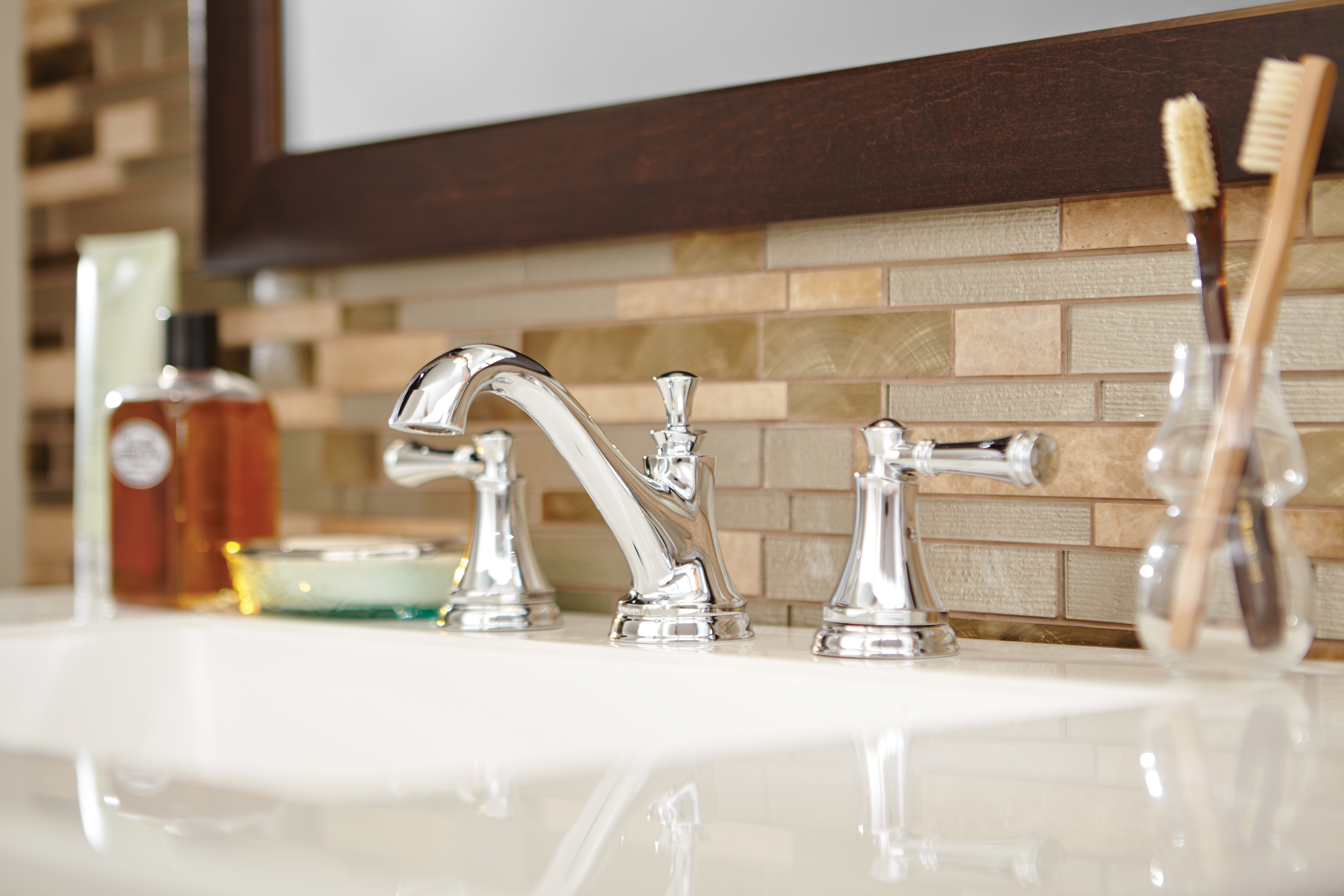
Champagne Toast Glass & Metal Tile
Hexagon Mosaic Tile
Hexagons are 1", 2" and 3" flat-to-flat, not point-to-point. If you picked hexagons, double check that measurement, because getting it jumbled up could mess up your arrangement. MSI’s White Matte 2” Hexagon is a perfect example of a clean and modern look to marble veining.
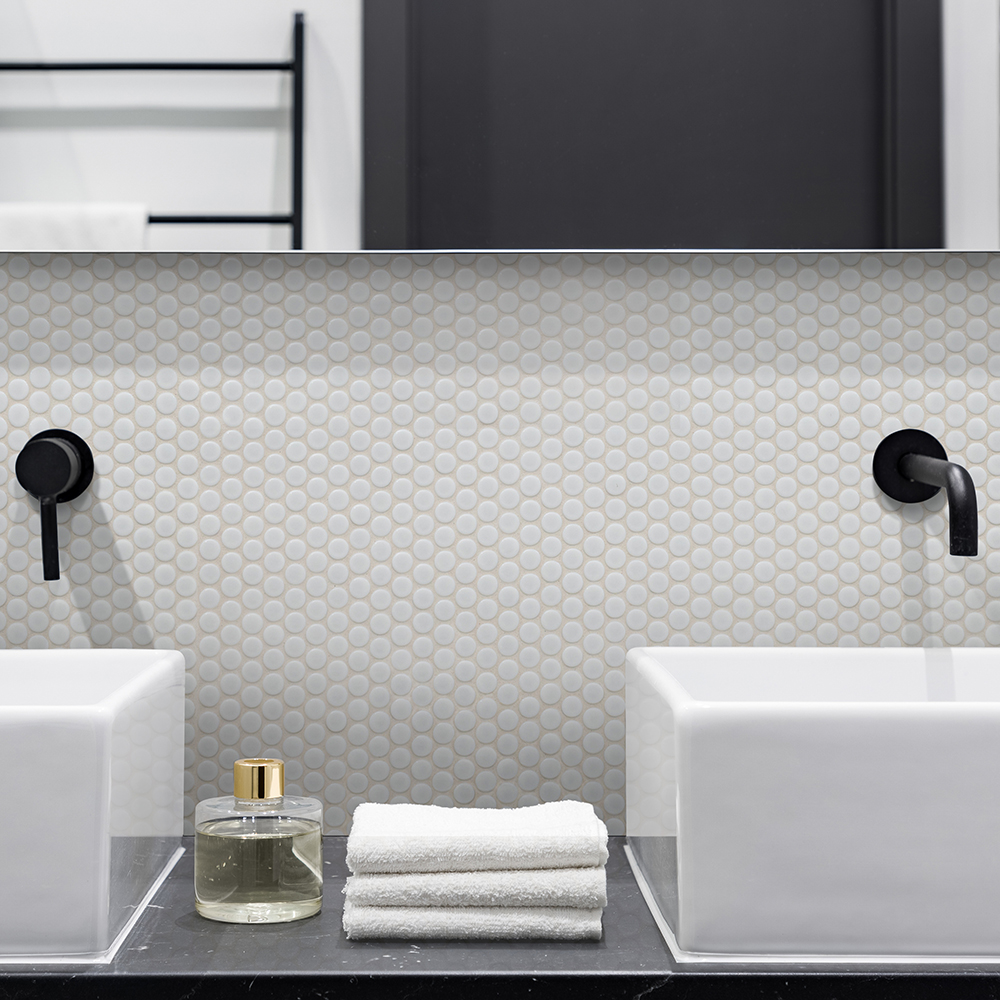
White Matte 2" Hexagon Mosaic Tile
They’re good for bathroom floors, backsplashes, and busy laundry rooms. For wet floors, porcelain is the better choice, since it’s non-porous and grades well for safety even without extra texture. Grout color modifies the look. Dark grout sharpens the hex grid. Light grout blends it into a softer field.
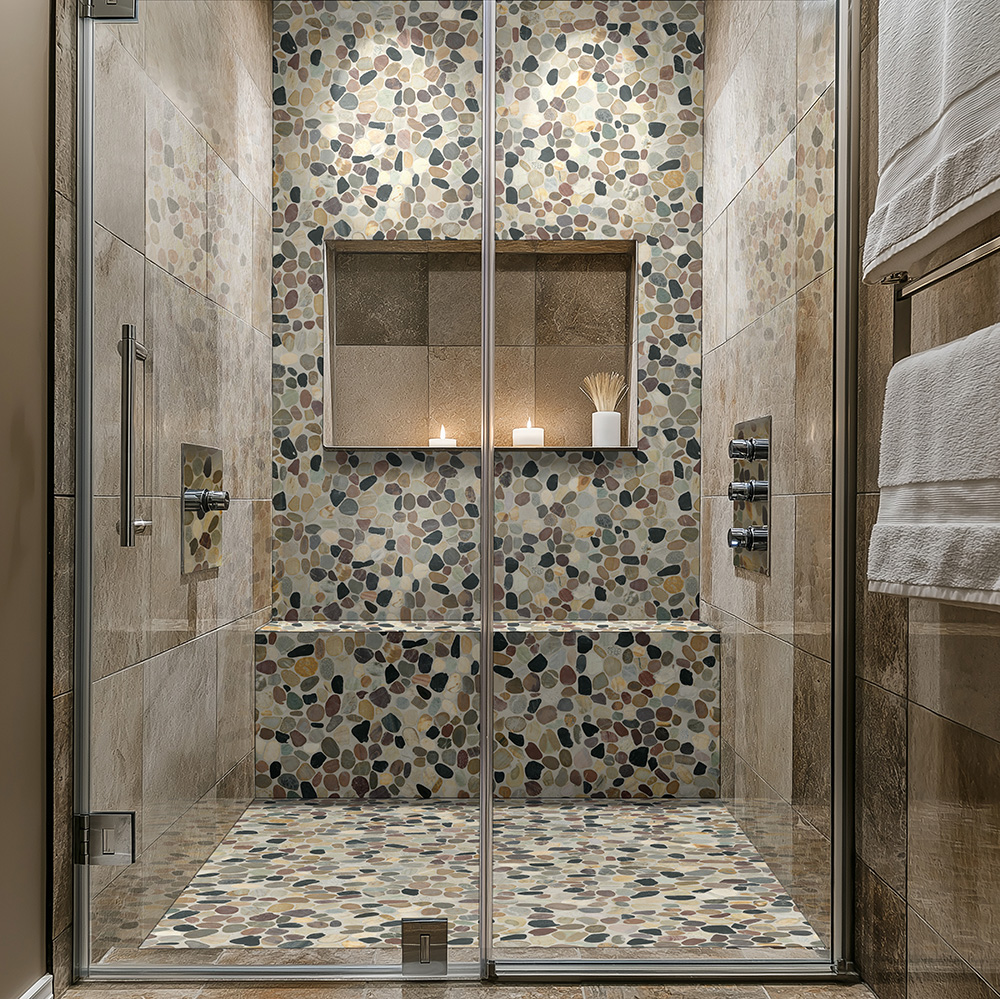
Mix River Pebbles Pattern Tile
Penny Round Mosaic Tile
Penny tiles are the small circle shape, usually 7/8” or 1” in diameter, and are sold solely on mesh sheets. They have a retro look that works well for hospitality restrooms, walk-in shower pans and restaurant entryways.
They are round; hence, they expose more grout per square foot than square tiles. If you are installing them in a commercial wet location, you will want to specify an epoxy grout.
Herringbone Mosaic Tile
Herringbone is a rectangular tile laid in a repeating diagonal V. It is prearranged on the sheet so there is no field cutting or manual layout to deal with. Popular sizes are 1"x2" finger mosaics and 2"x4" rectangles, commonly used for backsplashes, bathroom floors and accent walls, usually in marble or porcelain.
Fish Scale (Scallop) Mosaic Tile
Fish scale tiles are often glass or porcelain and laid out in curved, overlapping rows for a seaside or Mediterranean effect. Stick to backsplashes and accent walls; the curved edges can lead to lippage if laid on the floor, particularly in high-traffic areas.
Arabesque Mosaic Tile
Rooted in Moorish design, arabesque is a long, pointed oval shape available in ceramic, porcelain, marble and glass for backsplash centerpieces. One mix-up worth flagging: an arabesque is the pointed-oval shape; a quatrefoil is the four-lobed clover shape. It's easy to get the wrong tile delivered if you mix them up on a purchase order.
Standard Mosaic Tile Sizes — What the Numbers Mean
Two factors are important when ordering mosaic: the size of each individual tile face and the size of the full sheet. Standard face sizes include 5/8” x 5/8”, 7/8” round, 1” x 1”, 1” x 2” finger/brick, and 2” x 2”. Sheet size is almost always 12" × 12". Specialty formats such as 11.75" × 11.75" or 12" × 24" (for finger mosaics) are also available.
You can have straight-cut sheet edges that meet cleanly against one another, or interlocking edges that offset into the following sheet to hide the seams — the latter is usually the best choice if you want sheet joints to disappear.
Transitions are where thickness counts: ceramic and porcelain mosaic run from 1/4” to 3/8” thick, and glass runs thinner at 3/16” to 1/4”. Detail each transition from mosaic to hardwood or LVP. On drawings, not in the field, map out grout joints in sheets to be 1/16” to 1/8”.
Large Format Tile Versus Mosaic Tile – Side-by-Side Comparison
Small-format vs. large-format tile: DCOF, subfloor tolerance and surface geometry are primary; aesthetics and room size are secondary.
One typical source of confusion: mosaic tile vs. subway tile. Subway tile is a conventional format, usually 3"×6", set piece by piece with no mesh backing. It exceeds the 6-square-inch mosaic threshold, so theoretically it doesn’t even qualify as a mosaic, but the two commonly appear on the same wall.
The large-format tile cuts down on grout lines, so opening up a space. That’s why large format porcelain tile in small spaces works so well.
This is the sort of tile where the differences are the most. Large format requires a subfloor to be within 1/8” over 10 feet, per TCNA F125. Mosaic’s mesh will flex over small imperfections and curves.
| Attribute | Mosaic Tile (≤2"×2") | Large Format Tile (≥15" on one side) |
|---|---|---|
| Grout joint density | High — 72–144 linear in./sq ft | Low — 2–16 linear in./sq ft |
| Wet-area DCOF compliance | Naturally ≥0.42 due to grout frequency | Requires textured or etched surface finish |
| Curved surfaces | Conforms to curves and radius walls | Rigid — incompatible with curved substrates |
| Subfloor flatness requirement | Tolerates minor variation; mesh flexes | Strict: max 1/8" in 10 ft per TCNA F125 |
| Grout maintenance demand | Higher — more joints to seal and scrub | Lower — fewer grout lines to clean |
| Room perception | Dense visual detail; can look busy | Open and expansive; makes rooms feel larger |
| Best applications | Shower floors, pools, backsplashes, accents | Open floor fields, large walls, shower walls |
| Installation speed (floor) | Slower — high piece count, more grouting | Faster — fewer individual pieces per sq ft |
On the flatter, faster-install side of that equation, MSI’s large format tile selection is perfect for open floor fields or large commercial installations.
When to Use Mosaic Tile — Application Guide by Surface
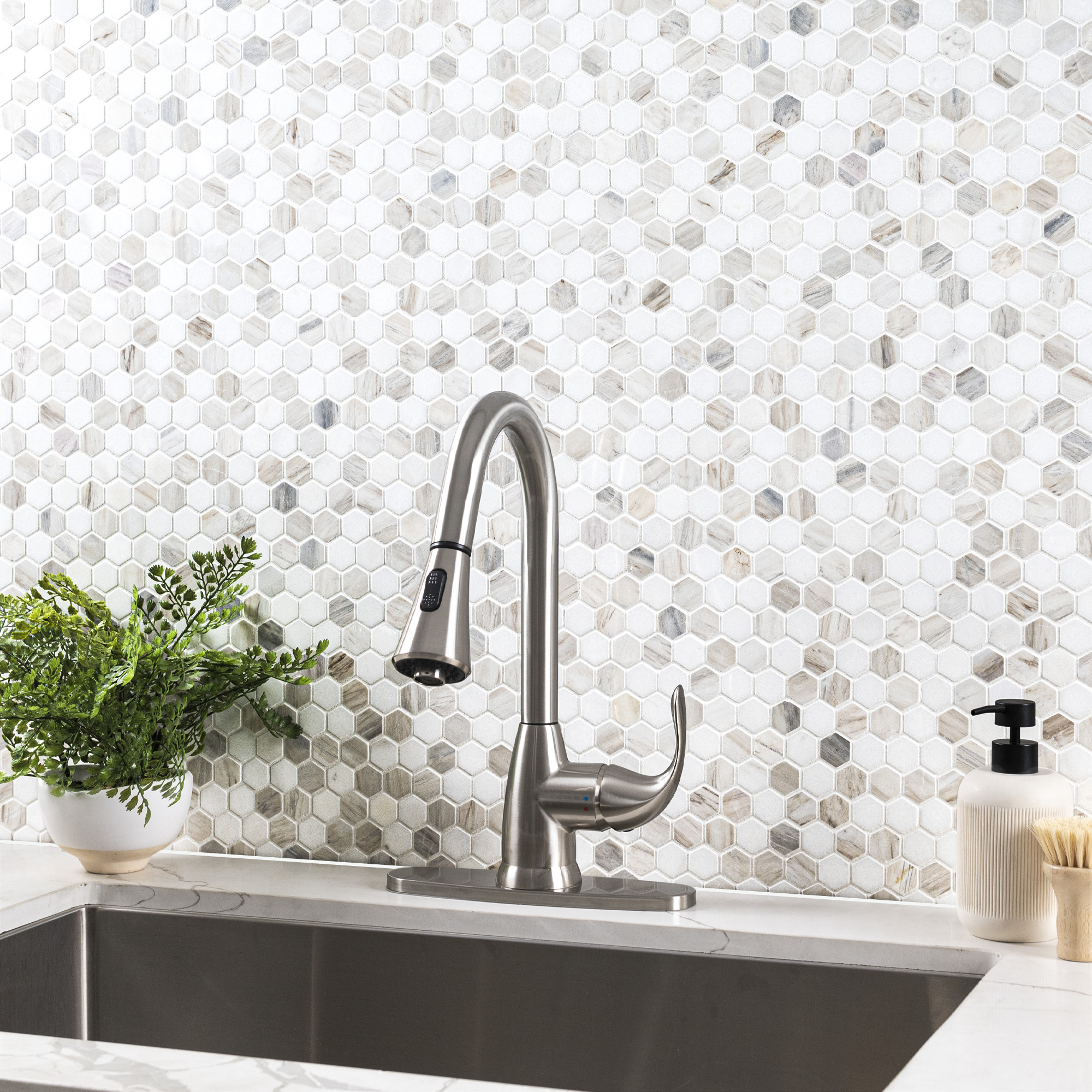
Angora Tibi Polished Hexagon Mosaic Tile
When is mosaic tile the right specification over large format? There are three elements to consider: surface geometry, DCOF requirements and design purpose.
Used properly, mosaic tile flooring overcomes two difficulties that large format tile can’t: traction in wet places and curved substrates. A mosaic tile floor pays for itself wherever those elements exist, and the next sections take the important surfaces one by one.
Shower Floors
Mosaic tile is a good choice for shower floors. It is the traditional choice since the density of the grout automatically meets the ANSI A137.1 wet area minimum of DCOF ≥ 0.42 and requires no etching.
Match your grout to the joint size: for joints less than 1/8 inch wide, use unsanded grout; for joints 1/8 inch and more, use sanded grout. For glass mosaic tile, use epoxy or a non-sanded grout; grout that is cement-based can scratch and cloud the glazing.
Waterproofing rule: grout is porous and never a barrier to water. A suitable membrane goes under the tile bed, period.
MSI mosaic tile collections include porcelain tile solutions rated for DCOF for residential and commercial shower floors. For inspiration, see mosaic tile as bathroom floor tile.
Selecting porcelain mosaic tile for shower floor makes it easier to be compliant because the material is non-porous and DCOF-rated right out of the box. A mosaic tile shower floor also drains better in practice. The same logic applies to a mosaic tile bathroom floor outside the pan, where traction is the most important around tubs and vanities.
A whole mosaic tile bathroom floor would have the same standard reasoning. The grout density gives you additional traction outside the shower pan.
Kitchen Backsplashes
The pattern complexity and custom waterjet-cut work that large format can’t replicate, especially in backsplashes, are found in mosaics. MSI’s Multi-Surface Visualizer helps you visualize tile in your space, showing how the pattern will look against countertops and cabinetry before you order. The backsplash tile guide details layout choices, and MSI’s waterjet cut mosaics offer custom-cut patterns in stone, glass and mixed materials.
Pool Surrounds and Curved Surfaces
Because the mesh backing has flex, mosaic is the only solution for curved pool walls, rounded stair nosings and free-form spa benches. Large-format tile does not flex, and if you try to force it onto a curved substrate, you’ll get lippage and cracking.
If your outdoor pool is located in a freeze/thaw climate, use frost-rated porcelain or glass. Check the manufacturer’s documentation before you order: Local AHJ may also require ADA traction sign-off for commercial ramps. The mosaics on the floor — new era in flooring design piece covers how the format is spreading beyond wet areas.
Feature Walls and Accent Applications
Usually, mosaic is used as an accent band or niche liner in a larger tile field, not as a complete wall covering. A common commercial scheme is a 24”x48” large format field with a 2” – 4” mosaic band. For hospitality lobbies and upscale residential walls, MSI’s decorative blend mosaics, stone, glass and ceramic combined add texture without overpowering the space. The micro-pattern mosaics for floors and walls guide has more information on scaling pattern size to the wall.
Grout Joint Density: The Specification Metric That Decides Every Mosaic vs. Large Format Decision
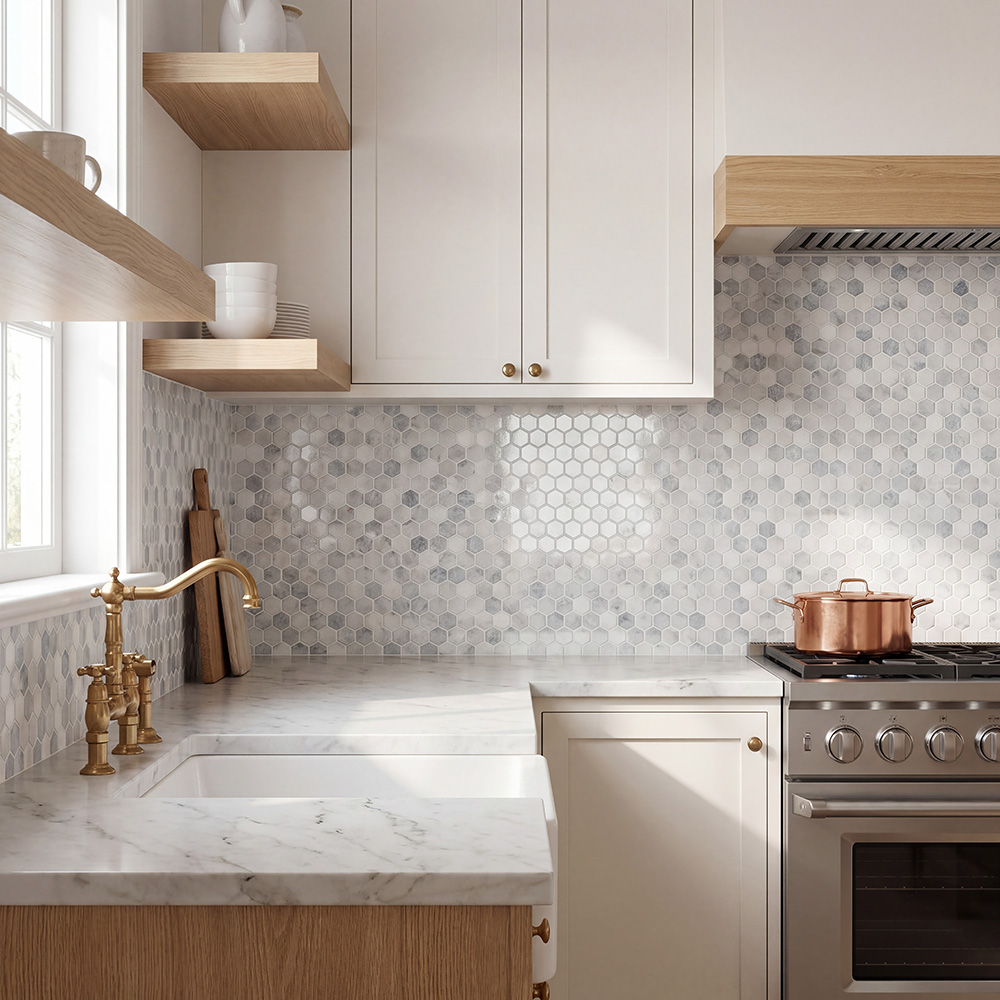
The decision is basically driven by the grout joint density, total linear inches of grout per square foot. It drives DCOF compliance, it drives sealer volume, and it drives cleaning frequency.
| Tile Format | Tile Face Size | Approx. Tiles/Sq Ft | Linear Grout In./Sq Ft | Wet-Area DCOF Path |
|---|---|---|---|---|
| Mosaic | 1"×1" | 144 | ~144 | ≥0.42 inherently |
| Mosaic | 2"×2" | 36 | ~72 | ≥0.42 inherently |
| Standard | 4"×4" | 9 | ~36 | Typically compliant |
| Standard | 12"×12" | 1 | ~8 | Verify by finish type |
| Large Format | 24"×24" | 0.25 | ~4 | Requires textured finish |
| Large Format | 48"×48" | 0.06 | ~2 | Standard polished finish won't meet wet DCOF |
Do the math and the difference is striking. A 1”x1” mosaic yields about 72 times more linear grout footage per square foot than a 48”x48” slab, which is why mosaic meets wet-area DCOF all by itself, but it also means more long-term maintenance. Don’t assume compliance based on format. Check the manufacturer’s spec sheet, and for commercial jobs, put the exact grout product, color, and sealer in the drawings, and don’t leave it as a field call.
Quick-Reference Guide — Which Tile Format Is Right for Your Application?
| Application | Recommended Format | Key Reason |
|---|---|---|
| Shower floor — residential | Mosaic (1"×1" or 2"×2" porcelain) | Natural DCOF ≥0.42 from grout joint density |
| Shower floor — commercial / ADA | Mosaic (porcelain, ≤2"×2") | Grout density achieves ADA wet-area compliance |
| Shower walls | Large format (12"×24" or larger) | Fewer grout joints; easier to clean; contemporary look |
| Bathroom floor (under 50 sq ft) | Either — based on design intent | Mosaic: traditional/detailed; large format: modern/open |
| Kitchen backsplash | Mosaic (glass, ceramic, or stone) | Pattern variety, material options, custom waterjet capability |
| Pool surround — curved walls | Mosaic (frost-rated porcelain or glass) | Only format that conforms to curves; freeze/thaw rated |
| Open floor field (over 100 sq ft) | Large format | Fewer grout lines; faster installation; lower maintenance |
| Feature wall / accent panel | Mosaic (decorative blend) | Design complexity, mixed materials, maximum visual impact |
| Exterior stairs — freeze/thaw zone | Mosaic (frost-rated, textured finish) | DCOF compliance + freeze/thaw durability |
Balancing Performance and Design
The selection of tile format is mostly a performance decision. Grout joint density regulates slip resistance, mesh backing allows curved installs, and format geometry affects the long-term durability of a space.
The MSI mosaic collection offers porcelain, glass, natural stone and decorative blends in all conventional shapes. Begin your journey and Visit one of our MSI showrooms, chat with us online or find an authorized retailer near you.
Once you’ve narrowed down the mosaic tile types that fit the application, the rest is material and grout selection.
Frequently Asked Questions
What is mosaic tile?
Any tile having a face area of 6 square inches or smaller under ANSI A137.1, commonly 1”x1” or 2”x2” pieces on 12”x12” mesh sheets, in ceramic, porcelain, glass or stone.
What is the difference between mosaic tile and regular tile?
Size and install method, basically. Regular tile is larger and installed piece by piece; mosaic is laid in one sheet of mesh at a time and produces way more grout per square foot.
How large is mosaic tile?
Piece sizes are 1"x1" or 2"x2", 7/8" to 1" for penny rounds, 1"x2" for finger shapes. The sheet is nearly always 12"x12", piece size and sheet size should be indicated separately.
Can You Use Mosaic Tiles for Shower Floors?
Yes. A mosaic tile shower floor is the ideal spec. The grout density provides natural traction that meets DCOF ≥0.42 by itself, no texturing required.
What is the difference between mosaic tile and large format tile?
Mosaic yields 72–144 linear inches of grout per square foot; large format only 2–16. That’s why mosaic takes the prize for traction and curves while large format is the winner for a clean, low-maintenance finish.
How do you grout mosaic tiles?
Grouting mosaic tile requires spreading them with a rubber float, working diagonally across the sheet. Use unsanded grout for joints less than 1/8", sanded for joints 1/8" or wider. Wipe with a moist sponge within 20-30 minutes, then seal after a 72-hour cure.
Can mosaic tile be used on floors?
Yes. mosaic tile floor is often used in shower pans, pool surrounds, bathroom floors, and anywhere a detailed design is desired.
Can you paint mosaic tiles?
You may, with mineral-based or epoxy tile paint, but it eliminates the friction rating. Keep painted tile free of showers and pool surrounds. It’s best for dry, low-traffic walls.
 SHARE
SHARE
 PIN
PIN
 TWEET
TWEET