LVT (Luxury Vinyl Tile) Wear Layer Thickness

LVT wear layer thickness is typically the most underestimated on commercial jobs and most often results in a refused warranty claim or early replacement. A 12-mil vinyl flooring wear layer in a busy multi-family foyer can seem worn out in as little as eighteen months — far before anyone expects to re-floor. The cause is virtually always the same: a surface not properly defined for the traffic it is expected to convey.
What’s the Best LVT Wear Layer Thickness?
The ideal wear layer thickness for LVT is determined by the volume of traffic and the type of project. 6–12 mil is utilized for light residential applications, 12–20 mil is used for active residential and light commercial applications, and 20 mil or thicker is used for commercial projects. For high-traffic retail, hotel, multifamily, and office interiors, consider wear layer thickness, quality of coating, warranty terms, overall product structure, and maintenance requirements.
In this guide, we’ll explain what trade professionals need to know about wear layer thickness and how to pair it with real world application. Knowing the difference between LVP and LVT flooring, as well as the wider types of luxury vinyl flooring is crucial to buying the right flooring for your space. At MSI, our luxury vinyl solutions offer beauty and durability without the guesswork of performance trade-offs.
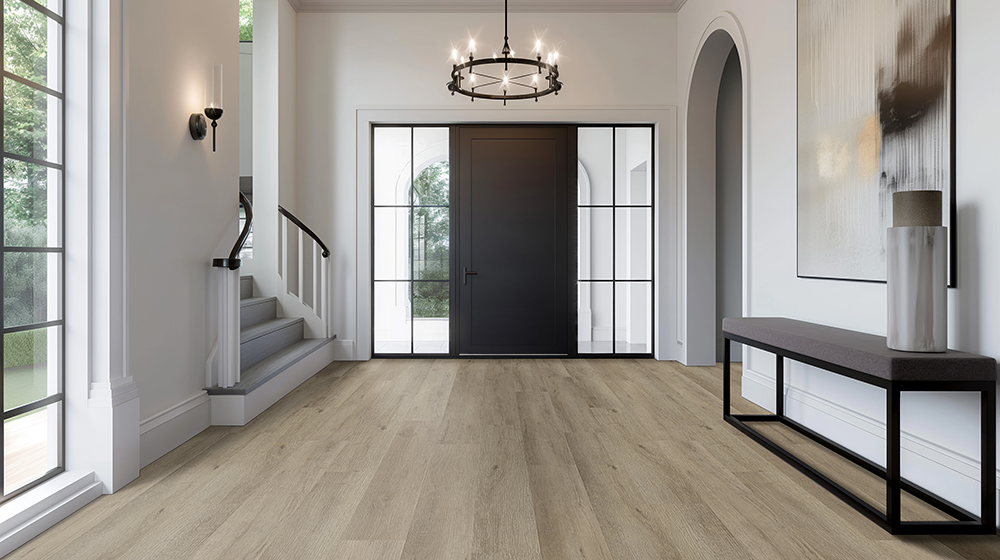
Studio Lark Luxury Vinyl Planks
What Does LVT Wear Layer Thickness Mean?
The wear layer is a protective, clear coating on top of the printed design. Our blog explains what is a vinyl flooring wear layer and why it matters most. That thin top film absorbs the pounding when maintenance crews drag equipment across lobbies, when rolling chairs scuff office floors, and when guests wheel luggage down hotel corridors.
That top film is beaten up by heavy foot traffic, moving chairs, cleaning equipment, and ordinary use. That’s the only area of the floor that does that job. Simply put, a thicker, more protected wear layer has more to give before it begins to exhibit wear on the actual surface.
What is a Mil Thickness in Vinyl Flooring?
The average person becomes confused because they are comparing apples to oranges here. The overall thickness of the LVT flooring will affect how it feels underfoot and how it installs. The top layer, the wear layer, is a thin film that protects the finish and determines if your project still looks good in year three, or if it has to be redone.
Many buyers mix up "mil" and "mm”, and this can result in inaccurate comparisons of products. The trick is knowing that when you are measuring wear layers mils are not millimeters.
- One mil equals one-thousandth of an inch (0.001").
- Typical wear layers run 6 mil, 12 mil, 20 mil, 28 mil, or 40 mil.
- Thicker is generally more durable, but the coating’s chemistry matters too.
- A mil is not a millimeter — the units aren't even in the same ballpark.
Wear Layer for LVP Flooring Thickness Chart: Mil to MM
Keep this handy when translating spec sheets and converting vinyl flooring thickness in mm:
| Wear layer | Approx. mm | Typical use |
|---|---|---|
| 6 mil | 0.15 mm | Budget residential, low-traffic areas |
| 12 mil | 0.30 mm | Active homes, rentals, moderate traffic |
| 20 mil | 0.50 mm | Commercial standard for offices, retail |
| 28 mil | 0.70 mm | Heavy commercial, hospitality corridors |
| 40 mil | 1.00 mm | Institutional, extreme-use applications |

Laurel™ Hyde Haven Luxury Vinyl Planks
LVT Thickness vs Wear Layer Thickness
The total thickness of the LVT is the sum of the backing, core, print layer, and wear layer thickness. This is the entire floor assembly, not just the top layer. Overall gauge affects comfort, subfloor tolerance and installation type. Our vinyl flooring thickness guide explains what those total-gauge differences mean in the real world.
But the longevity of luxury vinyl tile is just the beginning. An 8 mil plank with less protection may not last as long as a 6 mil plank with a strong duty wear layer. It is a sturdy board with a thin finish that wears through where it counts on the surface.
How Much Thickness Really Helps
- Leveling subfloor imperfections
- Sound insulation between floors
- Click-lock joint strength
- Comfort underfoot in residential applications
- Transition height where vinyl meets tile or carpet, handled with the right luxury vinyl flooring accessories
The importance of wear layer thickness for luxuary vinyl tile durability
Surface protection is the difference between a 3-year floor and a 10-year floor in commercial settings. This is especially the case where the costs of tenant turnover are considerable, where replacement impacts on operations, or where long-term maintenance and replacement expenses are to be maintained to a minimum.
Protective film is under assault from heavy foot traffic, rolling chairs, cleaning equipment, and everyday use. If hacked, the design layer below is revealed and can require replacement.

Cyrus® Chester Hills Luxury Vinyl Planks
Recommended Thickness of LVT Wear Layer by Project
A generic recommendation will generate a generic outcome. What is fine for a quiet medical office is too much for a storage room and not nearly enough for a hotel corridor.
| Project type | Recommended wear layer | Why it works |
|---|---|---|
| Model homes | 12–20 mil | Supports staged traffic, design presentation |
| Single-family residential | 12–20 mil | Balances cost with family use patterns |
| Multifamily units | 20 mil | Reduces replacement risk during turnover |
| Student housing | 20–28 mil | Handles move-ins, rolling chairs, heavy use |
| Retail stores | 20–28 mil | Supports daily traffic, commercial cleaning |
| Hospitality rooms | 20 mil | Balances guest comfort with durability |
| Hospitality corridors | 28 mil and up | Handles rolling luggage, constant traffic |
| Office spaces | 20 mil | Manages chairs, carts, moderate commercial use |
| Healthcare waiting areas | 20–28 mil | Supports frequent cleaning, public traffic |
| Restaurants and cafés | 20–28 mil | Protects against spills, scuffs, heavy cleaning |
Is 12 Mil LVT Good Enough?
Yes, for residential and rental properties. 12 mil is a reasonable budget and takes into consideration normal family use, light commercial traffic and moderate wear patterns.
But put it in a high-traffic commercial space and the risk goes up quickly. In high-traffic multifamily common areas, 12-mil floors can begin to show visible wear in as little as two years.
Is 20 Mil LVT Good for Commercial Use?
20 mil is the commercial standard for a reason. It can stand up to rolling chairs, normal foot traffic and everyday commercial cleaning without premature wear. Most full commercial warranties require at least 20 mil.
When Should You Specify 28 Mil and Higher?
When a space never empties or replacement disruption is the real cost, upgrade to heavy-duty protection:
- High-traffic retail environments
- Hospitality corridors and public areas
- Educational facilities and student housing
- Senior living common spaces
- Multifamily lobbies and amenity areas
- Any location where closing operations for re-flooring would result in a loss of revenue
40-mil wear layers are for very high-traffic commercial areas. These are recommended for sites where the premium is justified by the extreme durability, not as a blanket upgrade.

Katella Ash® Luxury Vinyl Planks
How Coatings Influence LVT Wear Layer Performance
Thickness is only part of the equation. The chemistry of the coating on top determines the scratch resistance, stain resistance, cleanability, and the appearance of the floor after years of use.
The same 20 mil wear layer on two different products can age dramatically different depending on the coatings. That's why you can't tell thickness alone.
Urethane Coatings
For most commercial interiors, urethane will provide a good baseline of protection. This allows for easy and cost-effective routine maintenance in standard office, retail and hospitality applications.
Aluminum Oxide and Ceramic Bead Coatings
These systems make sense on projects that really need the added hardness, but on those that don’t, they add cost that is not necessary. Enhanced surface resistance is possible with better coatings on projects with rolling loads, carts, moving furniture and frequent cleaning.
Why Coating + Wear Layer Is Better Than Wear Layer Alone
When assessing commercial flooring performance, both the wear layer and finish should be taken into consideration. A thicker wear layer without a strong coating does not always beat a thinner product with a stronger protective finish.
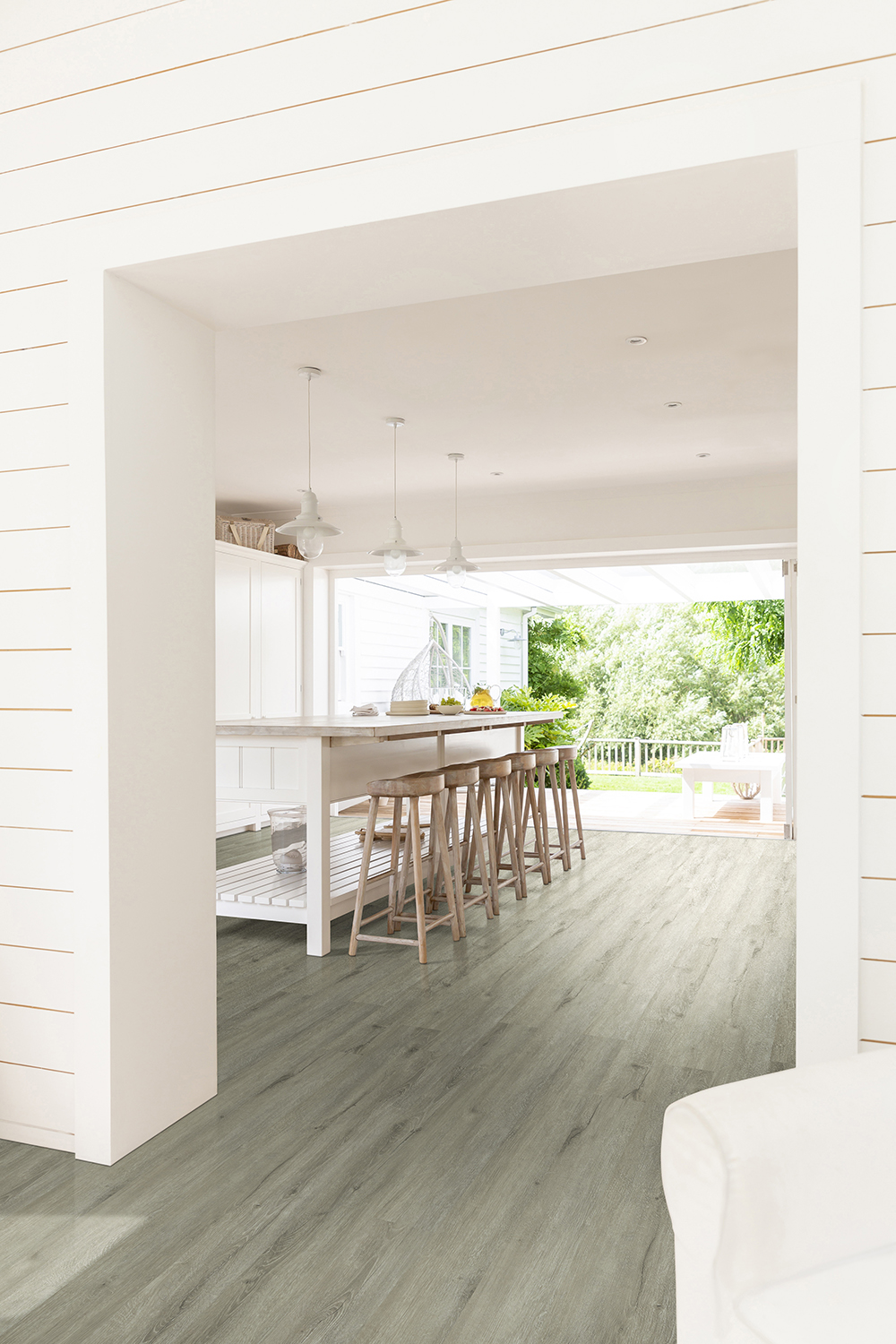
Katavia® Twilight Oak® Luxury Vinyl Planks
LVT Thickness and Commercial Warranties
Warranty coverage isn’t just about wear layer thickness. The size is determined by the installation method, maintenance requirements, traffic restrictions and permitted uses.
Reading warranty terms and LVT specification guides carefully can help avoid installing the wrong flooring in the wrong application.
Residential Warranty vs Commercial Warranty Terms
- Extended residential warranty periods
- Limited commercial coverage
- Different exclusions and limitations
- Stricter installation requirements for commercial use
- Different maintenance expectations
- Rolling-load and traffic restrictions
Before you commit to any specification, check wear layer thickness, length of commercial warranties, approved installation methods, maintenance requirements and performance limitations.
What B2B buyers should look for when specifying
When specifying flooring, commercial buyers should not just look at the wear layer thickness but should look at the entire product data sheet. Technical data sheet small details affect installation cost, warranty coverage, long term maintenance and overall performance of the project.
- Wear layer thickness: Verify that the wear layer meets the anticipated traffic load and application.
- Commercial warranty length: Review the length of commercial coverage and any limitations that may be specific to the application.
- Installation method: Decide if the product can be installed using click-lock, glue-down, loose-lay, or other approved methods.
- Approved adhesives or underlayment: Verify the compatibility requirements and approved accessory products to maintain warranty compliance.
- Maintenance requirements: Understand cleaning procedures, recommended products, and any conditions related to warranty coverage.
- Rolling load limitations: Consult manufacturer’s instructions for rolling chairs, carts, medical equipment, luggage traffic, and other wheeled loads.
- Stain and scratch exclusions: Review the exclusions in the warranty carefully to determine which kinds of damage are not covered.
- Wet-area suitability: Check if the product is approved for use in moisture-prone areas and if there are any specific installation requirements.
- Technical data sheets: Review performance data, testing results, and installation instructions before specification.
- Product certifications: Seek relevant third-party certifications and testing standards that back performance, safety, and indoor air quality claims.
A spec is only as good as the documentation behind it. An early review of these factors helps to minimize installation problems, avoid warranty disputes and assure that the selected flooring is appropriate for the demands of the space over the expected service life.
LVT Flooring ASTM, ASSURE and Performance Standards
Defensible specifications are not guesswork, they are based on ASTM standards, third party certifications and technical documentation.
ASTM F1700 Vinyl Flooring
Usually, solid vinyl products are tested to the ASTM F1700 standard. These benchmarks give specifiers an independent baseline of performance when selecting commercial vinyl options.
ASTM F3261 for Rigid Core Products
ASTM F3261 testing is for rigid core construction. This structural difference has consequences for product stability, installation needs, and commercial viability. This build is the foundation for collections such as the Everlife® Rigid Core Series.
ASSURE Certified Flooring
ASSURE certification for rigid core products is based on indoor air quality, performance properties and chemical considerations. Used in conjunction with ASTM testing, it provides independent verification of the manufacturer specifications.
When you can see the full product documentation before you buy, it’s a lot easier to specify. MSI product resources allow commercial buyers to view luxury vinyl specs and project suitability before specifying.

When you don't want a thicker layer
More protection is not the answer. Heavy duty wear layers are more expensive and may have little meaning in low traffic applications.
Cost vs Performance Balance
A good specification balances traffic demand and budget, design and lifecycle value. It’s good to weigh up pros and cons of luxury vinyl flooring. Protection is tailored to the actual application, instead of using the heaviest grade material everywhere, saving cost and keeping performance at a premium where it matters.
Visual Clarity and Surface Texture
The thickness of the wear layer is often discussed in relation to durability, but it also affects how the finished floor will look over time. The visual character of an LVT floor is affected by a number of factors including embossing, sheen level, product design and surface texture and these should be considered along with performance specifications.
Don’t Over-Specify in Big Projects
Not every wear layer spec works for an entire building. The hospitality environment has varying performance requirements for guest rooms, corridors, lobbies and back offices.
Cost is kept right by specifying by zone, with protection matched to the use of the area, putting the durability where the traffic is.
What to Look for in a Commercial Specification for LVT Flooring Thickness
Confirm These Details Before Picking a Wear Layer
| Specification question | Why it matters |
|---|---|
| What's the expected traffic level? | Determines minimum surface protection needs. |
| Residential, light commercial, or full commercial use? | Impacts warranty coverage and product suitability. |
| Will rolling chairs, carts, or luggage be present? | Increases scuff and scratch risk significantly. |
| Is moisture a concern in this space? | Requires appropriate construction and installation. |
| What maintenance schedule will be followed? | Affects long-term appearance and performance. |
| What's the expected replacement cycle? | Helps calculate true lifecycle value. |
| Does coating quality match traffic demands? | Performance depends on more than thickness alone. |
| What warranty coverage applies to this application? | Prevents specification mismatches and claim denials. |
Wear Layer Thickness Chart for Commercial Decision-Making
| Traffic Level | Best Wear Layer Range | Example Applications |
|---|---|---|
| Low Traffic | 6–8 mil | Guest rooms, low-use residential areas |
| Moderate Residential | 12 mil | Bedrooms, home offices, rental units |
| Heavy Residential / Light Commercial | 12–20 mil | Kitchens, active homes, boutiques |
| Commercial | 20 mil | Offices, multifamily units, retail spaces |
| Heavy Commercial | 28 mil+ | Hospitality corridors, education, public areas |
| Specialized High-Traffic | 40 mil | Select institutional or extreme-use applications |
This is a baseline chart. The final selection should consider the quality of coating, warranty terms, installation method, cleaning routine and total flooring construction.
Reference for Commercial Decision-Making
Coating technology: A finish can make a product perform above or below its wear-layer rating. For example, a 20-mil wear layer with an aluminum oxide or ceramic bead coating might out-perform a 28-mil product with a standard urethane finish. Similarly, a thin or poor-quality coating over a thicker wear layer may wear through faster than the number indicates.
Cleaning and maintenance routine: A floor that is well maintained can often achieve success at a lower specification than a floor subject to erratic or poor maintenance. The planned maintenance program will determine the level of performance margin incorporated in the spec.
Warranty requirements: Warranty terms generally specify the minimum acceptable specification. Usually you need a 20 mil or greater wear layer to get a full commercial warranty. Claims may be rejected if the product is not sufficiently specific for the application.
Backing, core, and joint system: Surface protection is only part of the story. How the floor reacts to the backing, core and locking or joint system all affects the subfloor conditions, installation method, indentation, movement and long-term stability.
These four factors must be taken into account with the traffic baseline. The best wear layer for LVP isn’t always the highest wear-layer number on the chart; it is the product in which the wear layer, coating, maintenance expectations, warranty coverage and construction all match the needs of the particular space.

Beckley Bruno Luxury Vinyl Plank
Mistakes That Lose You Money
Mistake 1: Confusing mil for millimeter
The units don't even come close. 20 mil is about .5 mm, not 20 mm. This confusion leaves floors very under-specified.
Mistake 2: Choosing total thickness over wear layer thickness
Various reasons are applied for the total product thickness and the wear layer thickness. The overall thickness affects construction and installation. The thickness of the wear layer influences the durability of the surface. Even thick planks with a thin protective layer, the wear layer surface is rotting.
Mistake 3: Ignoring commercial warranty terms
Commercial applications may be completely outside the scope of residential coverage, leaving projects unprotected.
Mistake 4: Overlooking coating quality
The same wear layer with different protective coatings will not give the same protection.
Mistake 5: Using one specification across different zones
There are different performance requirements for lobbies and back offices.
Get Expert Help with Your LVT Project
If the wear layer is specified correctly, then everything else falls into place. To learn how luxury vinyl plank flooring performs in the real world, chat with us online, visit an MSI showroom or connect with your local retailer for technical support and product comparisons.
Frequently Asked Questions
What is the best LVT wear layer thickness?
It depends on the application and traffic patterns. Residential applications often call for 12 mil, while commercial vinyl flooring wear layers require a minimum of 20 mil. .028 inch or greater is recommended for high-traffic commercial use.
Is a 12 mil wear layer good for LVT?
12 mil is great for residential use, rental properties, and light use commercial spaces. 20 mil for common areas offers better long-term protection for multifamily, retail, hospitality, or office projects.
Is a 20-mil wear layer enough for commercial flooring?
20 mil is the commercial standard for offices, retail, and multifamily units. In high-traffic areas such as hospitality corridors or education facilities, 28 mil wear layer or higher may be beneficial.
What's the difference between LVT thickness and wear layer thickness?
LVT thickness is the total product from the backing to the surface. The thickness of the wear layer is only the clear protective film that sits on top of the printed design. That protective layer is more directly impactful to surface durability.
Does thicker LVT mean better quality?
Not necessarily. Total thickness impacts comfort and installation characteristics, but surface durability is more dependent on wear layer thickness, quality of coating, and overall product construction.
What does a 20 mil wear layer mean?
A 20 mil wear layer means the protective surface is 20 thousandths of an inch thick (about 0.5 mm). It has been widely used for commercial applications where reliable surface protection is needed.
What wear layer works best for rental properties?
Rental properties generally go 12-20 mil depending on tenant turnover and traffic. High turnover rentals and multi-family units should be targeting 20 mil to take out obvious wear and tear costs of replacement.
What wear layer should I specify for retail stores?
Retail typically requires a minimum of 20 mil. 28 mil is normally used in high-traffic showrooms, busy stores, and public areas for better long-term performance.
How do I read LVT spec sheets efficiently?
First, check wear layer thickness in mils, then coating type and total thickness in millimeters. That sequence avoids most specification mismatches before they become expensive problems.
 SHARE
SHARE
 PIN
PIN
 TWEET
TWEET