Honed Vs Polished Quartzite: Which Finish Is Right For Your Space?
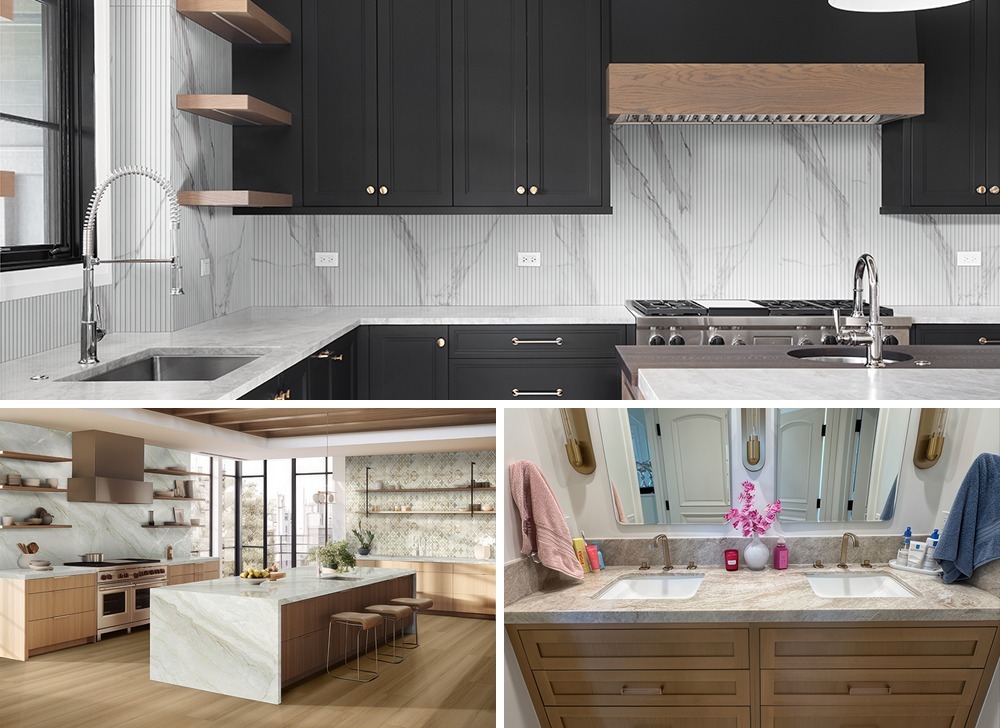
When picking natural stone for their homes, most purchasers will spend hours evaluating slab hues and veining patterns, but often make decisions about quartzite finish options in just a few minutes. This is a lost chance. The finish you choose completely alters the sensation of the stone -- the way it reflects light, how soft or smooth it feels to the touch, how often it needs sealing, how easily it displays everyday smudges and whether it offers enough traction to be safely used on a shower floor.
Polished quartzite delivers high-gloss drama, deep color saturation, and strong contrast, whereas honed quartzite presents a matte, velvety, and subtle presence. But quartzite has one physical advantage above other natural stones that affects the way you should look at this quartzite movement meets modern luxury.
In this definitive guide, we’ll discuss how each finish stands up, the science of stain resistance and sealing, important warnings about color matching, design tips for each area, and how to select the right surface from our quartzite countertop collection.
For most domestic areas, either quartzite finish works remarkably well, because true quartzite doesn’t etch from acids like marble does. Choosing between polished vs honed quartzite is more of an aesthetic and lifestyle choice than a durability protection decision.
Polished quartzite has a mirror-like luster, deeper color intensity and tight surface pores that prevent moisture absorption. Polished quartzite has a soft, flat matte finish that gently diffuses light and has a superior slip resistance, but it does need to be sealed a little more often. Honed is recommended for wet shower floors, but polished is much more suitable for masking everyday hand marks for dark stone variants.
Why the Finish for Quartzite is Different Than for Marble?
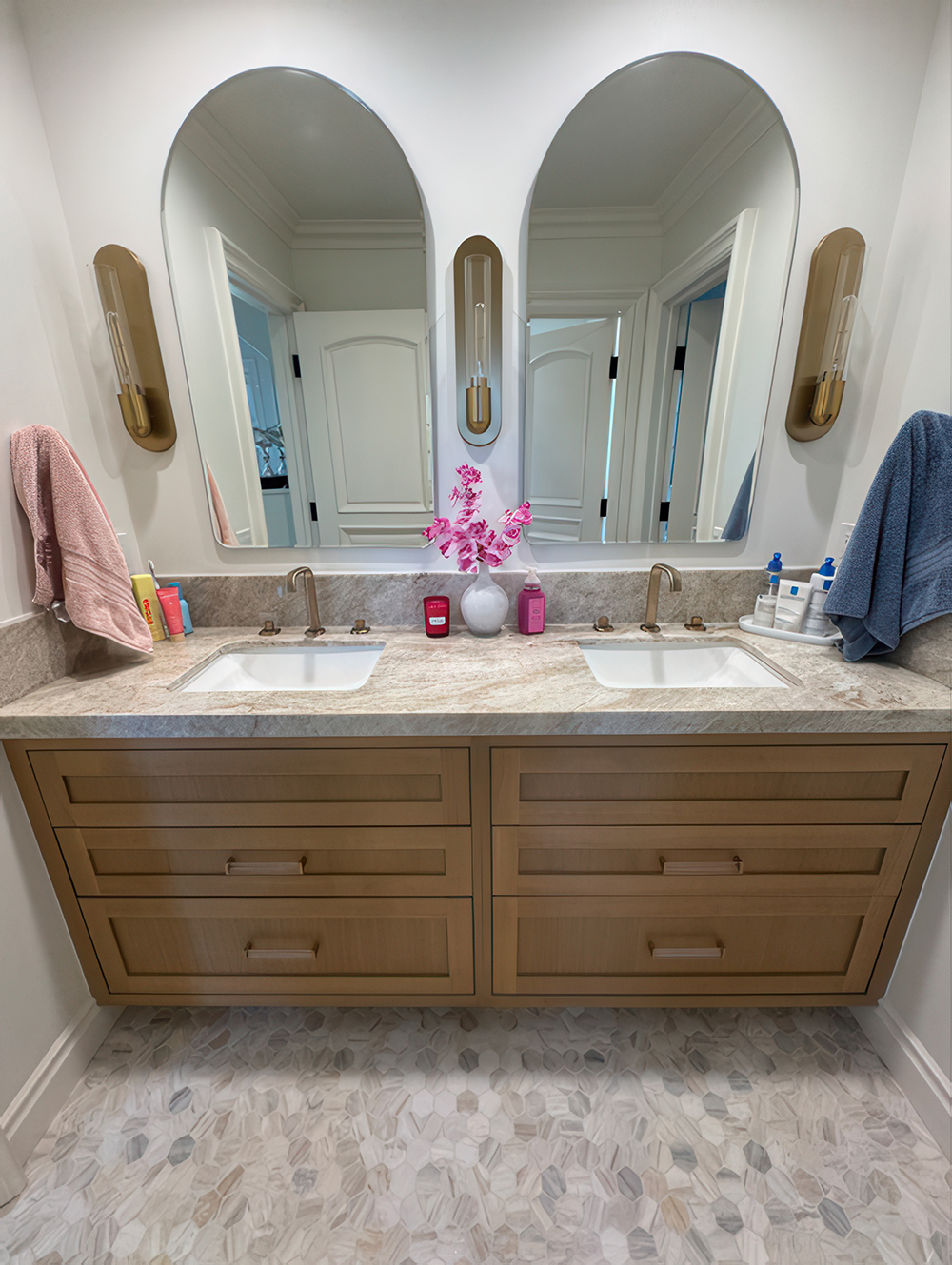
The most crucial thing to know when comparing honed vs polished quartzite side-by-side is that quartzite does not etch.
| Property | Marble (Soft / Reactive) | Quartzite (Hard / Inert) |
|---|---|---|
| Composition | Calcium Carbonate | Metamorphosed Quartz |
| Mohs Hardness | ~3 (Scratches easily) | ~7 (Scratch-resistant) |
| Acid Reaction | Severe etching (lemon, vinegar, wine) | None (true quartzite does not etch) |
| Durability | High-maintenance, porous | Highly durable, heat-resistant |
| Best Used For | Bathroom vanities, fireplaces, low-traffic accents | Kitchen countertops, high-traffic surfaces |
Homeowners typically apply marble reasoning to a stone that acts radically differently when deciding between quartzite versus marble honed-finish options. Marble consists of calcium carbonate. Household acids such as lemon juice, vinegar, wine or citrus cleanser may cause a chemical reaction when they come into contact with marble and will permanently dull and scar the surface. This is a form of physical damage also known as acid etching. Designers often pick honed marble for high-use kitchens because a matte surface hides these dull chemical etch marks far better than a polished surface.
Quartzite is a metamorphic rock. It forms when quartz-rich sandstone undergoes metamorphism under intense heat and pressure. It is almost entirely made up of quartz, which scores a 7 on the Mohs hardness scale (diamond scores a 10). Quartzite simply does not react with most household acids due to its chemical nature.
That completely eliminates the etch-protection argument from the finish discussion. If you have quartzite, you don’t need a matte surface to hide acid damage. Whether you choose to polish quartzite or leave it with a low-sheen honing will depend on visual character, tactile feel, safety in the room, and how much daily cleaning you want to undertake.
Important Material Distinction: Real quartzite is a 100% natural stone quarried and needs to be sealed regularly. Quartz (engineered stone) is a manmade surface that is a combination of crushed quartz mineral and resin binders and does not need to be sealed. They’re wholly different materials and have completely different care needs. Looking for natural slab design inspiration? Check out our lookbook on quartzite countertops that look like marble.
What Is Polished Quartzite?
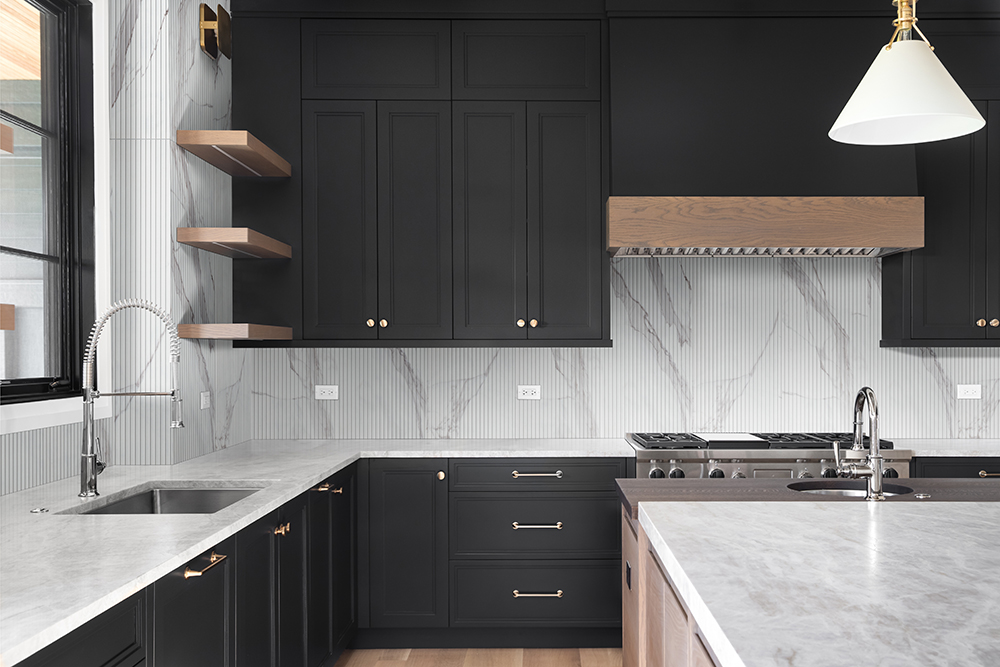
To make polished quartzite, a fabricator runs the raw stone slab through a sequence of motorized polishing heads fitted with progressively finer diamond abrasive wheels. This continues until the friction and the tiny grit compress the surface structure of the stone and produce a high reflecting gloss – a mirror-like sheen.
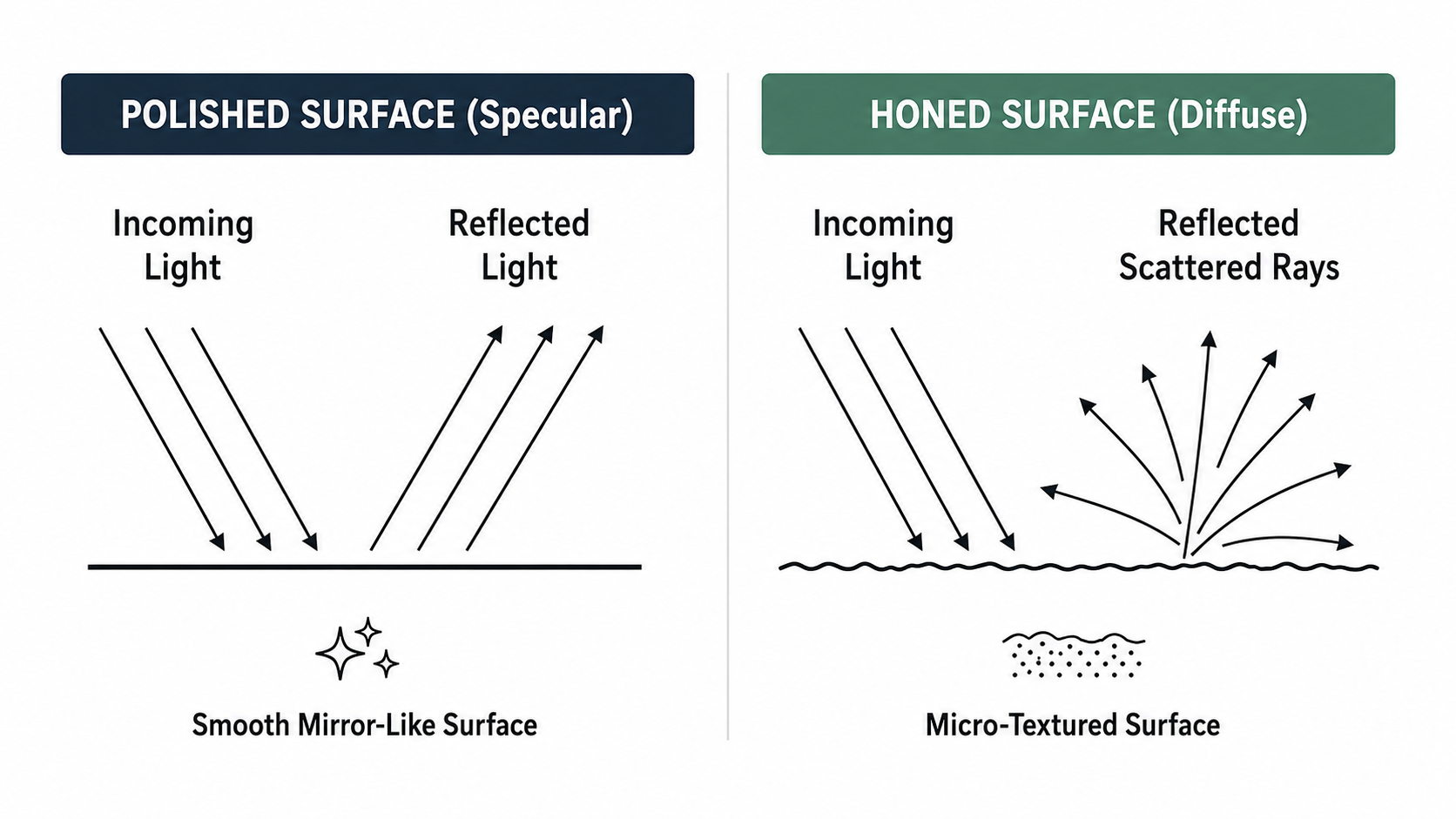
Polished Finish
- Structure: Smooth, tight surface
- Reflection: Reflection of direct, focused light (High Gloss)
- Best For: High-contrast color depth and stain resistance
Honed Finish
- Structure: Micro-textured, more open surface
- Reflection: Soft, scattered light diffusion (Matte/Satin)
- Best For: Hiding daily wear, scratches, and everyday smudges
Aesthetic & Tactile Qualities
The visual effect of polishing quartzite is bold and vivid. Colors become substantially richer and more saturated, with tiny mineral streaks, metallic veins and contrast layers popping out. Its flawless, glass-like polish reflects light straight back, giving the stone a high-end look that is a match for classic Italian marble. It seems cool, sleek, and like nothing is there at all.
Advantages in performance
- Superior Stain Delay: Fine diamond grinding creates a smoother, tighter surface with less open capillaries. This stronger barrier delays liquid penetration, allowing you more time to mop up spills like red wine, coffee or oil before any deep absorption happens.
- Lower Sealing Frequency: The surface is tighter thus polished quartzite will usually hold its sealant longer. Most people recommend reapplying every 12 to 18 months, although the finish matters less than the stone’s inherent density and the sealer you employ.
- Effortless Wiping: Because it is non-textured, sponge cloths and microfiber towels will slide across without snagging, making cleaning up dry crumbs quite quick.
Performance Considerations
- Reflective Smudges: Darker slabs can be quite reflective and can function like a dark mirror, plainly exposing hand prints, skin oils and water spots under direct lighting.
- Wet Slip Hazard: When wet, a high-gloss polished slab has virtually no foot grip and is dangerous for use on shower floors or wet bathroom steps.
- Visible Light Scratches: Light Quartzite is very scratch resistant, however any deep physical damage will break the reflecting plane and will appear more readily in direct light.
Top Design Styles
Polished surfaces are the best choice for conventional luxury kitchens, dressy transitional areas, formal bathroom vanities and high-impact centerpieces such as full-height waterfall islands.
Recommended Polished Quartzite Slabs
- Taj Mahal Quartzite: Taj Mahal is known worldwide for its creamy white-gold background and gentle amber veining. MSI’s polished surface creates an ultra-luminous beautiful depth. See how the choice of finish affects this versatile stone in our in-depth guide to Taj Mahal quartzite finishes.
- Cristallo Quartzite: A translucent crystalline quartz body, Cristallo is at its most brilliant when polished. Light also penetrates beneath the top surface, illuminating the internal structure of the slab.
Honed Quartzite – What Is It?
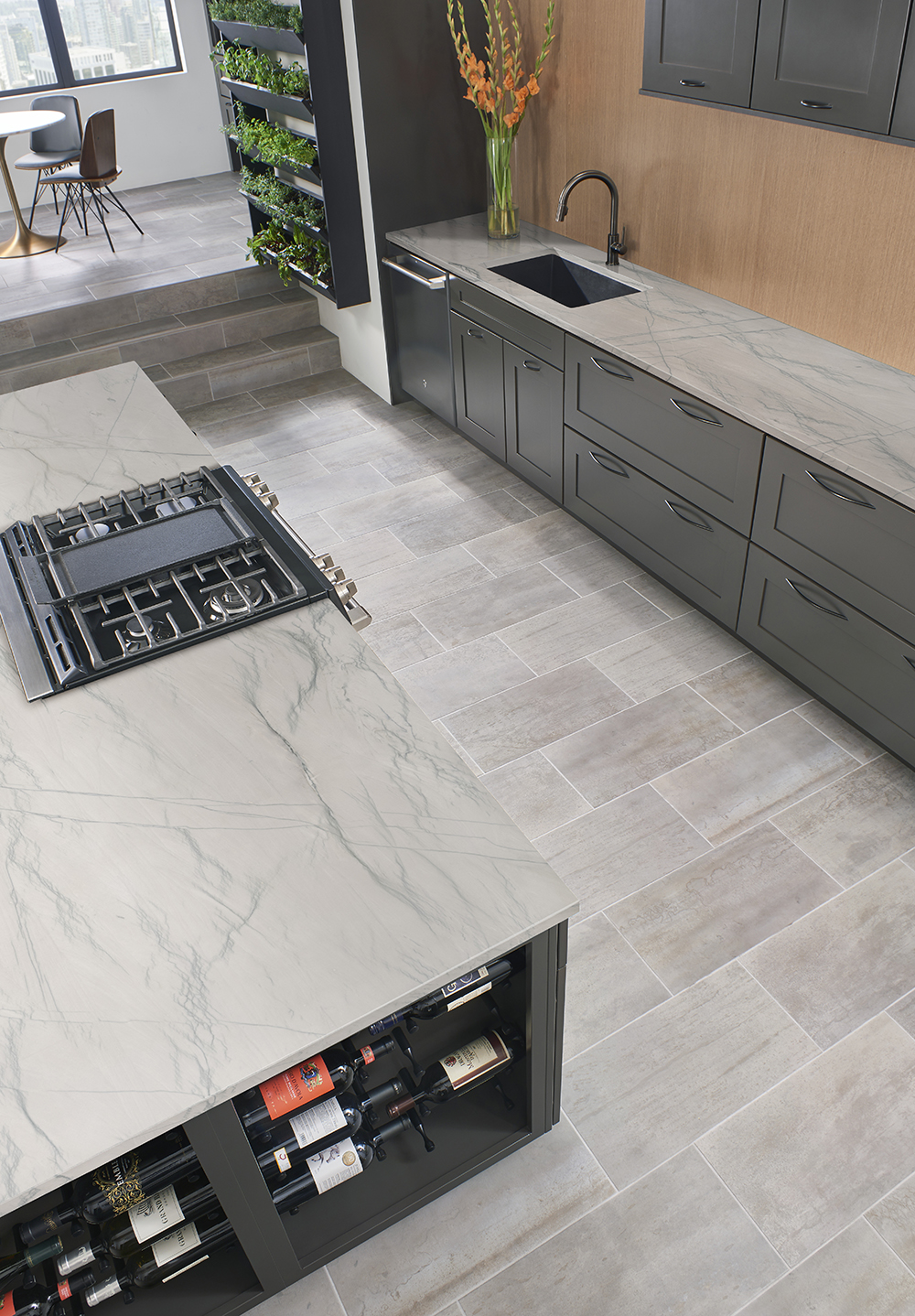
Honed quartzite countertops are formed by stopping the abrasive grinding process before the high-grit polishing steps. The effect is a smooth, flat surface with a satin or matte glow that absorbs and scatters the surrounding light rather than reflecting it directly back at the observer.
Aesthetic & Tactile Qualities
The slab is softer overall with the honing. You still get the whole natural movement and veining of the stone, but the contrast is less forceful, the color palette feels more peaceful and organic. Honed quartzite is silky, smooth to the touch.
Honed Quartzite Pros and Cons
- Reduced Smudging on Light Stones: Light-honed surfaces absorb ambient overhead illumination, making daily smudges, light dust and dry water spots nearly unnoticeable on white, cream or light gray slabs such as Ostrich Gray Quartzite tiles.
- Conceals Micro-Wear: No shiny surface layer to break up, so little surface scuffs or tiny day-to-day abrasions blend in without calling attention.
- Superior Traction: A honed surface has a micro-texture that gives a significant grip underfoot, making honed quartzite for shower floors the professional’s first option for wet bathroom conditions.
Performance Considerations
- Open Surface Pores: Stopping the process too early can leave surface pores open. Unsealed spills soak in more quickly, so it’s even more crucial to clean them up right away.
- Increased Sealing Schedule: Honed surfaces usually need to be re-sealed every 6 to 12 months.
- Higher Fabrication Cost: Additional grinding procedures are needed to remove the factory polish evenly (without leaving uneven regions of sheen) to get an honed finish. That adds about 10% to the cost of material processing in general.
Best Design Styles
Honed quartzite is the perfect choice for modern farmhouse kitchens, Scandinavian interiors, organic modern spaces and master suites that seem like a soothing spa.
Honed Quartzite vs Polished: A Side-by-Side Comparison
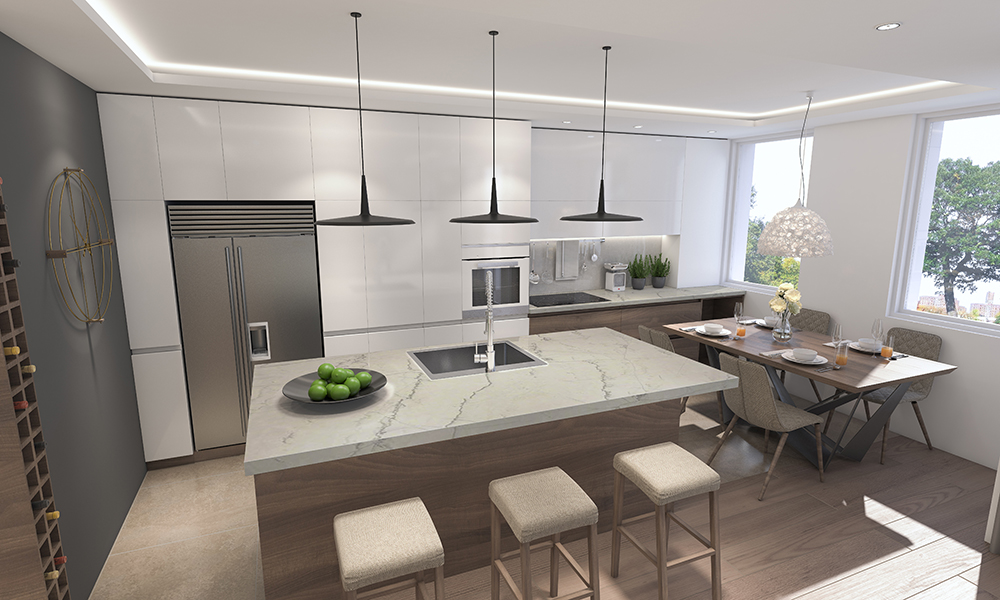
This makes the choice between honed versus polished quartzite easy when you have an approaching renovation:
| Performance Feature | Honed Quartzite | Polished Quartzite |
|---|---|---|
| Surface Appearance | Matte / Flat / Satin | High-Gloss / Reflective / Mirror-like |
| Surface Texture | Soft, velvety | Smooth, glass-like |
| Color Saturation | Soft, muted, organic | Rich, vivid, deep contrast |
| Fingerprint Visibility | Excellent concealment on light stone | Highly visible on dark slabs |
| Scratch Visibility | Low (diffuses direct light) | Moderate to high (reflections show breaks) |
| Stain Resistance | Moderate (requires timely wiping) | High (compressed pores delay absorption) |
| Sealing Frequency | Every 6 to 12 months | Every 12 to 18 months |
| Shower Floor Safe | Yes (provides necessary wet traction) | No (slippery hazard when wet) |
| Light Behavior | Absorbs and diffuses ambient light | Reflects light and brightens dark rooms |
| Design Style | Farmhouse, Scandinavian, Organic Modern | Classic Luxury, Contemporary, Glamour |
| Relative Cost | ~10% higher (extra fabrication steps) | Standard baseline slab pricing |
| Acid / Etch Risk | None (Natural Quartzite Advantage) | None (Natural Quartzite Advantage) |
Comparing Materials? If you’re weighing different stone types for your project, check out our polished vs honed vs leathered granite comparison to get an idea of how finish attributes differ from one natural stone to another.
Is Honed Quartzite Stain Resistant? What is sealing?
One of the most often asked inquiries from consumers is “Does honed quartzite stain easily?
Short answer is yes, a little more easily than polished quartzite but far less than honed marble.
The open pore structure of honed quartzite allows acidic or oily liquids to penetrate the upper layer of stone more quickly. A polished slab will have a longer buffer before absorption begins. A honed slab will start absorbing open liquids sooner. Quartzite is naturally thick however, so if sealed properly it will not absorb stains deeply or permanently.
Sealing Guidelines for Honed Quartzite
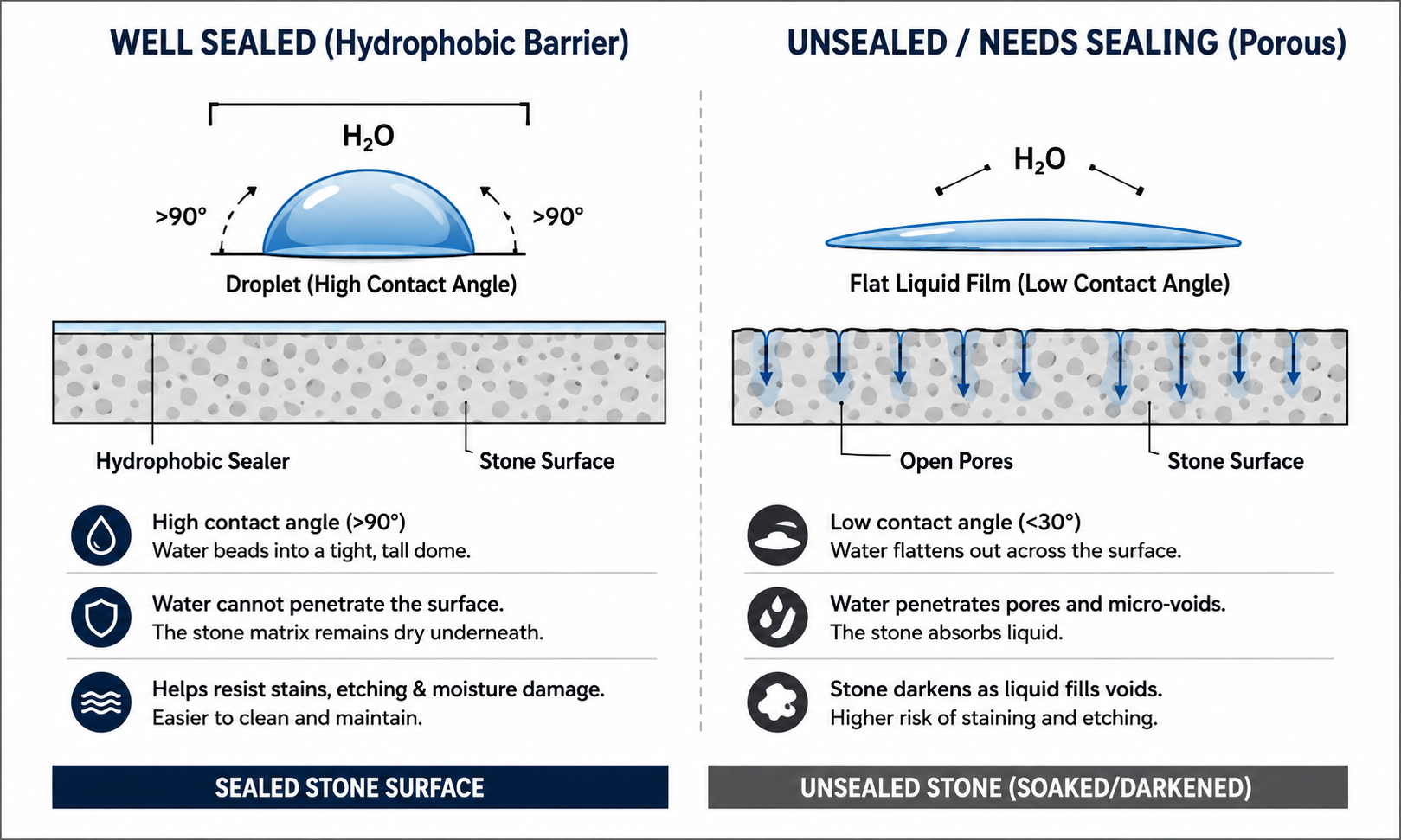
- Use Only Penetrating (Impregnating) Sealers: Do not use a topical sealer or topical wax polish on honed quartzite. Topical coatings create a film on top of the stone that can flake, smear and change a lovely matte surface into an uncomfortable semi-gloss. Penetrating sealers are designed to seep deep into the pores, lining them from the inside out, while leaving the surface texture 100% matte and unaffected.
- Perform the Water Bead Test: Don’t wait for the calendar to tell you when it’s time to seal. Put a couple teaspoons of clean water on your worktop. If the water forms tight, spherical beads, your sealant is intact. Cover with a drinking glass so it can not evaporate and let it for about 20 minutes. If the water has discolored and dulled the stone, seal the surface.
- Daily Cleaning Routine: Daily Cleaning Routine Cleaning honed quartzite countertops doesn’t require any particular magic. Use a light pH-neutral stone cleanser or warm water and a drop of gentle dish soap, with a soft microfiber cloth. Do not use severe bleach, ammonia or abrasive scrubbing pads.
A Critical Note on Honed Finishes and Dark Quartzite
This is the single most critical thing missing from stone finish recommendations — and it can save you years of cleaning aggravation.
| Finish Type | Honed (Matte) | Polished (Glossy) | Brushed (also called Leathered) |
|---|---|---|---|
| Surface Feel | Smooth, velvety flat finish | Glass-like, high reflectivity | Textured, slightly undulating matte |
| Fingerprint & Oil Visibility | High: Dark matte surfaces amplify oil transfers | Low-Moderate: Easy to wipe away entirely | Very Low: Texture breaks up light and hides prints |
| Daily Cleaning | pH-neutral stone cleaner; dark slabs need wiping more often | Quick paper towel / microfiber wipe | Microfiber cloth fits into microgrooves. |
| Best Application | Light-toned counters, walls, low-touch dark accents | High-traffic counters, backsplashes | Kitchen islands, high-touch dark countertops |
Many homeowners think that a matte honed surface will hide smudges better than a shiny one. This rule is applicable for light stones, such as white or beige, but is fully reversed for dark stones.
But, honed deep charcoal, black, dark green or blue quartzite is a major maintenance concern. The stone does not disperse enough light on dark matte surfaces to disguise differences in comparison. Every natural skin oil from a fingertip, every drop of water, every palm rest leaves a dark, visible mark that makes the countertop look continually dirty.
The Brushed Solution for Dark Stone
If you appreciate the organic, low-gloss look and want a dark slab, go for a brushed finish as opposed to a flat honed finish. The stone is brushed to create a faint pebble-like relief texture. Diamond tipped brushes are rubbed across the stone to create a brushed surface. Light reflection is scattered in dozens of directions at once by the micro-texture, totally obscuring fingerprints and hand oils while providing a matte, velvety feel.
Dark Quartzite Suggestions
- Platinum Black Quartzite: A charcoal deep stone from MSI’s quartzite line with fine white veining. A bold stone. A polished or brushed finish is more beautiful and doesn’t have the daily fingerprint problem that a flat hone has.
- Andes Black Quartzite: A stunning black slab with white veining that performs very well in polished kitchens or brushed outdoor entertaining zones.
Which Finish Is Best for Each Space?
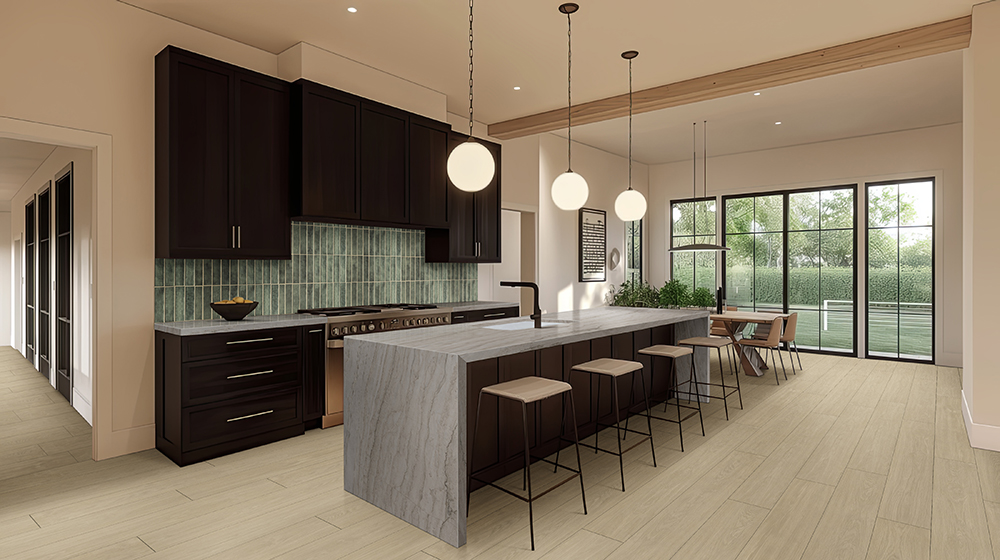
Choosing the proper finish to match your room’s physical needs will keep your investment practical and appealing for decades.
| Space / Application | Light Quartzite (Taj Mahal, Zermatt) | Dark Quartzite (Belvedere, Andes Black) | Primary Recommendation Reason |
|---|---|---|---|
| Kitchen Countertops | Honed or Polished | Polished or Brushed | Brushed hides skin oils on dark stone; Honed softens reflections on light stone. |
| Kitchen Island | Polished (Statement) | Polished or Brushed | High visibility favors high-contrast reflectivity or tactile texture. |
| Bathroom Vanity | Honed or Polished | Polished or Brushed | Resists toothpaste, soaps, and cosmetic acids across all finishes. |
| Shower Floors | Honed (Recommended) | Honed (Recommended) | Matte texture provides vital slip resistance when wet. |
| Shower Walls | Honed or Polished | Polished or Brushed | Polished walls shed water faster; Honed offers a modern spa aesthetic. |
| Outdoor Kitchens | Honed (Weather-proof) | Honed (Weather-proof) | Prevents harsh glare under direct sun and masks UV-exposed wear over time. |
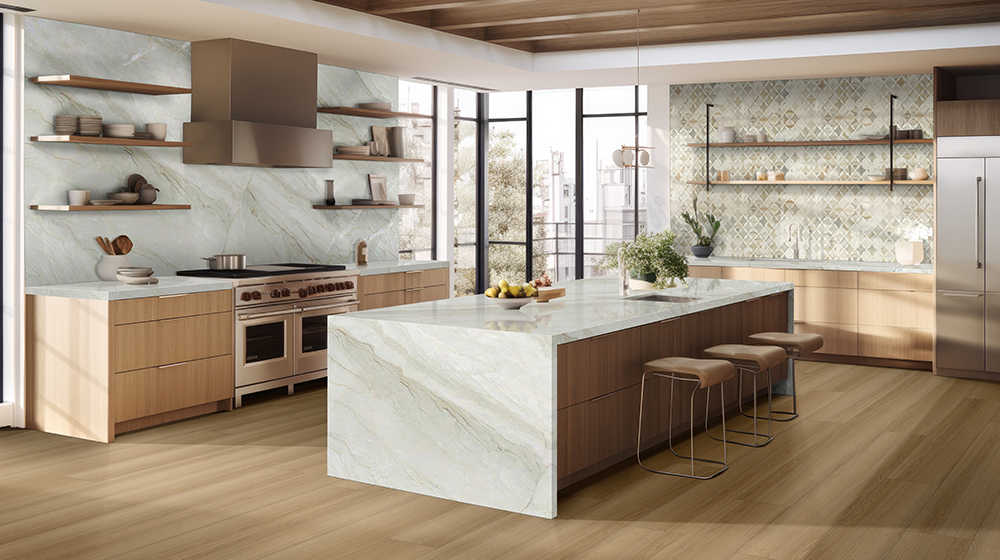
1. Kitchen Countertops & Islands
Both treatments work well with light-colored stone such as Zermatt Quartzite or Golden White Quartzite tiles. Honed offers a warm calm organic kitchen area. Polished creates a strong center of attention and throws the light back into the space. Dark kitchen countertops demand polished or brushed finishes for everyday functionality.
2. Vanities in the bathroom
Both finishes are suitable for bath settings. Polished vanity tops give a reflective, high-end spa look, while honed tops bring a peaceful, serene, natural-stone presence.
3. Wet Areas and Shower Floors
The unambiguous professional recommendation for shower floors is honed quartzite. Wet polished stone can be a significant slipping danger. Honed surfaces offer the micro-traction needed underfoot in wet areas.
4. Outdoor Kitchens
Honed is the recommended standard for outdoor kitchens. Windblown grit and abrasion will dull exterior polished surfaces over time and sun exposure breaks down sealers more quickly when they are outdoors. The patina created by the elements outdoors is beautiful.
Matching Surface Finish with Edge Profiles
The look and feel of your room is determined by the combination of your surface finish and quartzite edge finishes. For the ultimate in formal luxury, match a polished slab with a full waterfall edge or intricate ogee profile. The clean, serene, and modern silhouette of a honed slab with a basic relaxed, beveled or straight edge. Explore our guide to quartzite countertop edge profiles for all fabrication choices and our general countertop selection guide.
Can You Refinish Quartzite Once It’s Installed?
You can refinish a quartzite countertop that is already in place, but this is not very practical and should be avoided if possible.
- Changing Polished to Honed: A skilled stone restoration contractor can use portable diamond hand abrasives to remove the matte surface from an installed slab and create a high gloss finish. However, quartzite is a hard 7 on the Mohs scale and this procedure is labor intensive, costs $10-20 per sq. foot and produces a lot of slurry and dust within your home.
- Quartzite Polishing: Harder, rarely worth it. A skilled stone restorer can repolish installed stone in place using a floor or hand machine utilizing industrial diamond disks; but achieving a uniform, factory-grade gloss across an entire kitchen is a multi-step process. First get a quote.
Bottom Line: Choose the right finish before the slab goes to the fabricator. Have your stone supplier display you full size slabs in both finishes under genuine store illumination.
Visit to see the difference
Photos reduce the contrast of stone, and reading about finishes only goes so far. But when you’re standing there in front of the real slabs, in the natural light, it’s immediate, it’s easy. When you are ready to select your stone, chat with us online to speak directly to our design specialists, MSI Showroom to see full-size honed, polished and brushed quartzite slabs side-by-side, or connect with a local authorized dealer to source the exact quartzite variety for your dream home renovation.
Frequently Asked Questions
Is honed or polished quartzite better for kitchen countertops?
Both finishes have their benefits, but neither is universally better. Quartzite is naturally acid resistant, so it won't etch from food spills. Polished quartzite is a bit simpler to wipe clean and resists stains longer, making it a popular choice for busy kitchens. Honed quartzite is softer and more contemporary, which pairs wonderfully with lighter colored slabs.
What is the best finish for quartzite countertops?
The optimal finish is totally dependent on your design goals and stone hue. White quartzite can be finished in either an honed finish for an organic, informal feel or a polished finish for dazzling reflection. For dark quartzite, polish or brush will be the best way to avoid fingerprint smudges. Honed is the only safe solution for shower flooring.
Is honed quartzite easy to stain?
Honed quartzite will soak up spills faster than polished quartzite because the pores on the surface are left exposed. But true quartzite is a dense stone, and regular application of a penetrating sealer (every 6-12 months) prevents stains from settling into the stone.
What are the downsides of honed quartzite?
Cons: Higher sealing frequency (every 6-12 months vs. 12-18 months for polished,) higher volume of finger prints visible on dark stone kinds. Slightly higher fabrication cost (~10% more owing to extra processing stages).
 SHARE
 PIN
 TWEET