What Is Hybrid Rigid Core Flooring? How Is It Different From SPC, WPC And Glue Down Vinyl?
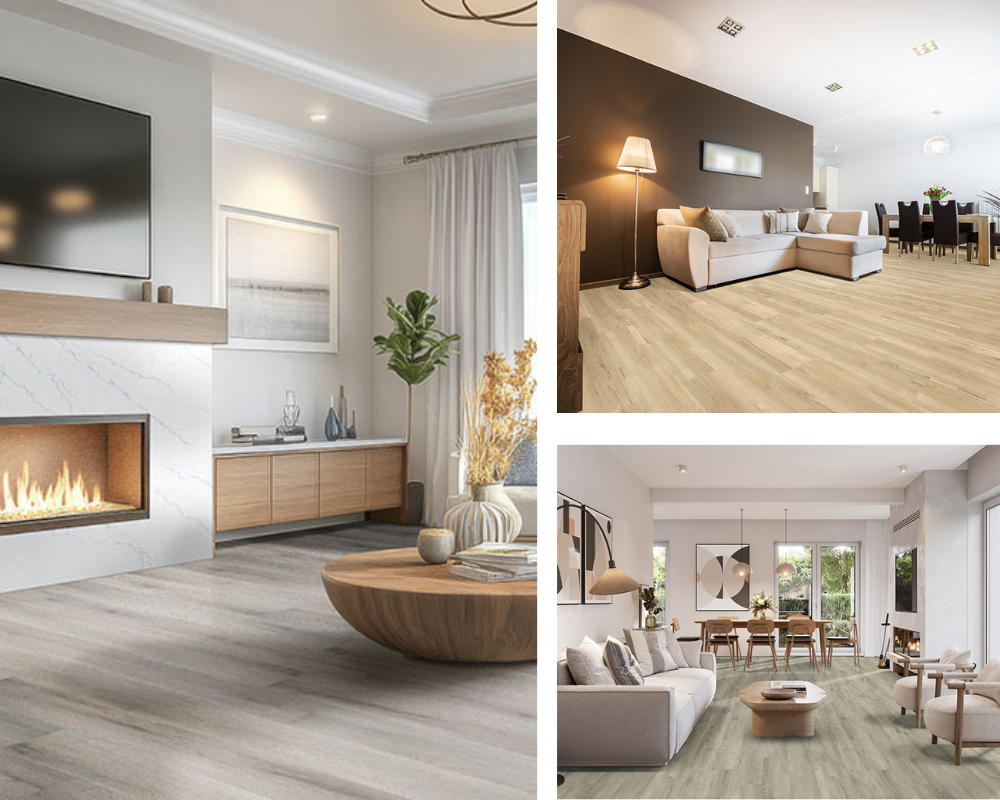
What is rigid core hybrid flooring? Hybrid rigid core flooring is a multi-layer waterproof plank built on a polymerized fortified composite core (100% PVC-free) that offers excellent dimensional stability, subfloor forgiveness, and support for wide-plank formats. It sits at the top of the rigid core category, engineered specifically for large-format planks and demanding commercial environments—answering a gap between standard stone-composite density and the acoustic comfort of foamed-core construction.
This guide explains the different types of rigid core flooring—hybrid, stone polymer composite, wood polymer composite, and glue-down vinyl—by comparing their core construction, commercial specifications, installation methods, and how they can be used in projects. Rigid core luxury vinyl flooring is not a single product type; it includes several formats, such as hybrid rigid core, SPC, WPC, and glue-down vinyl. For the full category overview, see our complete vinyl flooring guide.
| Format | Core Material | Total Thickness | Install Method |
|---|---|---|---|
| Hybrid Rigid Core | Polymerized Fortified (PVC-free) | 10–12mm | Floating Click-Lock |
| Stone Plastic Composite | Stone Plastic Composite | 4–6mm | Floating Click-Lock |
| Wood Plastic Composite | Wood Plastic Composite (Foamed) | 5.5–8mm | Floating Click-Lock |
| Glue-Down Vinyl | Homogeneous/Heterogeneous PVC | 2–4mm | Full-Spread Adhesive |
The Rigid Core Family Consists of Four Formats That Share One Common Foundation
Rigid core formats share a common design goal—dimensional stability—but diverge sharply in core density, thickness profile, and installation mechanics. Builders and property owners familiar with waterproof vinyl flooring often assume these formats are interchangeable. They are not.
Each category has a different building application. One of the most common and costly errors in commercial renovation is choosing the wrong specification on the basis of surface appearance. Vinyl plank dimensional stability, subfloor tolerance and wear layer depth are markedly different among the four formats, with each variable impacting long-term performance.
- Hybrid Rigid Core—reinforced composite core engineered for large plank formats and consistent dimensional stability
- Stone Polymer Composite—the densest profile, thinnest cross-section, greatest dent resistance
- Wood Polymer Composite—foamed core providing acoustic performance and underfoot comfort
- Glue-Down Vinyl—adhesive-bonded, zero-float permanent installation for sustained-load environments
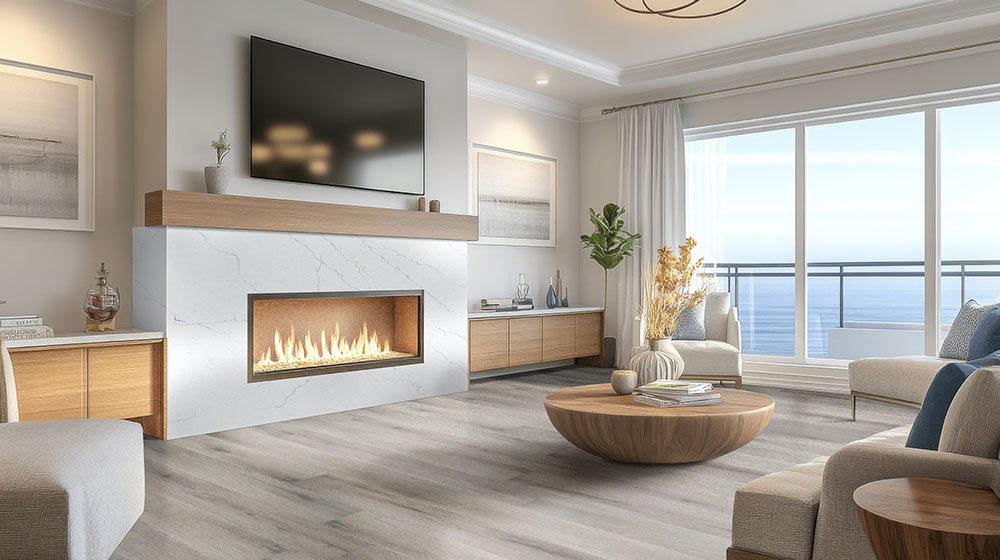
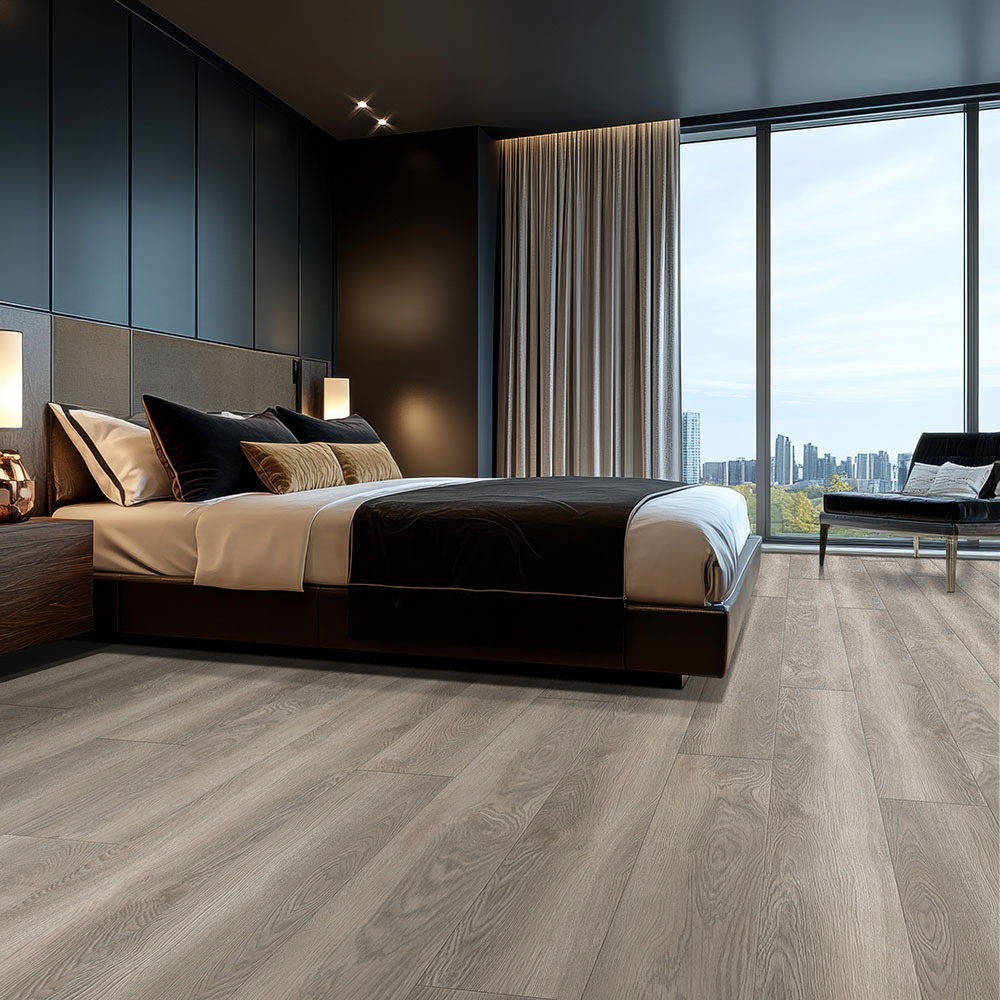
Avery Ash® Hybrid Rigid Core Flooring
What Makes Hybrid Rigid Core Different?
The effect force has on a floor is dependent on the exact combination of minerals and polymers in a plank and impacts its ability to support heavy loads, temperature fluctuations and the movement of long planks. It is important that differences in construction layer are understood before any specification is issued.
Core Construction Compared
- Stone Polymer Composite: Ground limestone powder and PVC are used to produce this without the use of a foaming agent. This is the densest format and the most slender profile at 4–6 mm. Least subfloor forgiveness; greatest resistance to structural dents.
- Wood Polymer Composite: Made from wood flour, PVC and a chemical foaming agent. The softer core produces a thicker profile of 5.5–8mm with built-in comfort and powerful sound dampening.
- Hybrid Rigid Core: Uses a unique type of strong composite that is completely free of PVC which helps keep larger planks stable – enabling boards up to 9″ wide and over 72″ long with much less risk of expanding or contracting.
- Glue-Down Vinyl: Does not contain a floating click-lock mechanism at all. It is the thinnest format, 2–4 mm thick, and is permanently bonded to the subfloor.
Hybrid Rigid Core vs. SPC — The Core Difference
When comparing hybrid rigid core to stone-composite construction, the primary factor is how the core of each handles mid-plank flex. For projects comparing hybrid rigid core vs SPC, the biggest difference is that hybrid rigid core is designed for larger plank formats and improved dimensional stability, while SPC is usually thinner and denser. Most SPC vs WPC discussions focus on two types of material, but a hybrid rigid core adds a third option – a stronger composite that handles bending over wide planks, while a regular stone-composite core can bend a little under heavy weight.
Is hybrid rigid core better than wood-polymer composite? Hybrid rigid core flooring is usually the better choice for larger commercial and whole-home applications that require dimensional control over longer spans. Wood polymer composite scores higher for acoustic comfort and residential underfoot feel, but a foamed core gives up some stiffness at wider plank widths. The correct answer depends on span width, application load, and the luxury vinyl flooring pros and cons that matter most to the project.
Wear Layer Specs & Commercial Ratings
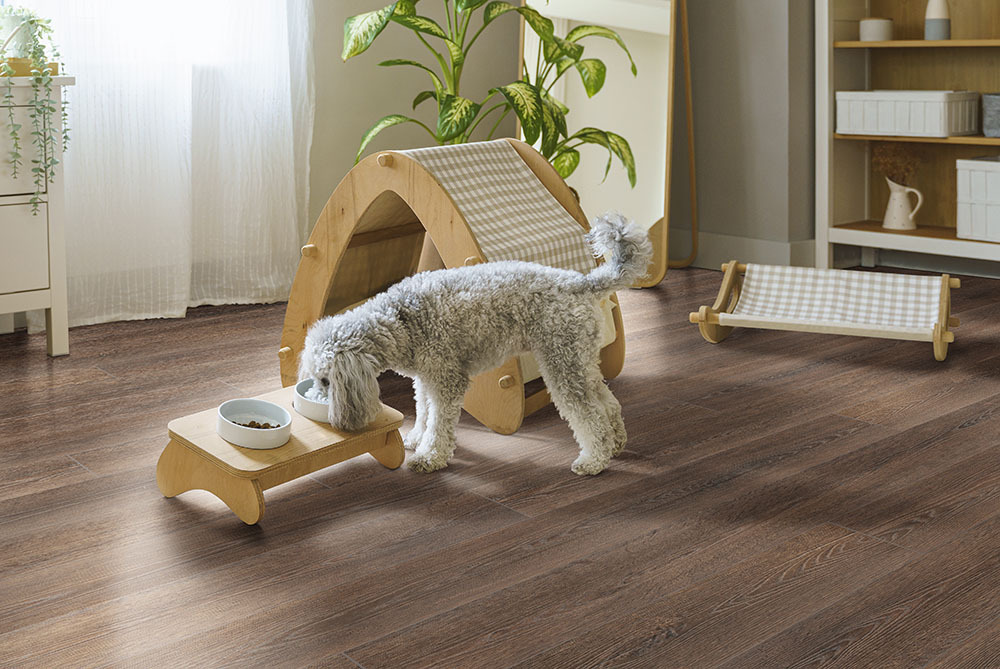
Evaluating wear layer mil thickness for commercial applications is necessary before issuing any specification. The CrystaLux™ Protection Layer is available as a 12 mil residential grade and can be scaled up to a 20 mil commercial grade with CrystaLux Ultra™. Vinyl plank wear layer thickness directly affects warranty length as well as the long-term surface integrity.
- 12 mil: Ideal for light residential and low traffic spaces
- 20 mil: Designated for light commercial spaces, multi-family hallways, and rental units
- 28 mil: Available from some manufacturers for healthcare clinics, education facilities, and heavy commercial footprints
Hybrid flooring with integrated underlayment systems of material such as EVA, IXPE, or thick acoustic foam attached to a waterproof backing is common in premium floating planks and generally does not require purchasing a separate underlayment.
Side-by-Side Comparison: Stone Composite vs. Wood Composite vs. Hybrid vs. Glue-Down
The luxury vinyl comparison chart below highlights the differences that designers often miss, especially the important distinction between hybrid flooring and glue-down vinyl when dealing with heavy loads or ongoing moisture in the area. When comparing hybrid flooring vs vinyl, the main difference is core construction: hybrid rigid core is built for dimensional stability and large-format plank support, while traditional glue-down vinyl depends more heavily on adhesive bond and subfloor preparation.
| Feature | Hybrid Rigid Core | Stone Plastic Composite | Wood Plastic Composite | Glue-Down Vinyl |
|---|---|---|---|---|
| Core Material | Polymerized fortified (PVC-free) | Stone plastic composite | Wood plastic composite (foamed) | PVC, no composite core |
| Total Thickness | 10–12mm | 4–6mm | 5.5–8mm | 2–4mm |
| Wear Layer Options | 20 mil (AC4/AC5-rated) | 12–20 mil | 12–20 mil | 6–22 mil |
| Install Method | Floating click-lock | Floating click-lock | Floating click-lock | Full-spread adhesive |
| Subfloor Tolerance | 3/16" in 10 ft. | 1/8" in 6 ft | 3/16" in 10 ft. | 1/8" in 6 ft |
| Acoustic Performance | High (IXPE underlayment) | Moderate | High (foam core) | Moderate |
| Temperature Range | Climate-controlled (65–78°F); below-grade approved | Wide | Moderate | Narrow — adhesive-dependent |
| Replaceability | Individual planks | Individual planks | Individual planks | Full adhesive removal is required. |
| Best Application | Commercial, whole-home, large-format | High-traffic, commercial | Residential comfort, multifamily | Healthcare, rolling loads, wet areas |
For examples of concrete products, think about the Cyrus SPC vinyl plank family for regular stone-polymer density, the Andover WPC vinyl plank series for a 20 mil commercial-grade stone-composite design with built-in soundproofing, or the Nove collection of glue-down luxury vinyl planks for full-spread needs in commercial spaces.
What Format Is Best For Your Project?
Choosing the right flooring format depends on the project type, traffic level, subfloor condition, acoustic needs, and installation method.. The breakdown below streamlines decision-making for design teams and specifiers, and a vinyl flooring cost comparison can help finalize budgets.
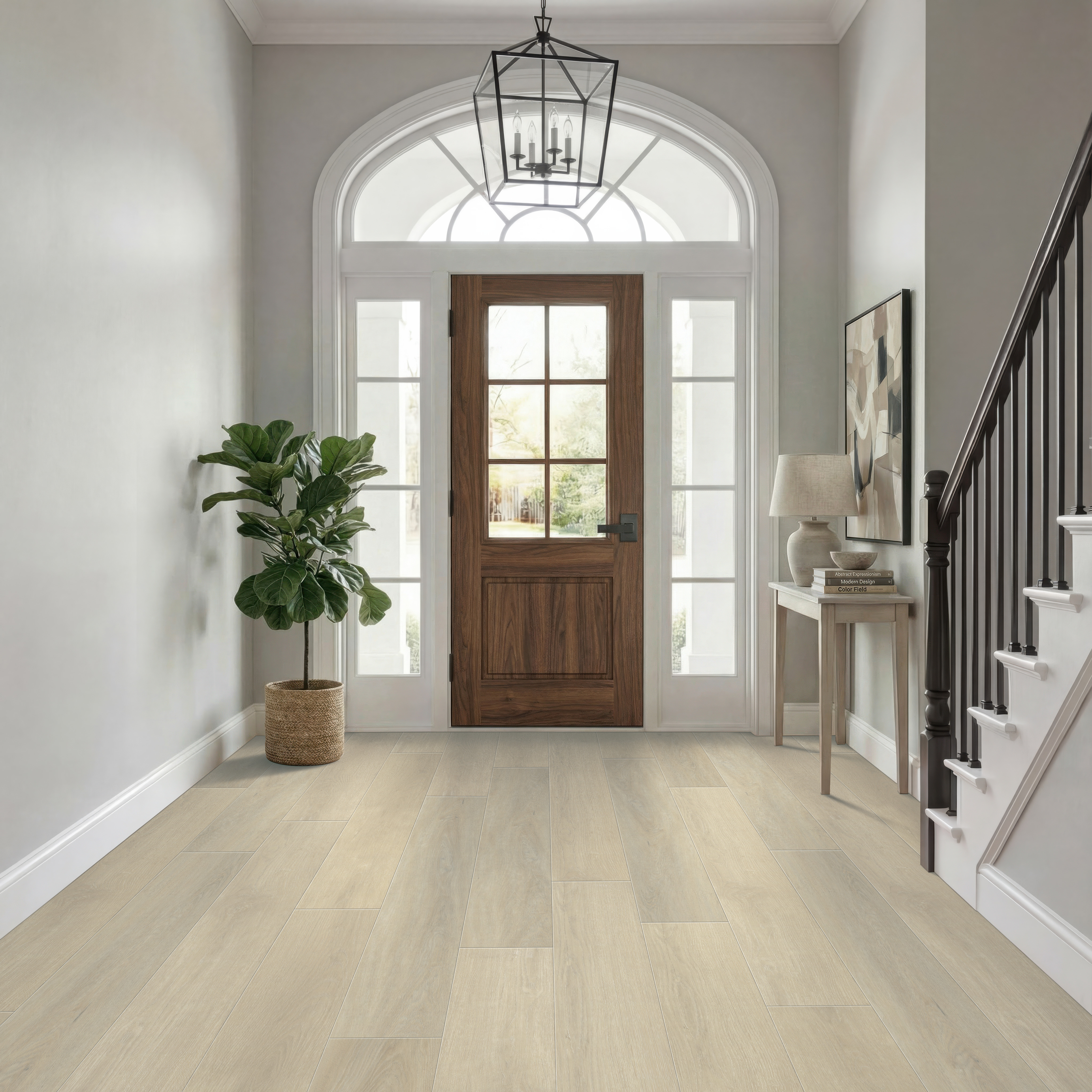
Wayne Parc™ Waldron Luxury Vinyl Planks
- High-traffic retail / showroom: Hybrid rigid core or stone-composite format, requiring a 20 mil or higher wear layer alongside a high-density core supporting wide planks.
- Healthcare / senior living: A hybrid rigid core that can achieve the ANSI A326.3 wet DCOF rating of 0.42 or higher (check each product's score) while staying stable under heavy loads.
- Hospitality / hotel corridors: Hybrid rigid core suits long-corridor applications—wide planks expand the visual scale while meeting multi-story acoustic requirements.
- Residential multifamily: Wood-polymer composite improves sound insulation and reduces noise transfer between stacked units.
- Wet areas (locker rooms, pool surrounds): Glue-down vinyl, where the continuous adhesive backing eliminates moisture infiltration at seam joints.
- Renovation over existing hard surface: Hybrid rigid core or stone-composite format, where slim floating profiles clear door thresholds without full demolition.
- Radiant heat substrates: Waterproof rigid core flooring temperature range limits apply—the heating surface must remain at or below 85°F (29°C). Always check the product datasheet.
Floating Floor vs Glue Down – Which Installation Method is Better?
Whether floating or glue-down is the better choice depends on loading conditions and long-term renovation strategy. It is usually decided by the operating environment.
Floating floor installation method uses tongue and groove click lock joints. Planks lock in place and float freely above the subfloor. There is no glue, and no acclimation is needed, assuming the climate is right – planks in extreme heat or humidity need at least 12 hours to acclimate. And every plank can be replaced separately at any time in the lifespan of the floor.
Whether to go with click-lock or glue down vinyl flooring is a matter of how permanent you want it to be and the type of load. Glue-down vinyl has planks that are adhered to a tough adhesive backing so that they form a solid bond that won't flex at the edges when the toughest equipment is run on them. Subsequent remodelling will involve massive scraper removal. Glue-down vinyl is the right specification when rolling loads, sustained moisture or extreme temperature swings are part of the operating environment.
When to Specify Glue-Down Over Floating
There are three conditions that consistently favor adhesive bonding over floating:
- Heavy rolling load environments: Continuous localized weight from hospital beds or supply carts can stress and eventually damage floating click-lock joints over time. There is 100% prevention of joint movement with adhesive.
- Wide temperature fluctuation zones: Commercial garages or unconditioned storage areas are perfect for adhesive systems that prevent expansion along seam lines.
- Constant high moisture below grade: Subfloors with constant vapor transmission require glue down application with moisture vapor testing – emissions greater than approximately 8 lbs per 1,000 sq ft per 24 hours (ASTM F1869) require a moisture mitigation system prior to installation.
Specifying Hybrid Rigid Core for Commercial Projects
Issuing an accurate building specification requires matching product testing certifications with local building codes and accessibility guidelines.
- DCOF compliance: For commercial wet areas, specifiers should verify the product’s wet DCOF rating, commonly evaluated using ANSI A326.3 testing. Always confirm the required slip-resistance standard for the specific project and local code. for commercial wet zones. Specifiers must verify compliance on the MSI product data sheet; Hybrid Rigid Core planks featuring advanced registered embossing typically meet or exceed this traction benchmark.
- Wear layer specification rule: Commercial specifications must require a minimum 20 mil layer for light commercial zones like office suites and standard boutique retail, scaling up to a 28 mil minimum for high-occupancy civic zones including hospitals, schools, and transportation hubs.
- VOC compliance: To qualify for LEED points or meet healthcare air quality mandates, specify products that carry FloorScore or CARB Phase 2 indoor air quality certifications.
- Shorecliffs™ HRC: For high-traffic commercial spaces requiring a premium aesthetic, specify the MSI Shorecliffs series. This collection delivers commercial-grade wear layers, large-scale wide planks, and a verified DCOF rating. Review the complete technical specification via our hybrid rigid core flooring page.
The Condition of the Subfloor Dictates the Format You Can Use
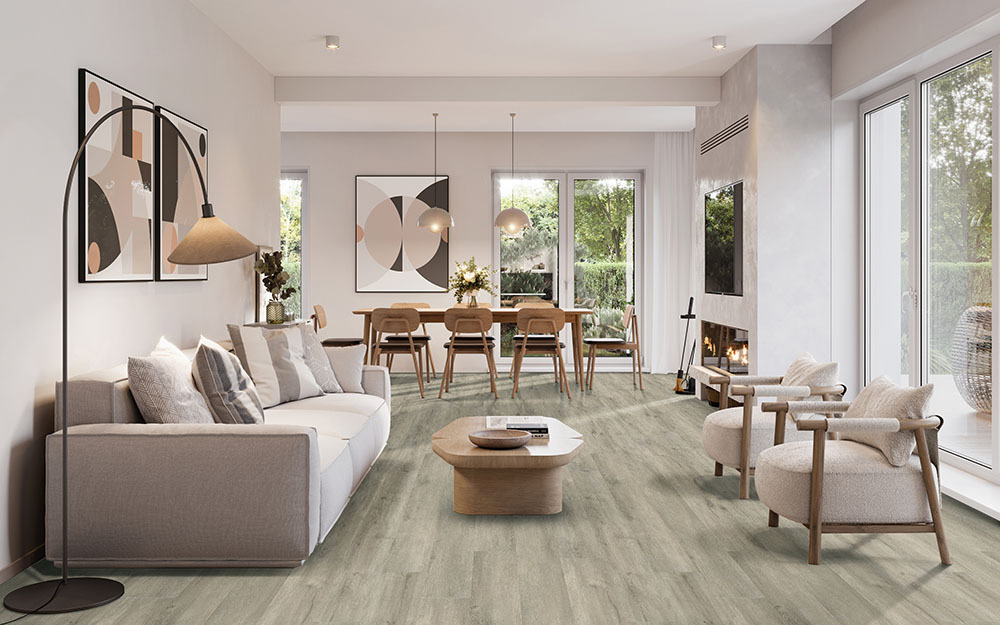
Wixom Valley Hybrid Rigid Core
This is where most spec guides fall short and where projects fail. Format-specific vinyl plank subfloor tolerance requirements are not interchangeable. Not measuring actual substrate flatness prior to purchase is the #1 cause of post-installation joint failure and visible mid-plank deflection.
No format is immune to subfloor unevenness. And, the floor above is only as good as what's underneath it.
Subfloor Flatness Tolerances (Maximum Allowable Variation):
| Format | Maximum Variation | Span |
|---|---|---|
| Floating (Hybrid, Wood Composite) | 3/16" | 10 ft |
| Stone Plastic Composite | 1/8" | 6 ft |
| Glue-Down Vinyl | 1/8" | 6 ft |
Here's what those numbers mean in practice:
- Stone Polymer Composite: Allows a maximum 1/8″ variation across any 6-foot run per MSI's installation guide—tighter than the general ASTM F710 tolerance. Has little flex over low spots, and high spots create rigid pivot points stressing click-lock joints under continued foot traffic.
- Wood Polymer Composite: Allows a deviation of 3/16″ in 10 feet. The thicker foamed profile allows a bit more bridging over small low spots, but high spots are just as much a problem.
- Hybrid Rigid Core: Requires a tight limit of 3/16″ over 10 feet. Wide-format planks can cover longer distances, so even one high spot can cause noticeable bending in the middle of the plank and stress on the tongue-and-groove joints, which is a problem that occurs more often with larger planks.
- Glue-Down Vinyl: Sets the strictest standard—flatness within 1/8″ over a 6-foot span. The thin material adheres directly to concrete and telegraphs every substrate imperfection to the surface.
If surfaces do not meet these standards, they must be fixed with a self-leveling underlayment compound prior to installing any product. As long as grout joint dips are no more than 1/16 inch, floating formats can bridge over existing flat ceramic or porcelain tile for renovation. When using glue down options, grout joints should be flat before applying adhesive. Adhesive will not bond evenly in joint recesses.
Measure first. Remediate as needed. Our product data sheets for each collection have the vinyl plank subfloor tolerance specifications – we can pull those for you before your specification is finalized.
Ready to Choose the Right Rigid Core Format?
Planning a commercial or residential project? We are ready to match you with the right product, core format and technical documentation for your next luxury vinyl flooring installation. Chat with us online to get expert advice on format selection, visit an MSI showroom to see full-size product displays in person, or find high-quality rigid core luxury vinyl flooring near me offered by trusted local retailers.
FAQs
What is hybrid flooring and how is it different from standard luxury vinyl?
Hybrid rigid core flooring is a waterproof plank constructed on a polymerized fortified composite core (100% PVC-free), designed for large format planks and demanding commercial environments. It gives you dimensional stability and factory-attached underlayment over a standard luxury vinyl construction.
Is hybrid rigid core flooring the same as stone polymer composite?
No, Stone polymer composite is made from a thick core of PVC and limestone. Hybrid rigid core is made from a special PVC-free base designed for wider planks, up to 9 inches wide and longer than 72 inches, providing better stability and an integrated underlayment. The stone-composite format has a denser, thinner core optimized for standard plank dimensions.
What is the difference between floating and glue-down vinyl flooring?
Floating systems are laid without the use of glue, but instead with click-lock joints, and individual planks are fully replaceable. Glue-down vinyl is bonded with full spread adhesive for zero joint movement under heavy rolling loads.
Which format is best for commercial projects?
Hybrid rigid core is the commercial specification of choice for large-footprint projects—hospitality, healthcare and high-end retail—due to its wide-plank format and dimensional stability. The stone-composite format is good for high-traffic commercial applications, and the wood composite is good for residential multifamily where acoustic performance is a driver in the decision.
How thick does the wear layer need to be for a commercial space?
Light commercial spaces require a minimum 20 mil depth, while heavy commercial environments such as hospitals, schools and hospitality require 28 mil. The wear layer thickness determines the warranty term, scratch resistance and long-term surface integrity.
Is hybrid rigid core flooring okay for wet areas?
Yes, all four formats are 100% plank-level waterproof. Glue-down vinyl is the best choice for sustained-wet commercial areas such as locker rooms or pool surrounds because the adhesive bond prevents moisture from getting into the seam joints.
Will hybrid rigid core flooring work over radiant heat systems?
Yes, within manufacturer specified limits. With most hybrid rigid-core products, you can use radiant heat as long as the subfloor temperature does not exceed 85°F (29°C) – just make sure to check the product data sheet for the exact temperature limit before installation.
 SHARE
SHARE
 PIN
PIN
 TWEET
TWEET