How Thick Is A Quartz Countertop? The 2Cm Vs 3Cm Specification Guide
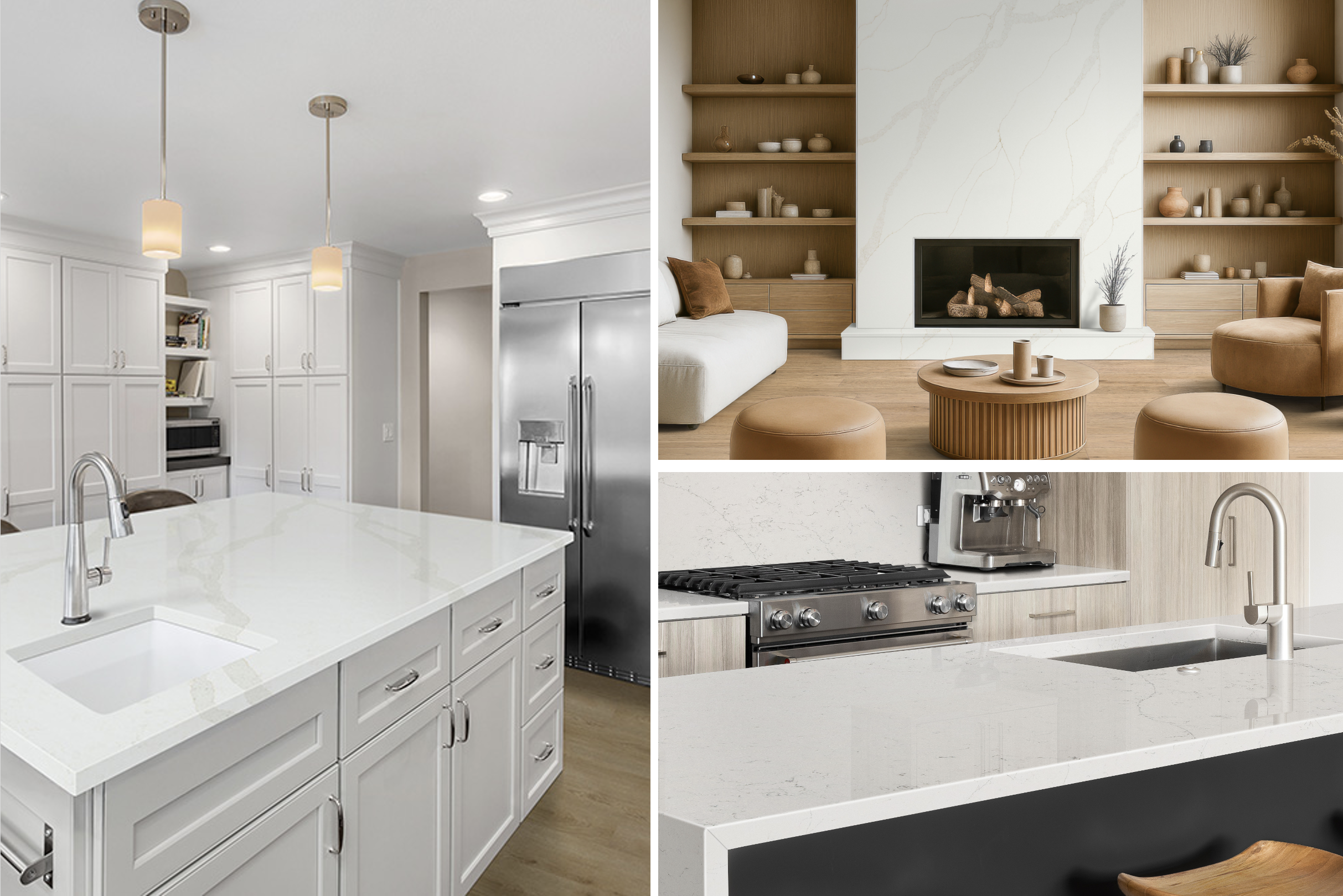
Quartz countertops are available in two common thicknesses: the 2cm (about ¾ inch) and the 3cm (about 1¼ inch). 3cm is the industry standard for kitchens, big islands and commercial areas with heavy use. The thinner 2cm option is excellent for bathrooms, vertical wall features, or budget conscious projects when supported by a plywood underlayment. Both thicknesses function well for everyday usage when fitted correctly. 3cm provides impact resistance and structural-stress resistance in high-traffic areas.
Choosing the proper thickness of quartz countertop is a major decision, and one of the most misunderstood aspects of a remodel. The slab thickness you need for a hard-working kitchen island is somewhat different than that needed for a floating bathroom vanity, a full-height fireplace wall or a busy restaurant bar top.
Getting the 2cm vs 3cm quartz countertop thickness comparison right involves looking beyond the visual profile. Weight constraints, cabinet support, edge details and the overall cost of installation must be taken into account. If you're still in the early stages of design, an essential kitchen countertop guide will help you establish clear expectations for your layout before you get into specific edge details. And here’s all you need to know to make the proper call.
What Are the Standard Quartz Countertop Thickness Options?
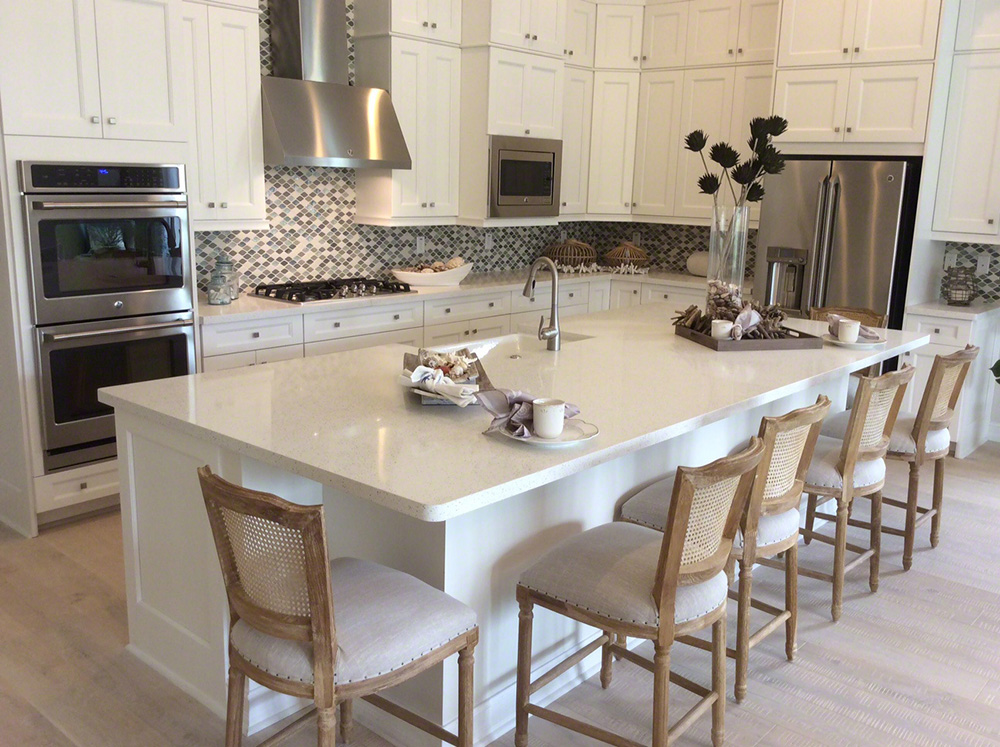
There are two typical quartz countertop thicknesses – 2cm (¾”) and 3cm (1¼”), which are standard in the stone business. It's essentially a choice between a clean, minimalist 20mm profile, or a more typical chunky 30mm depth.
Another newer option you may see are ultra-thin 12mm slabs. They are used mostly for vertical wall cladding, fireplace surrounds or custom furniture panels, instead of flat countertops.
Most of the major quartz manufacturers keep more alternatives stocked in the 3cm size. But don’t worry, our MSI Q countertops are available in both 2cm and 3cm profiles, so you can easily match your design goals with the right structural support. Both have the same raw material composition, scratch resistance, hardness, and stain protection, which is worth mentioning. The sole variation is their structure behavior.
Weight is an important element here. Standard 2cm quartz is roughly 9 to 10 pounds per square foot. That weight at 3cm climbs to approximately 13.5 to 15 lbs per square foot. A 3cm choice for a conventional 30-square-foot kitchen countertop run adds an additional 130 to 150 pounds of weight to your cabinets as compared with 2cm. If you are rebuilding an older or historic property, you should evaluate the strength of your existing cabinets before you add a heavy 3cm slab.
2cm vs 3cm Quartz — Specs Compared Side by Side
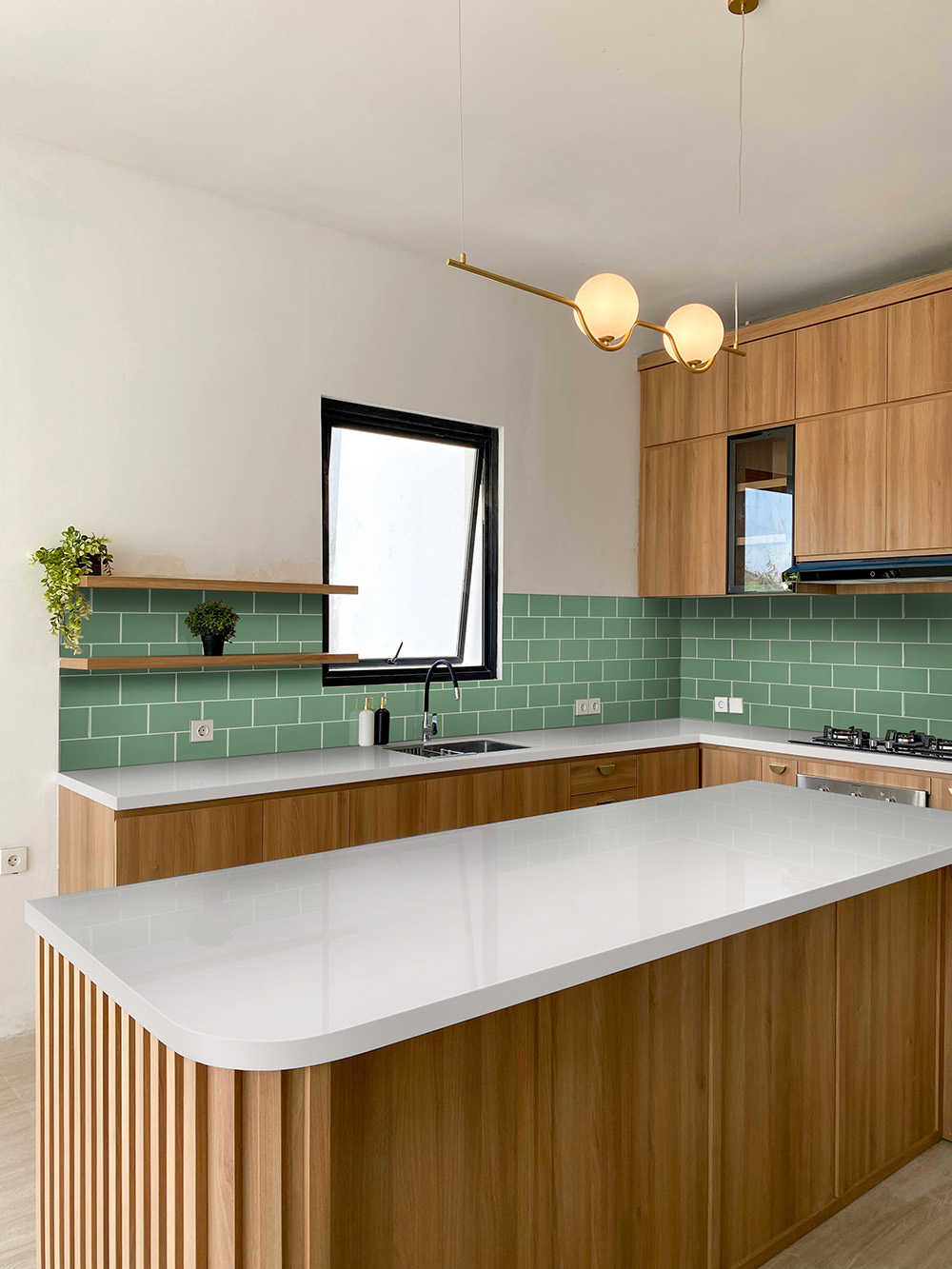
In both cases the engineered stone below is the same, but the varying thicknesses need different handling and provide distinct options in design.
| Spec | 2cm (¾") | 3cm (1¼") |
|---|---|---|
| Thickness | 0.75 inch / 20mm | 1.25 inch / 30mm |
| Weight per sq ft | ~9–10 lbs | ~13.5–15 lbs |
| Plywood underlayment | Required | Not required |
| Max unsupported overhang | 8 inches | 16 inches |
| Waterfall edge | Uncommon | Standard |
| Full ogee / cove ogee edge | Uncommon | Standard |
| Relative slab cost | 20–30% less | Standard pricing |
| Typical application | Bath, vanity, vertical | Kitchen, island, commercial |
3cm is generally always the default choice for a show-stopping kitchen island with bar seating or complex, deep edge detailing. 2cm is a very capable and price conscious option for bathrooms, backsplashes and walls as long as you build the proper support system underneath.

The Effect of Quartz Countertop Thickness on Structural Requiurements
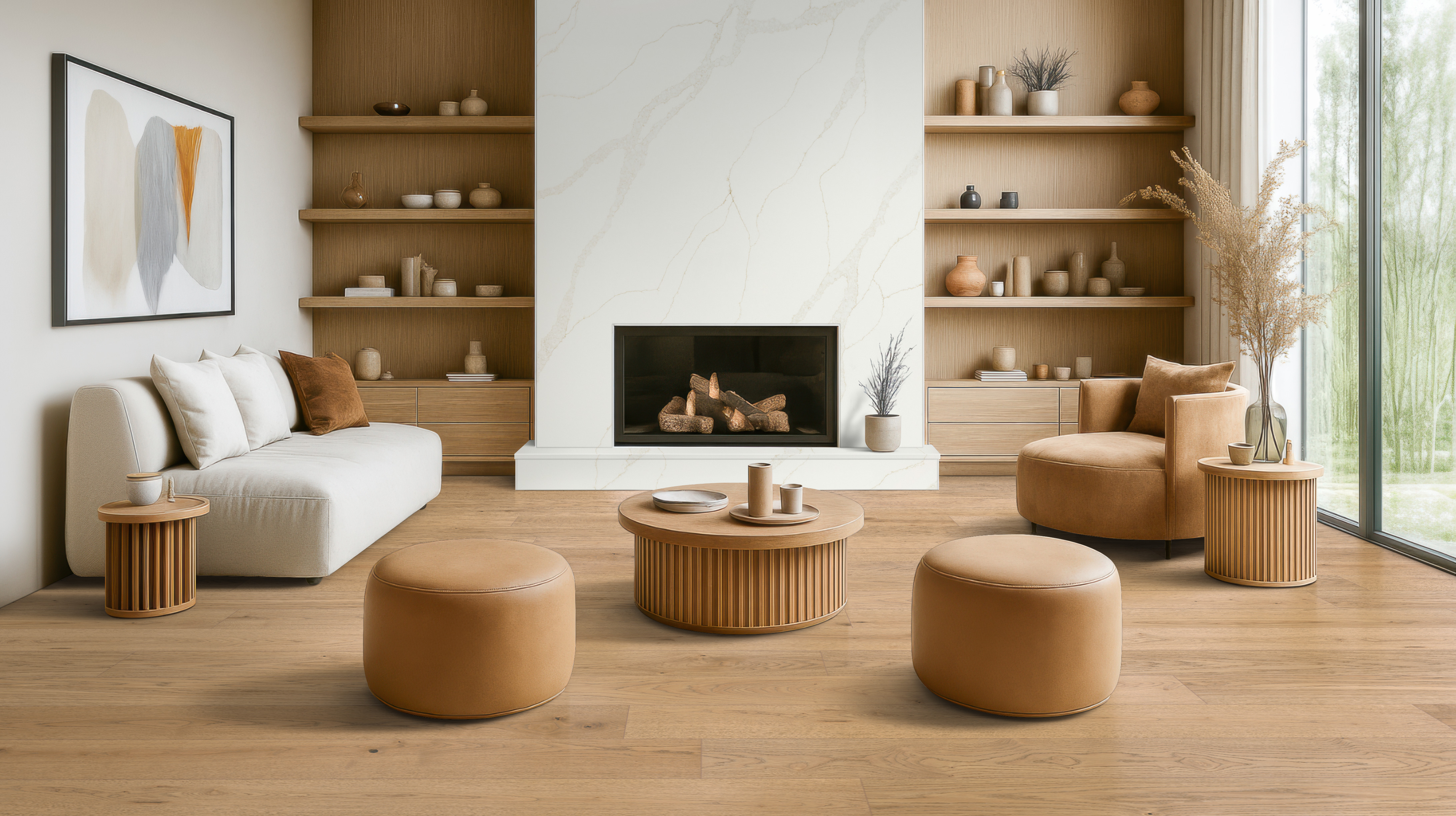
How thick you go will determine how you create your support structures. One of the most common ways budgets are blown is by going beyond this point in early project planning.
Plywood Underlayment for 2cm Quartz
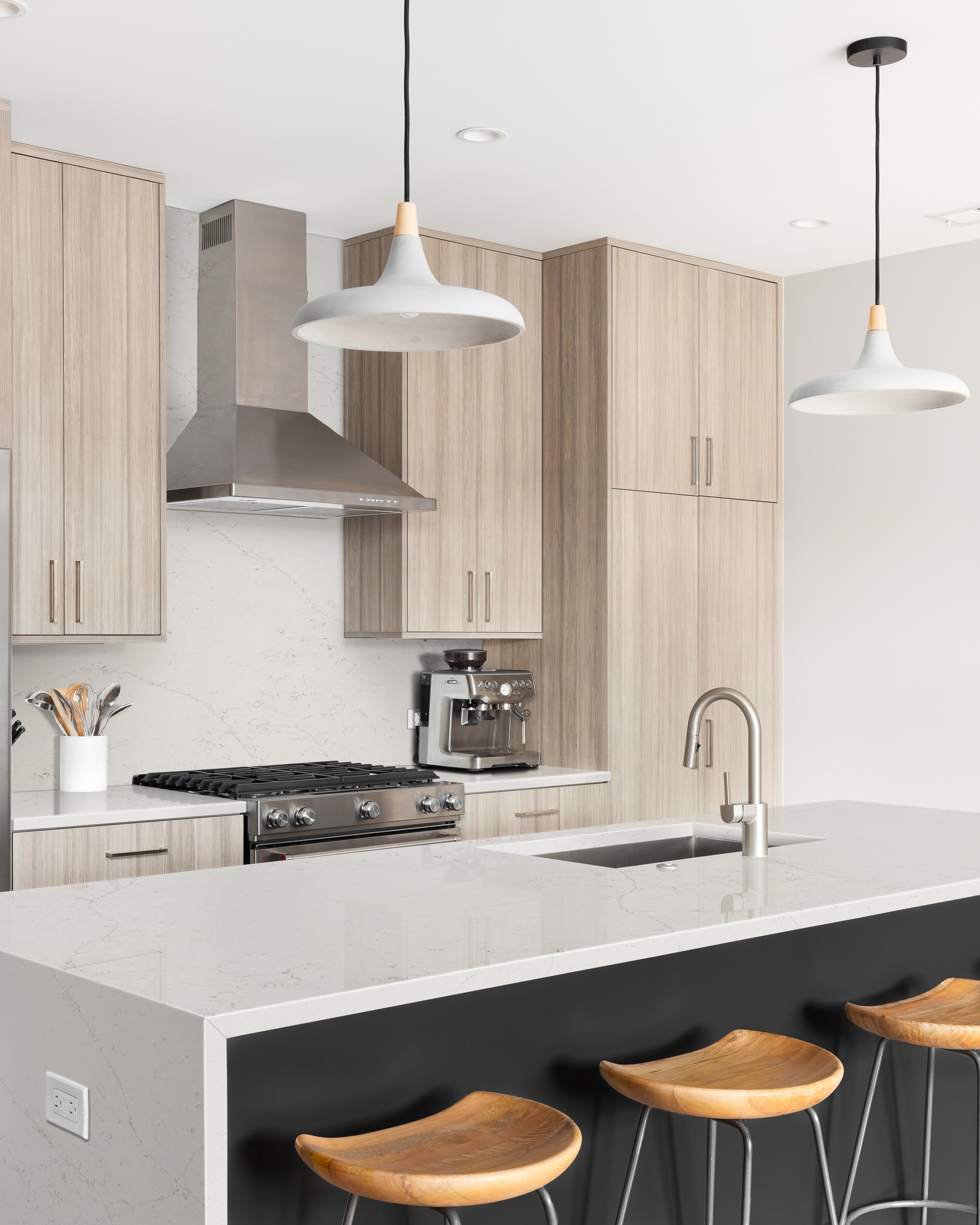
2cm quartz is thinner and lacks the independent structural stability of a bigger slab. You must have at least a full ¾" plywood thickness under quartz countertops to support it on any flat, horizontal surface. You should not leave an unsupported span more than 24" wide between cabinet supports without adding blocking to prevent the stone from flexing or cracking.
This plywood is to be glued and screwed down solidly in high traffic business areas, not loosely fitted. Be sure to always specify moisture-resistant plywood around wet areas, such as kitchen sinks or high-humidity bathrooms, so that the wood underneath doesn’t warp with time.
Limits of overhangs relative to thickness
If you are designing an island or a breakfast bar with seating, there are some engineering constraints that you should know before your fabricator cuts the stone:
- 2cm slabs: The unsupported overhang should not exceed 8 inches. Other than that, you'll need substantial steel brackets embedded into the counter.
- 3cm slabs: Supports unsupported overhangs of up to 16 inches safely. If your overhang reaches above that point, you'll have to add decorative corbels or hidden steel support rods to the island framework.
If your breakfast bar requires a comfortable 12 to 15 inch depth for stools, then 3cm is the simplest solution to maintain the space under the counter free of brackets.
Load Considerations for Cabinets
3cm quartz counter thickness is strong enough to sit straight on your cabinets without any extra support. However, a 2cm slab is thin and depends on a good plywood base to support it safely. Older cabinets, especially those built before the 1990s, often require structural reinforcement to support the heavy weight of a 3cm thick slab. Frameless European-style cabinets are typically rugged enough for either application right out of the box.
How Thick Should the Quartz Be for Your Project?
Countertops and Islands for Your Kitchen
3cm is the absolute industry standard in the main kitchen worktop areas. It can cover broad gaps without sagging, is less likely to crack from abrupt temperature shock, and is almost a must for any island with a breakfast bar. There are obvious performance reasons today, and the right 3cm setup gives you the best blend of stability and style. For standard kitchen perimeter counters, you can go with 2cm, but only if you have specifically planned for the extra labor and material to create a plywood underlayment.
The industry standard for primary kitchen work surfaces is 3cm thick. It will not sag across wider spans and provides greater structural support. It is the best choice for islands, peninsulas and breakfast bars. It’s no secret why quartz is the top choice for modern kitchens, and choosing the 3cm thickness provides you the best combination of durability, stability and elegance. 2cm quartz can also be installed for standard kitchen perimeter counters, but should only be considered when the additional labor, material and support requirements of a plywood underlayment are taken into account.
Bathroom Vanities
Either thickness works really well in the bathroom. The 2cm thickness is a relatively typical residential vanity size since it reduces the burden on the cabinetry and a regular vanity top (22 to 25 inches deep) easily fits within the weight constraints of either format. With a fashionable floating vanity, 2cm is typically the better option, as the weight reduction over time protects the wall-mounting bracket system.
Commercial and Hospitality Applications
For high-use areas such as restaurant bar tops, café service counters and hotel check-in desks, 3cm is almost a must to survive the everyday wear and strain. If you’re putting together commercial bids, be sure to note surface hardness, stain resistance and heat tolerance, as well as thickness. A quick reminder also that ADA countertop height compliance (34 inches max) is a separate calculation from the material thickness you choose.
Vertical Applications — Backsplash, Fireplace Surrounds, Furniture Panels
You want 2cm for walls and vertical surfaces. Keeping the material as light as possible is important to ensuring that the adhesive bond will stand the test of drywall or concrete backer board in the long run. If you are tiling an entire wall taller than 6 feet, it’s worth investigating ultra-thin 12mm profiles. Remember, a mitered return on a horizontal waterfall island is still a structural layout, so stay at 3cm for those.
Quartz Countertop Edge Thickness Requirements
Slab thickness does more than alter the look of your counters. It directly influences what kind of edge detail your fabricator may cut into the stone.
Edges That Require 3cm
- Waterfall Edges: For the luxe look of a waterfall panel, floor to ceiling on the side of an island, 3cm is the typical go-to. It has enough mass at the 45-degree corner joint to keep it up over time without the visible seam some 2cm laminated waterfalls show.
- Thick Mitered Edges: To create the appearance of an ultra-thick block edge of 2.5 inches or greater, you need the structural strength of two 3cm pieces joined perfectly.
- Intricate Curves: Classic, ornate edge profiles like as a full ogee or a cove ogee are generally reserved for 3cm – the deep cut removes proportionally more material from a 2cm slab; however, a few manufacturers provide these profiles at 2cm for lighter-use applications.
Edges for Both Thicknesses
Both thinner or thicker edges look fantastic on cleaner, simpler profiles. Both 2cm and 3cm slabs are compatible with a typical relaxed edge, clean bevel, pencil edge, full bullnose or conventional square edge.
Achieving a Thick Look with 2cm — The Mitered Edge Technique
If you're cutting down on material expenses by using 2cm slabs but still want the weighty, quality look of a thicker counter, then ask your fabricator about a laminated edge. This is accomplished by gluing a narrow two-centimeter strip of matching quartz directly underneath the front lip to simulate the appearance of a solid 4cm slab. It typically adds another 5% to 10% to your edge fabrication costs but provides you that high-end look without the weight or price tag of a solid 3cm slab.
How Quartz Countertop Thickness Affects Price
When you're staring at a spreadsheet, 2cm can seem like an automatic money-saver. But the math of the actual slab is usually a bit more complicated.
2cm slabs are typically 20% to 30% cheaper per square foot than 3cm slabs when sold wholesale. The only downside is the additional processes necessary to correctly install a thinner slab might soon erode those savings:
- Substrate Materials: Buying and installing the necessary ¾" plywood underlayment costs around $5 to $10 per square foot.
- Extra Fabrication: If you add a laminated or mitered edge to hide the exposed plywood behind a 2cm counter, your fabrication labor cost per linear foot will increase.
As a result, the final fully installed price difference between the two is often much less than you’d think. For smaller residential kitchens under 30 square feet, 3cm is often the better overall financial and structural value. For massive commercial developments where the structural framing is pre-planned at scale, specifying 2cm can still offer meaningful bottom-line savings. If you are comparing material costs right now, reviewing a comprehensive countertop selection guide will give you a much clearer idea of how slab costs translate to real-world budgets.
Slab Yield and Thickness – The Overlooked Element
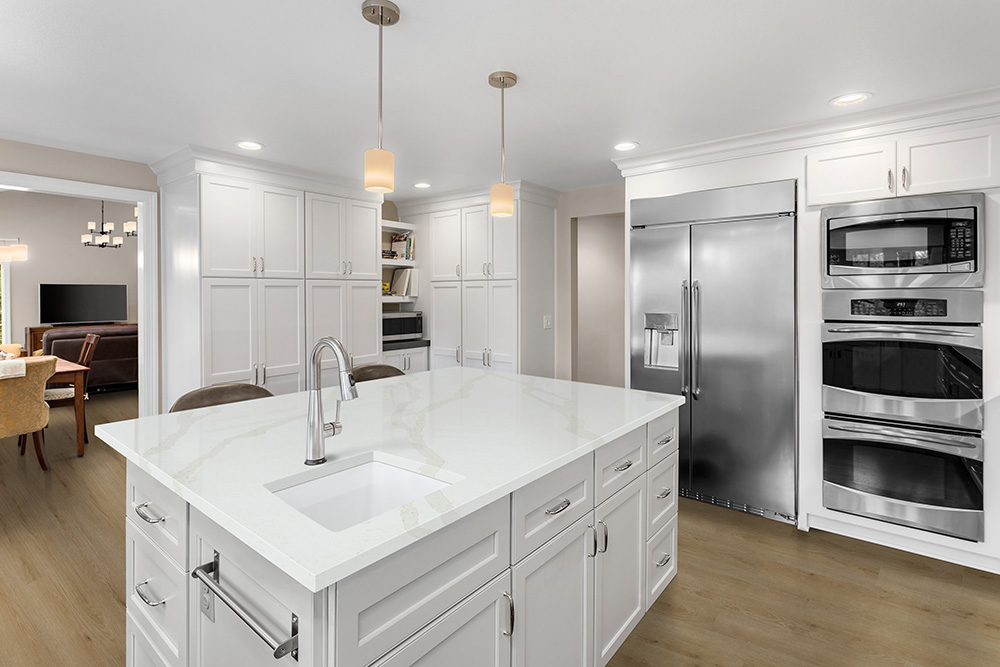
Most consumers only see the flat price per square foot and stop there. They overlook slab yield, the real usable square footage you receive out of a slab after they make cuts, sink cutouts and seam placements. For complex layouts, this matters.
Standard 2cm slabs are normally about 55” x 120”. Larger 63” x 126” slabs are MSI’s standard size for 3cm, not an upgrade tier, and are considerably more commonly available in that thickness.
Let's say you have a complex kitchen design with an island, a peninsula and a waterfall edge. One jumbo 3cm slab will give you about 54 square feet of usable surface area. You try to lay out that same kitchen on a standard 2cm slab, and it might only give you about 46 square feet of usable surface area because of where you are forced to place the seams.
Going up to a jumbo 3cm size reduces the number of slabs you have to order, as well as saving you money on shipping and eliminating seams in obvious places. If you have a difficult footprint, it is worth looking through our larger countertop collections for jumbo options.
Thickness Recommendations by Application
| Application | Recommended Thickness | Key Reason |
|---|---|---|
| Kitchen countertop (perimeter) | 3cm | Completely self-supporting; eliminates the need for plywood underneath. |
| Kitchen island with seating | 3cm | Safely handles a 12"+ seating overhang without ugly corbels or brackets. |
| Bathroom vanity | 2cm or 3cm | Both work beautifully; 2cm is great for keeping overall weight down. |
| Floating vanity | 2cm | Lightens the dead load to protect wall-mounted structural framing. |
| Waterfall edge | 3cm (standard) | 3cm gives the cleanest, most durable joint at the floor transition. |
| Thick mitered edge (2.5"+) | 3cm only | Gives the fabricator enough material to create a clean, seamless 45° miter. |
| Bar top / hospitality surface | 3cm | Easily tolerates public wear and tear while eliminating horizontal flex. |
| Outdoor kitchen | 3cm | Provides excellent weight stability through changing weather seasons. |
| Vertical backsplash / cladding | 2cm | Keeps the panels light to ensure the vertical adhesive holds forever. |
| Fireplace surround | 2cm | Perfect for heat-facing vertical walls where weight is an issue. |
Finalizing Your Specification
Checking your quartz thickness now will save you from stressful and expensive repairs later and guarantee your worktops will last for years. If you want to eliminate the uncertainties of the design process, you may use our digital design tool to visualize quartz thickness in your space and see exactly how different profiles look in your room layout before you commit.
Once you have a rough concept of thickness and scale you need for your layout, it’s important to consider long term protection for your surfaces. Keep your stone looking like new with our handy guidelines for everyday care and maintenance of quartz countertops. Protect your island setup with our guide on protecting quartz countertops from heat damage.
Ready to see these materials up close? You can explore new MSI countertop collections online to check out our newest textures, or map out your next step locally and find an authorized MSI countertop dealer near you to view full slabs in person.
Frequently Asked Questions
How thick are quartz countertops?
Standard quartz countertops are available in 2cm (¾ inch) and 3cm (1¼ inch) depths. In residential kitchens, 3cm is the usual, although 2cm is typical for bathrooms, backsplashes and wall features. For specific wall panels, ultra-thin 12mm slabs are also available from particular manufacturers.
What is the difference between 2cm and 3cm quartz?
The real stone substance is the same – they have the same mineral hardness, scratch resistance and stain defenses. It’s about strength of structure. A 3cm slab is self-sustaining, allowing for broader seating overhangs and deeper, traditional edge profiles. It’s less expensive and lighter initially, but a 2cm slab requires a plywood underlayment on horizontal counters and is compatible with fewer edge types.
Does 3cm quartz need plywood?
No. A 3cm quartz countertop may be installed straight on top of your conventional cabinet framing with no plywood support. However, a 2cm slab always requires a layer of ¾-inch plywood underneath to provide rigidity.
How does quartz countertop thickness affect price?
2cm raw slabs are typically 20-30% cheaper than 3cm slabs. However, when you factor in the cost of the required plywood underlayment and the labor to create a laminated edge to cover that plywood, the total installed cost generally comes out to be the same.
Can you do a waterfall edge with 2cm quartz?
Yes, but generally 3cm is recommended. Some 2cm quartz colors are suitable for waterfall edges, but most fabricators prefer 3cm for the reason it creates a stronger, cleaner mitered joint and a more substantial finished look.
What is the best thickness for quartz countertops on a kitchen island?
3cm size is well suitable for kitchen islands. If your island has a breakfast bar overhang of 12 inches or more, 3cm is needed to properly hold that weight without braces. If you want to try it with 2cm, then you will have to put support corbels every 24 inches.
How thick is a quartz countertop in inches?
A 2cm slab is exactly ¾ of an inch thick (0.75"), and a 3cm slab is 1¼ inches thick (1.25"). These measurements are for the rough stone before production. Your fabricator can fabricate a mitered front edge to make a thin slab look like a 2-inch-thick counter from the front view.
Is 2cm quartz good for a bathroom vanity?
Yes, 2cm quartz is a great choice for a bathroom vanity. 2cm material has structural restrictions that will hold safely a standard vanity that is 22 to 25 inches deep. Plus, bathrooms don’t get the heavy daily wear-and-tear that a kitchen does. The lighter weight is particularly helpful if you are attaching a fashionable floating vanity to the wall framing.
 SHARE
SHARE
 PIN
PIN
 TWEET
TWEET