Quartz Vs. Engineered Stone: The Ultimate Showdown For Your Kitchen Countertops
February 17, 2026Key Takeaways
- Both surfaces offer high durability and are non-porous, making them ideal for high-traffic areas.
- Our engineered stone provides high-definition designs that mirror the appearance of natural stone.
- Minimal maintenance is required for these materials, as they resist staining and etching without the need for periodic sealing.
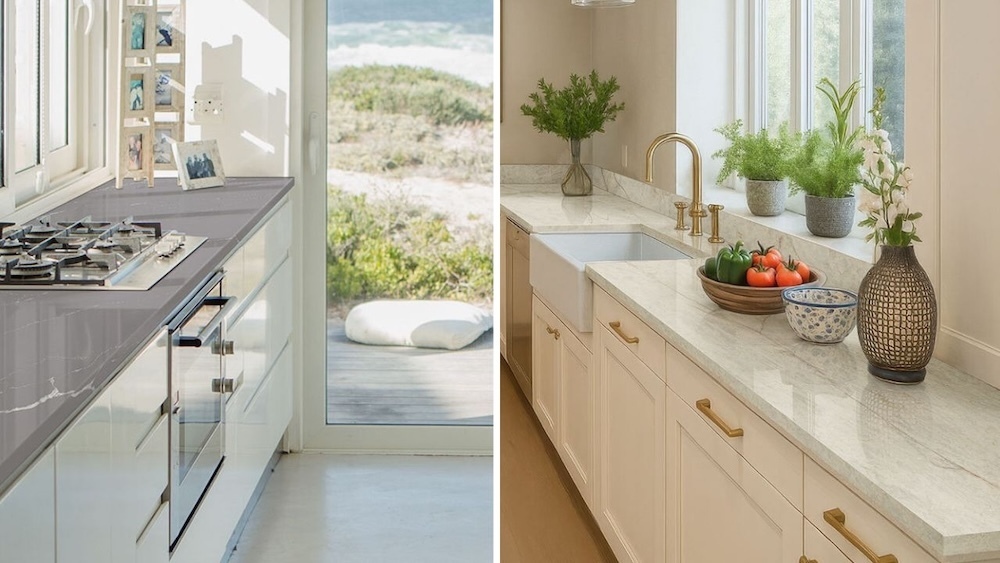
When selecting new countertops, the terms "quartz" and "engineered stone" frequently appear together. While they share many performance characteristics, understanding the nuances between our Q™ Quartz Countertops and our Q+ Collection helps you make an informed decision for your home. Both categories represent the pinnacle of surface technology, combining crushed natural minerals with high-quality resins to create a slab that is both hard-wearing and visually striking.
The Enduring Appeal of Q™ Quartz
Our quartz products are designed to withstand the rigors of daily life while offering a refined aesthetic. Because they are non-porous, they do not harbor bacteria and are highly resistant to moisture. This makes quartz for kitchen countertops a preferred choice for those who prioritize both hygiene and style. Unlike natural stone, these surfaces offer consistent patterns, ensuring that the look you choose is exactly what is installed in your space.
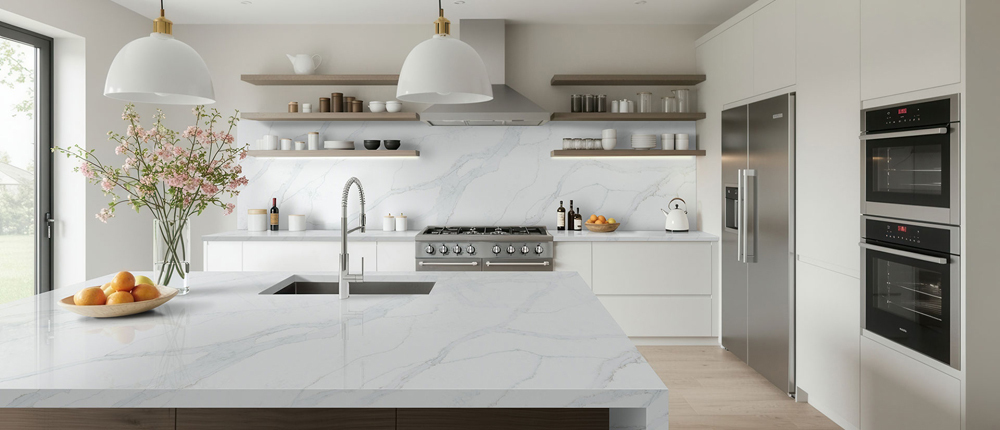
In this modern kitchen scene, our Calacatta Vernello™ Quartz serves as a bold centerpiece. We have applied this surface to both the expansive island with a waterfall edge and the full-height backsplash. The product features a creamy white background that is dramatically punctuated by thick gray veins, which contain subtle gold and charcoal accents. This design anchors the room’s minimalist aesthetic, providing a professional look against the flat-panel white cabinetry and open wooden shelving.
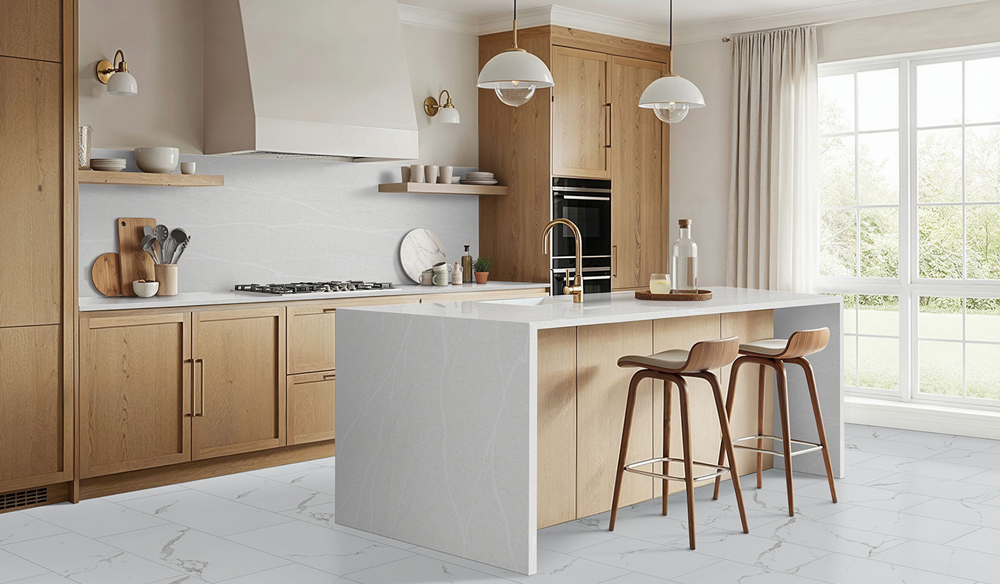
For a brighter, more expansive feel, Eroluna™ Quartz offers a crisp alternative. In this setting, the cool white background and subtle gray veining of the Eroluna™ Quartz island provide a sharp contrast to the warm wood cabinetry. The waterfall edge highlights the continuity of the pattern, while the matching backsplash under the range hood creates a seamless transition. This product is particularly effective in spaces with ample natural light, as its clean tones reflect brightness throughout the room.
Innovative Aesthetics in the Q+ Collection
Our Q+ Collection takes the benefits of quartz countertops and enhances them with even more intricate and detailed veining. The products in this collection mimic the look of natural stone, offering depth and movement that was once only available in natural materials. This collection allows you to achieve a high-end look while maintaining the practical advantages of an engineered product.
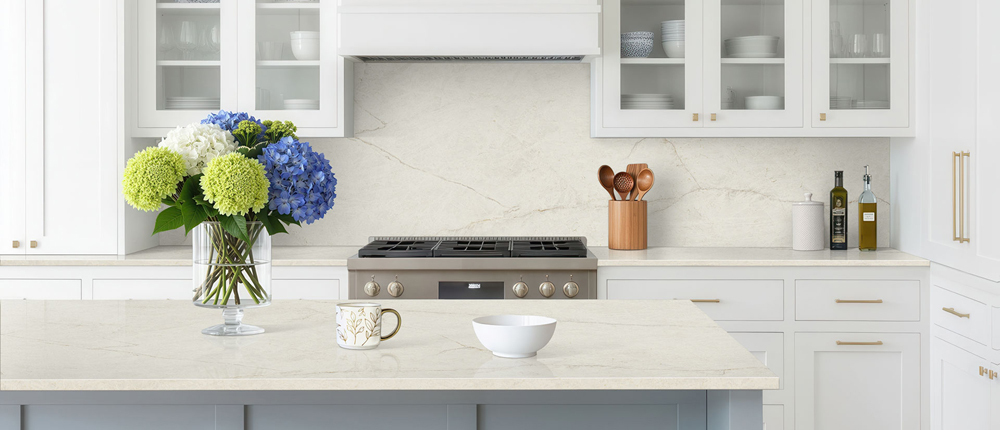
Solitaj™ Brushed Engineered Stone
The Solitaj™ Brushed Engineered Stone featured here demonstrates the unique texture available in our Q+ Collection: Engineered Stone. The creamy white background is layered with wisps of gold and blonde veining, providing a gentle warmth to the space. The brushed finish offers a tactile quality that differs from traditional polished surfaces. In this kitchen, the Solitaj™ Brushed Engineered Stone complements the white upper cabinets and the soft gray-blue of the island base, creating a classic and inviting atmosphere.
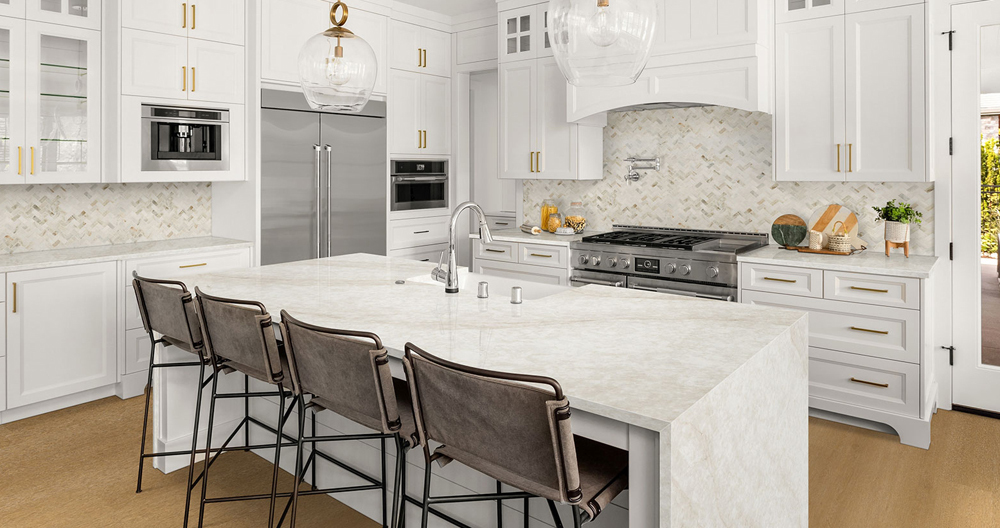
For those desiring a deeper level of detail, IvoriTaj™ Engineered Stone provides a striking quartzite-look. The warm white background is characterized by subtle earthy undertones and light gold veining that flows across the surface. In this room, the large island showcases the intricate movement of the stone, paired with a light-toned herringbone tile backsplash and gold-accented lighting. The IvoriTaj™ Engineered Stone brings a sense of organic beauty to the structured environment of the kitchen.
Performance and Reliability
Choosing between these kitchen countertops often comes down to the specific visual look you desire. Both our Q™ Quartz Countertops and the Q+ Collection: Engineered Stone are engineered to resist etching from acidic foods and are tough enough to handle the demands of a busy household. When comparing Quartz from MSI and engineered stone from Q+ Collection vs natural stone countertops, the primary advantage remains the lack of sealing requirements and the high level of impact resistance found in our engineered products.
Ultimately, quartz kitchen countertops remains one of the most versatile investments you can make for your home. Whether you prefer the bold veining of Calacatta Vernello™ Quartz or the textured finish of our Solitaj™ Brushed Engineered Stone, you are choosing a surface that combines the best of nature and technology. These countertops provide an enduring surface that will remain a centerpiece of your kitchen for years to come.
When you are ready to buy quartz countertops, we are here to help you find the perfect fit for your design goals. You can buy quartz countertops from our extensive network of partners, ensuring you receive a product that meets our rigorous quality standards. If you want to see these surfaces in person before you purchase, we encourage you to explore our full range of options at a location near you.
To get started on your project, chat online with one of our experts for immediate assistance. You can also visit an MSI showroom to experience the textures and colors of our slabs firsthand. To see our products in your area, find a local MSI retailer nearby.
Frequently Asked Questions
What is the main difference between Q™ Quartz and the Q+ Collection?
Q™ Quartz is MSI’s core premium natural quartz line, while Q+ is a next-generation engineered stone that uses high-definition print technology on an engineered stone and recycled glass base to deliver ultra-realistic natural stone visuals.
Do I need to seal these countertops?
No, one of the primary benefits of our engineered stone and quartz products is that they are non-porous and never require sealing, unlike many natural stones.
How do I clean my quartz or engineered stone surface?
Routine cleaning is simple; use a soft cloth and a mild detergent with warm water. Avoid using harsh chemicals or abrasive scrubbers that could dull the surface over time.
Are these surfaces heat resistant?
While our products are heat resistant, we always recommend using trivets or hot pads when placing items directly from the stove or oven onto the surface to protect the resin from thermal shock.
 SHARE
SHARE
 PIN
PIN
 TWEET
TWEET