Granite Countertop Thickness: Does 2Cm Vs. 3Cm Make A Difference?
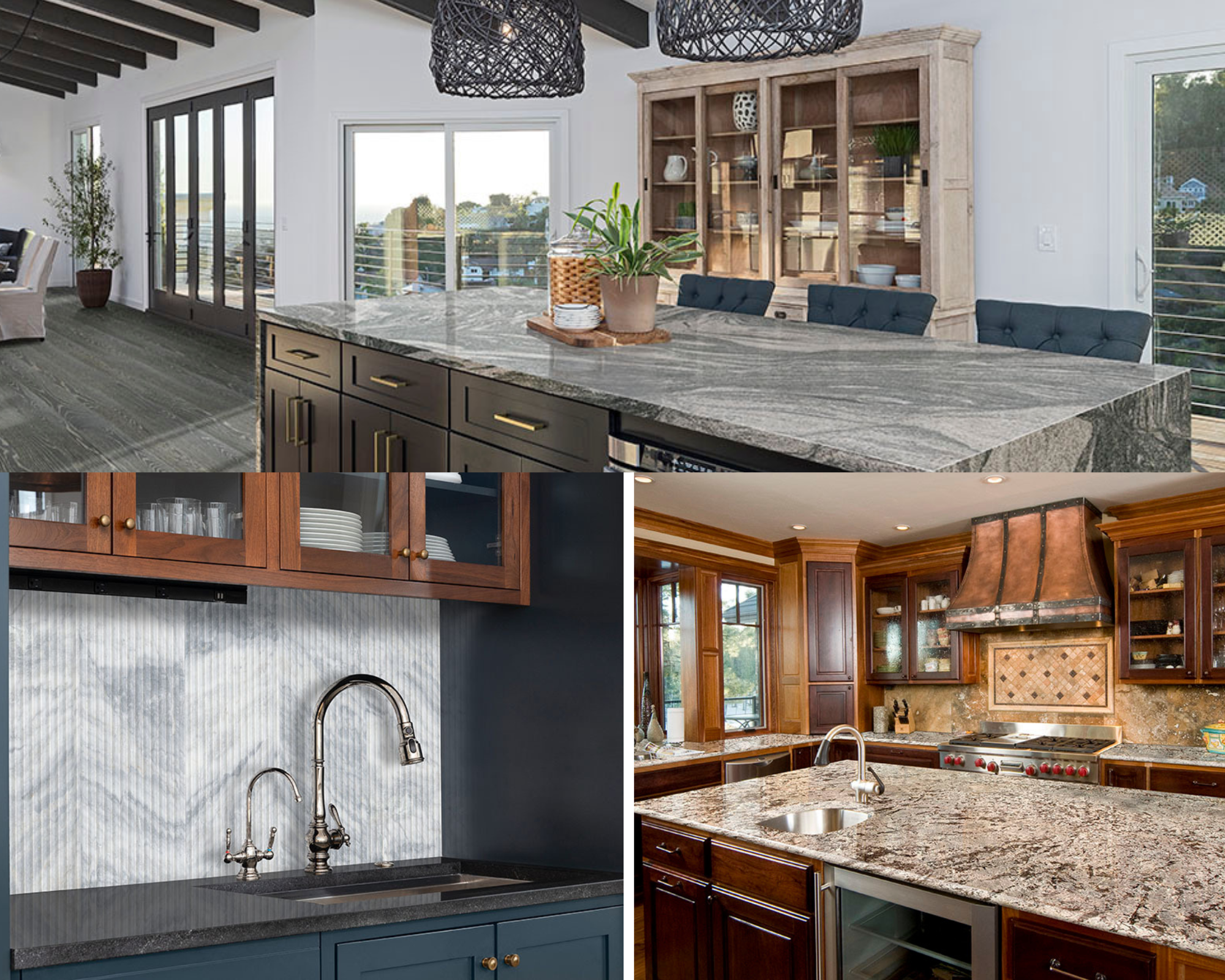
Industry standard granite countertop thicknesses are 2cm (3/4 inch) and 3cm (1 1/4 inch). 3cm is the norm these days for kitchens, islands and commercial surfaces, with self-sustaining, no plywood needed, and works with all edge profiles. 2cm is perfect for bathrooms, vertical applications and budget projects where the right plywood underlayment is needed.
What is the Standard Granite Countertop Thickness?
Imagine custom cabinets installed, appliances in, installers showing up to install a kitchen island. But when the sink cutout is cut into the stone, the stone fractures in half without reinforcement. Or months later when a wide cantilevered sitting ledge begins to sag, stressing the cabinet frames below.
You never have an aesthetic choice of 2cm or 3cm slabs, it's a structural choice that is going to impact all of your substrate preparation, support requirements and edge profile constraints. Failing to include just one item can lead to costly clean up, failed inspections or broken stone. Before you make structural decisions, take a look at this essential kitchen countertop guide to help you avoid these common mistakes.
The first thing you hear in most spec conversations is how thick is granite countertop material going to be. The answer is 2cm or 3cm.
Natural granite countertops are made in two standard thicknesses: 2cm (¾ inch / 20mm) and 3cm (1¼ inch / 30mm). A third option of 6cm is produced by laminating two 3cm slabs face to face and is found in household kitchens and commercial bar tops when visual weight is the design aim. The material quality is not altered in both these two possibilities. Performance qualities surface hardness (Mohs 6-7) is equal for both depths as far as the performance qualities are concerned. Structural variance will influence how the slab performs under stress, what substrate is required and what edge profiles may be accommodated. The most common granite thickness in kitchens nowadays is 3cm. Our MSI granite countertops collection provides standard slab sizes for household and commercial projects.
Standard granite roughly 2cm. 12-13 lbs. Granite 3cm weighs about 18-19 pounds per square foot. per sq ft. This is around 40-50% heavier than quartz made to the same thickness. Real granite slab thickness may vary according to ASTM C615. For older projects, multi-story installs and commercial builds, a structural evaluation of existing cabinetry is required before demanding 3cm.
Granite Countertop 2cm versus 3cm - Specs Comparison Side-by-Side
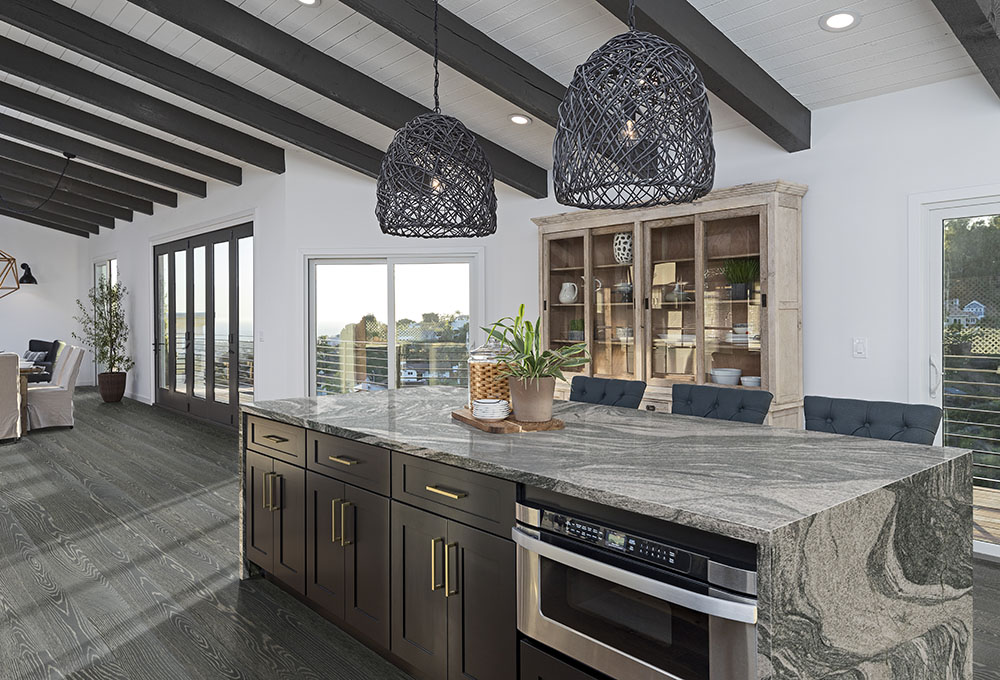
We offer Gray Mist granite in 2cm and 3cm slab thicknesses. This is a good example to use for the difference in structural load, edge capacity and substrate needs for different thicknesses of granite counter tops of the same material.
3cm granite thickness provides you structural independence: no plywood, greater overhangs and every edge profile you may imagine. 2cm trades lower material cost for advantages in low load applications.
| Spec | 2cm (¾") | 3cm (1¼") |
|---|---|---|
| Thickness | 0.75 inch / 20mm | 1.25 inch / 30mm |
| Weight per sq ft | ~12–13 lbs | ~18–19 lbs |
| Plywood underlayment | Required | Not required |
| Max unsupported overhang | 6 inches | 10–12 inches |
| Waterfall edge | Not possible | Yes |
| Full ogee / cove ogee edge | Not possible | Yes |
| Laminated 6cm edge | Not achievable | Yes (two 3cm pieces) |
| Relative slab cost | 20–30% less | Standard pricing |
| Typical application | Bath, vanity, vertical | Kitchen, island, commercial |
How Thick Should Granite Countertops Be for Structural Support
Slab thickness is a technical decision and not a design decision. The load capacity, substrate preparation and extension limitations vary greatly between 2 cm and 3 cm. See the ultimate granite countertop buying guide for the macro view of how the material operates, its engineering characteristics, and variances in weight.
2cm Granite Plywood Underlayment
For horizontal applications, granite countertops must be on plywood less than 2cm: ¾” plywood glued and screwed. Adhesive alone will not be strong enough to hold the weight of the stone. Supports cannot be more than 24 inches apart without blocking in between. In wet areas such as bathrooms and outdoor installations, use moisture resistant plywood or cement backer board to prevent degradation of the substrate layer under the slab.
Overhang Limits by Thickness
With a 2cm slab, the unsupported projection should be no more than 6 inches; if you go to 3cm, the maximum safe cantilevered range is 10-12 inches. Seating island extensions, which are typically 12 to 15 inches, must be made from 3cm material and corbels or steel rod supports, no matter the span. Always check maximum extensions with your stone professional, as the weight of natural stone varies from slab to slab depending on density and mineral composition.
Cabinet and Substrate Load Considerations
At 3cm, budget around 18-19 lbs/sq ft. This is where mass becomes a practical planning figure, not a spec sheet detail. A 30 sq ft counter run adds around 540-570 lbs of dead load to the cabinetry. Frameless plywood-box cabinets can reliably take this. Older particleboard face-frame cabinets might need reinforcement. For multi-story projects, floor loading must be calculated; a large stone island can deliver over 400 lbs to a single floor section. For commercial applications, document structural assessment in the spec package prior to fabrication.
What Is The Best Thickness Of Granite For Your Project?
The material you choose is driven by the demands of the space. Our full countertop selection guide describes how material properties drive space planning, and the sections below describe how slab depth maps to the most common project types.
But if the material itself isn’t yet locked in, comparing granite to the entire gamut of countertop collections keeps the thickness argument from getting ahead of the standard.
Kitchen Countertops and Islands
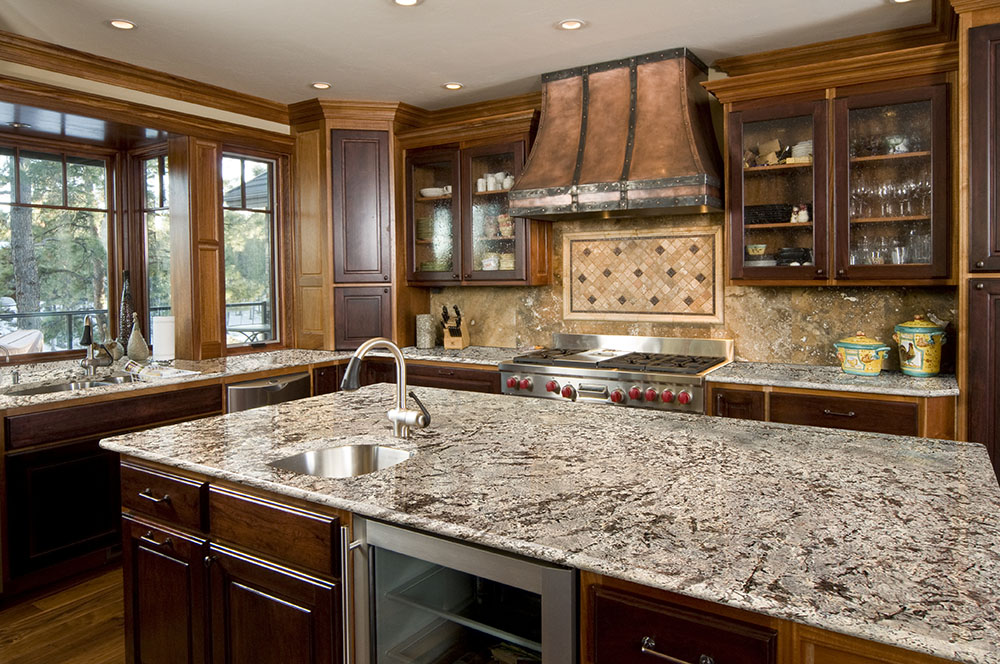
Bianco Antico granite for kitchen island and perimeter countertops. 3cm granite is the industry standard for most residential kitchens. It provides the strength needed for countertops and islands without the need for a plywood sub-top. It also supports a wide range of edge profiles and modern design styles.
In most homes, the most common granite thickness for kitchen countertops is 3cm (about 1¼ inches). This thickness is more desirable because it provides the strength and rigidity needed for everyday kitchen use without the need for a sub-top in most installations. It’s also flexible enough to be used over almost any edge profile and creates the heavy look that homeowners want from natural stone.
3cm granite is also used for kitchen islands, peninsulas and counter tops with seating overhangs. Stone generally supports short overhangs but longer seating extensions may require steel brackets, concealed supports or corbels depending on manufacturer’s advice and the extent of unsupported overhang. Most fabricators recommend 3cm granite as it offers the best balance of durability, aesthetics and long-term performance for kitchen use.
You can still find 2cm granite on some kitchen countertops, but it is usually used for applications where a plywood sub-top is part of the cabinet construction or where design and installation requirements call for a thinner slab. For most new kitchen countertops and islands, 3cm is still the industry norm.
Bathroom Vanities
Both sizes are suitable for bathrooms, but the ideal granite thickness for bathroom vanity layouts is often determined by the base design. If you're undecided between stone types for your bathroom, comparing marble and granite countertops will help you analyze weight, porosity and durability profiles. Are you installing a wall-hung or floating vanity? Opt for the lighter 2cm slab to protect the integrity of your wall brackets. Floor-mounted vanity bases can easily support either choice. Since standard vanity depths of 22-24 inches are within the safe unsupported span for 2cm, reducing mass is a prudent structural choice. Our Argento Grigio Vanity Top is a purpose-designed option to consider in this scenario.
Commercial and Hospitality Use
MSI granite meets commercial specification requirements, offering premium performance for any project size. Bar tops, reception desks, hotel counters and restaurant surfaces all require 3cm; Any horizontal surface subjected to regular impact load requires it. Pair the material choices with a documented sealing schedule. The Standard Specification for Granite Dimension Stone (ASTM C615) is the relevant compliance reference; Confirming adherence with your installer before procurement is good practice for commercial projects. Note that standard accessible ADA countertop height (34 inches) is a separate specification from thickness and should be clearly flagged for architects and accessibility consultants. When organizing commercial bids, find an authorized MSI countertop dealer to cross-reference localized logistics.
Height vs. Thickness – These are separate specs, our review of standard granite countertop heights includes counter, bar and ADA dimensions for commercial drawings.
Outdoor Kitchens and Exterior Applications
Granite fares well against outdoor elements, as its high density, UV stability, and Mohs 6-7 hardness make it the ideal choice for exterior applications. We recommend 3cm as the baseline for exterior applications. Environmental exposure, thermal cycling, and seasonal freeze-thaw shift focus stress to slab edges, meaning thicker stone provides better long-term durability in climates with temperature swings. Avoid 2cm in climates with freeze-thaw cycles as thin slabs are more prone to stress fractures. Always specify a penetrating sealer rated for exterior use, budgeting for an annual reapplication schedule versus the typical 3-5 year cycle used indoors.
Vertical Applications — Backsplashes, Fireplace Surrounds, Cladding
When working vertically, lighter is better. You are working against gravity and 2cm is the preferred size for vertical work. The integrity of the adhesive bond relies on keeping the slab mass to a minimum and the one-third reduction in weight makes a massive difference on wall mounted installations. This 2cm standard applies directly to granite fireplace surrounds.
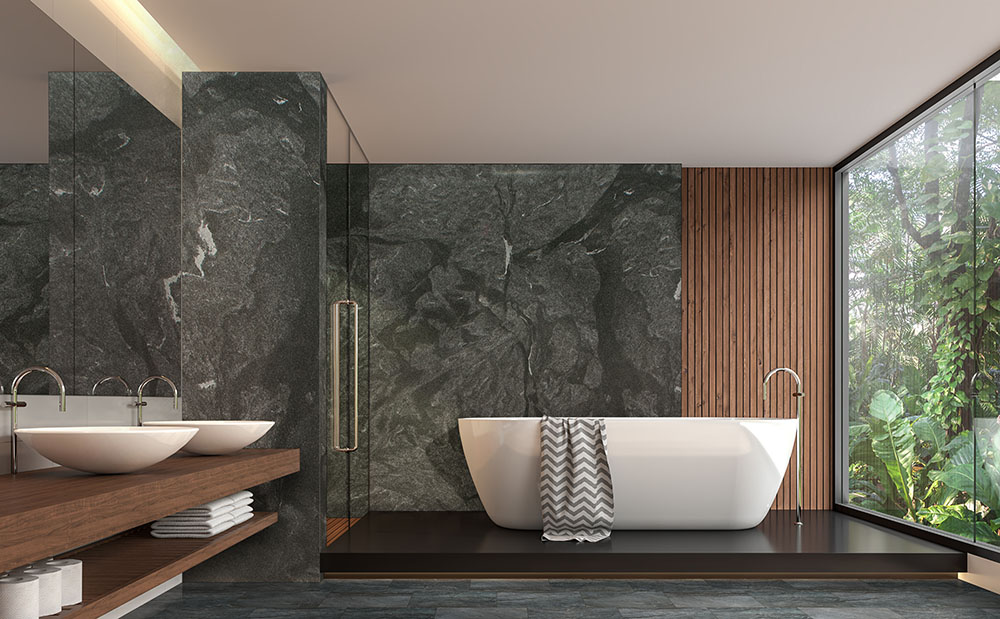
A bathroom feature wall in Virginia Mist granite celebrates the natural beauty of stone in a contemporary spa-like environment. While countertops are typically self-supporting using 3cm slabs, interior walls are generally constructed with 2cm granite to reduce weight while maintaining durability. When applied to a properly prepared substrate using appropriate setting materials and anchoring techniques, 2cm granite yields a durable architectural wall finish.
When you’re detailing fireplace plans, always check your stone hearth projection depth against local fire code clearance standards. If you’re cladding full height above 6 feet, skip the guesswork and see a structural engineer no matter which dimension you’re specifying.
Granite Countertop Thicknesses and Edge Profiles You Should Know
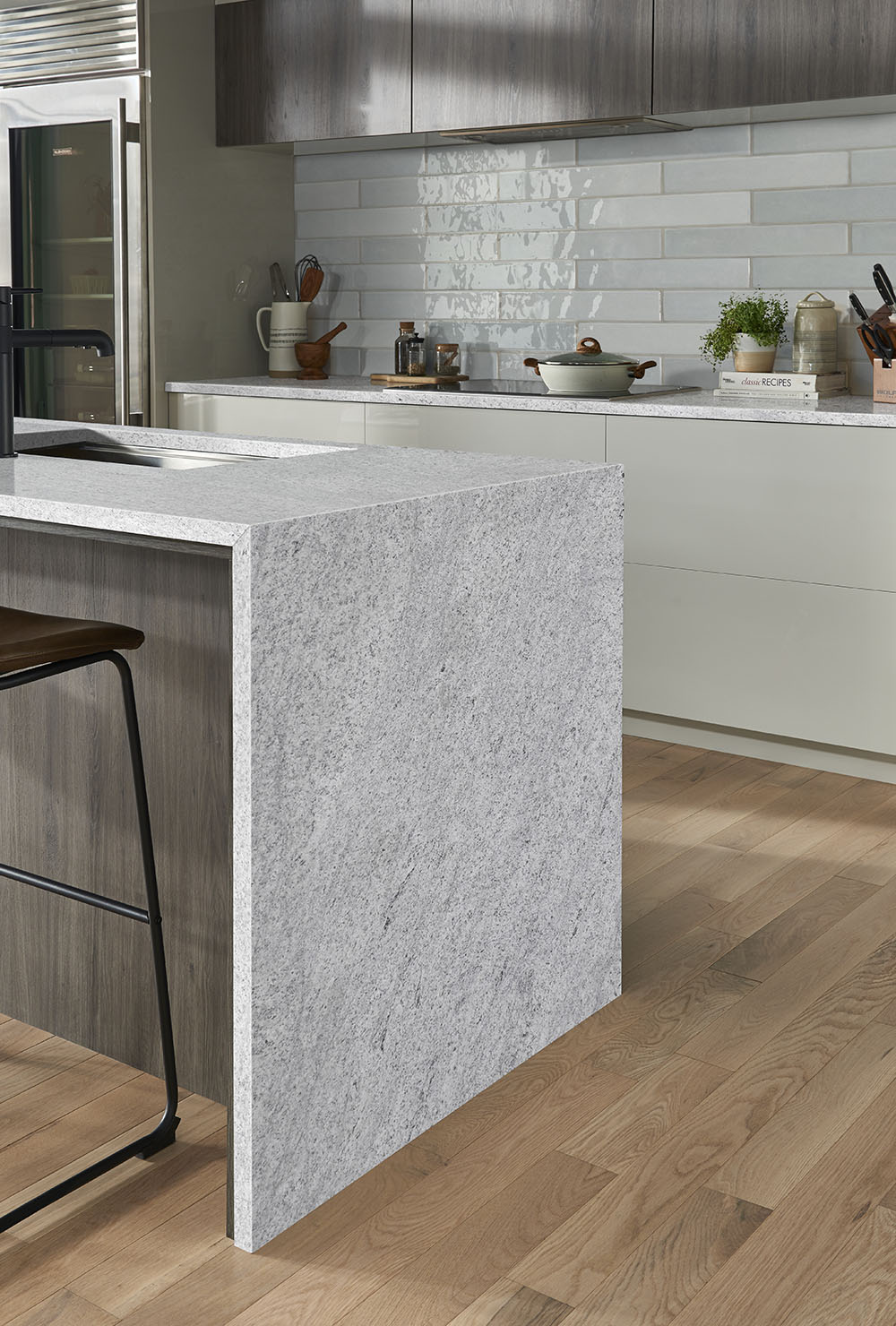
Everest Mist granite waterfall kitchen island - For waterfall edge we need a 3cm granite countertop thickness for structural continuity and mitered corner integrity.
The hardness of granite (Mohs 6-7) allows for more edge profile options than softer stones, but the thickness of a granite countertop still dictates what is structurally possible. Browse all of our countertops to see the edge designs that work best with different materials.
Edges That Require 3cm
Are you asking yourself “can you do a waterfall edge with 2cm granite? No. The weight at the floor seam makes it structurally unsound and no reputable stoneworker will attempt it. Full ogee and cove ogee profiles are also limited to 3cm because the depth of cut removes too much material from a thinner slab. Thick mitered edges, any visual depth above 2.5 inches, require two 3cm pieces joined at a 45-degree angle to provide long-term joint stability. Large overhangs with decorative profiles should always be confirmed with your fabricator by span and profile combination.
Edges Available on Both Thicknesses
- Eased edge: The most typical profile for residential construction. Reliable on both depths.
- Pencil edge and beveled.
- Standard bullnose (½ round & ¼ round)
- Edge square / flat polished
Laminated Edge Technique for a Thick Appearance
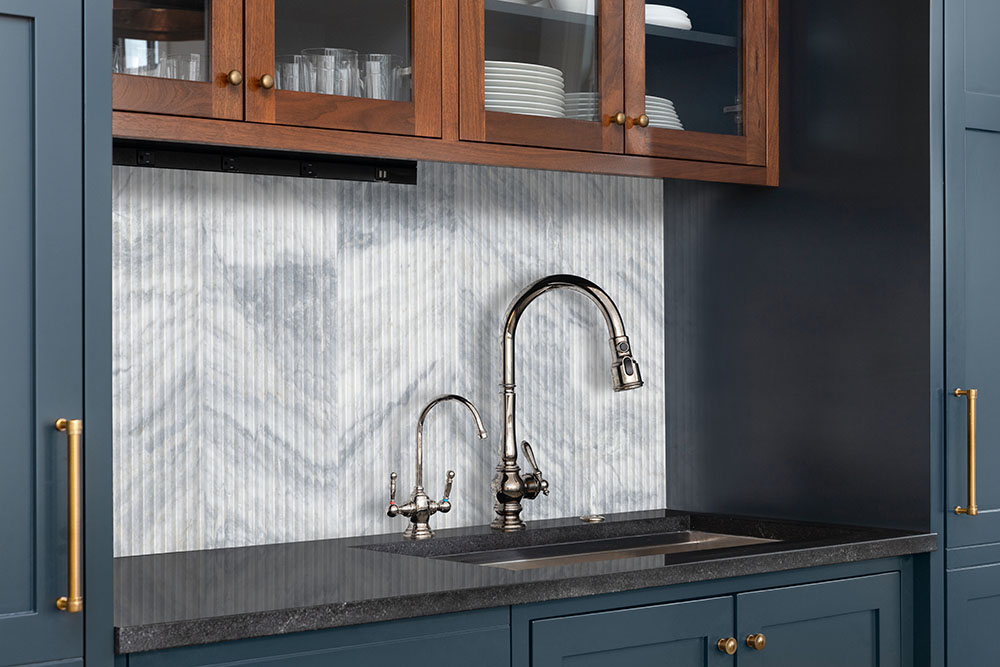
Nero Mist granite honed is a natural fit for statement bar tops and kitchen islands. Two 3cm granite slabs laminated together provide a dramatic 6cm edge profile for high end and commercial applications.
Laminated Edge: A strip of granite glued to the face of the slab to create a 4cm visual thickness. On natural stone like our Bianco Antico Granite or Virginia Mist Granite, grain matching from the same slab makes this more seamless on granite rather than engineered stone. It’s a practical way to achieve visual depth on bathroom vanities and kitchen perimeter runs where a full 3cm slab is not structurally required. Fabricating this profile usually adds about 8-12% to edge fabrication costs.
Cost Of Granite Countertop Thickness
Cost is the determining criterion for many commercial and residential buyers. Raw material 2cm granite slabs run around 20-30% cheaper per square foot than 3cm. But raw material pricing alone is only part of the total field cost.
If you plan on installing 2cm granite horizontally, you’ll need to use a sub-base and you should budget for a ¾” plywood underlayment that will add another $2-$5 per square foot to your installed total. If you want a laminated edge treatment to give that 2cm stone a premium, thick look, edge fabrication will cost you an additional $8-$15 per linear foot.
With all construction variables considered (plywood underlayment, adhesive framing, complex edge processing), the delta in total installed cost between 2cm and 3cm narrows to only 10-15%, versus 20-30% delta in material cost alone. For smaller stone projects under 30 square feet, 3cm slab is often the better overall value and avoids the logistical hassle of multi-step underlayment. Conversely, on large commercial footprints, the application of 2cm granite over a pre-engineered structural substrate can achieve significant cost savings – provided the framework is designed in advance within the technical specification documents.
The Spec Variable Everyone Ignores – Natural Stone Thickness Tolerance
Natural granite is quarried and cut with inherent variation. Engineered quartz is made to a tight, machine-controlled tolerance of ±0.5mm. ASTM C615 (Standard Specification for Granite Dimension Stone) provides a thickness tolerance of ±1/16 inch (~±1.5mm) within a single slab. You will notice that a slab marked as “3cm” can vary from about 28mm to 32mm in different places. This is normal and within the industry standard.
What it means to B2B buyers: Architects specifying finished countertop heights to the exact millimeter need to build this range into their drawings and communicate it directly to installers, particularly where the stone is integrated with appliance reveals, standard granite countertop heights (standard accessible height is 34 inches) or continuous millwork. To figure out reveals, edge details, substrate heights and seam alignment, fabricators need to know the actual slab measurements, not just the nominal thickness. On commercial projects with continuous runs of multiple slabs – reception counters, hotel check-in tops, restaurant passes – this tolerance directly impacts the alignment of seams and the setup of the supporting structure underneath.
Planning assuming absolute uniformity is a planning mistake that becomes apparent during installation. Always get the actual slab thickness measurement from the fabricator before finalizing the substrate height in the specification documents. MSI’s granite inventory includes detailed slab level specifications – authorized dealers are able to provide actual slab measurements prior to fabrication. Our team works hand-in-hand with installers and dealers from the beginning to be sure project parameters are correct. One of the best tools for that is our slab level inventory data which is one of the most reliable out there. For more information about controlling stone traits during construction, check out our buyer's guide to granite countertops.
Quick-Reference Guide — Recommended Granite Thickness by Use
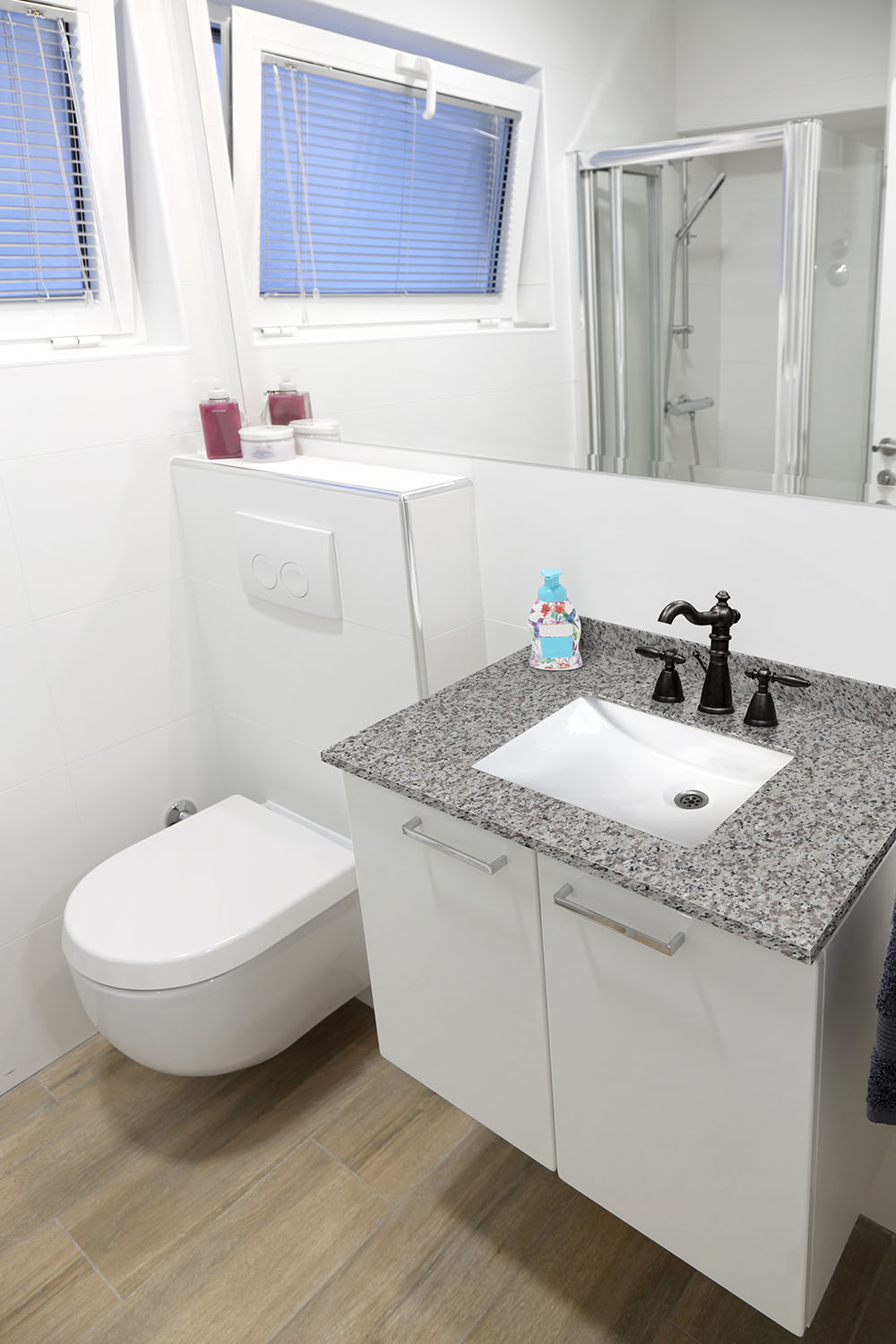
Argento Grigio granite vanity top is a purpose constructed 2cm application. Bathrooms and vanities are the appropriate use case when suitable plywood underlayment is specified, and a laminated edge creates the impression of thickness.
| Application | Recommended Thickness | Key Reason |
|---|---|---|
| Kitchen countertop (perimeter) | 3cm | Self-supporting; no underlayment needed |
| Kitchen island with seating overhang | 3cm | Weight + 10–12" max span; corbels advised beyond 10" |
| Bathroom vanity | 2cm or 3cm | Both work; 2cm reduces cabinet and wall load |
| Floating vanity | 2cm | Weight reduction critical for wall bracket integrity |
| Waterfall edge | 3cm only | Weight and seam stability at floor — 2cm not viable |
| Thick mitered edge (2.5"+) | 3cm only | Requires material depth for the 45° join |
| Bar top / hospitality surface | 3cm | Impact load tolerance; commercial specification standard |
| Outdoor kitchen | 3cm minimum | Thermal cycling and freeze-thaw stress on thin slabs |
| Vertical backsplash / cladding | 2cm | Adhesive bond integrity; weight reduction essential |
| Fireplace surround | 2cm | Heat-facing vertical; weight and adhesive considerations |
Looking to Choose the Best Granite for Your Project?
This is ultimately an aesthetic choice that is a balancing act between structural integrity, weight constraints and your design concept. Use our interactive design tools to visualize granite in your space – see how different depths, materials, and edges will look in real time. The right slab depth for your application means you can count on your stone to look fantastic and work consistently for decades.
Whether you’re specifying granite countertop thickness for a kitchen design or filling out a hospitality spec package, we’re here to help. Get fast technical answers by chatting with us online, or visit an MSI showroom to see full slab selections in-person, or find an authorized MSI countertop dealer near you to see quality granite options.
Frequently Asked Questions
How thick are granite countertops?
Granite countertops are made in two basic thicknesses; 2cm (¾ inch) and 3cm (1¼ inch). The third option – 6cm – is available by laminating two 3cm slabs for a stunning high-end effect. The standard these days for kitchen installs is 3cm. 2cm is a common requirement for bathrooms and vertical applications.
What is the standard granite thickness?
The industry standard for kitchen granite counter-tops is currently 3cm (1¼ inch). The former standard was 2cm, still available but often requiring plywood underlayment for horizontal installs. 3cm is the standard for most fabricators for kitchen bids as it is self-sustaining and does not need another substrate.
How thick is 3cm granite in inches?
Granite Countertop Thickness in Inches: 3cm is about 1.25” (1¼ inches) 2cm is about 0.75” (¾ inch) This is for raw slab depth, before any edge treatment. A laminated edge on 2cm granite can give the illusion of a 1.5” – 2” thick slab without adding to the thickness of the slab itself.
Is the price affected by the thickness of the granite countertop?
Yes, the 2cm granite slabs are roughly 20-30% cheaper per square foot raw material than the 3cm. But 2cm requires plywood underlayment and typically laminated edge treatment, which raises the installed cost by $4-20 per sq ft or linear foot. When considering all aspects of installation, the total net cost difference is typically 10-15%.
How thick should granite countertops be for a kitchen?
The industry standard is currently 3cm (1¼ inch) thick which is the acceptable thickness for kitchen counters. It is self-supporting with a 10-12 inch overhang without additional support and compatible with all edge profile options including waterfall, mitered edges. 2cm requires plywood underlayment and is limited to overhangs under 6 inches.
What is the ideal thickness of a granite kitchen island?
If there are overhangs for seating, these counters must be minimum 3cm thick. Island overhangs for seating are usually 12″ – 15″ which is to far for 2cm granite not to be supported. If the granite is 3 cm thick, overhangs greater than 10 to 12 inches will need corbels or supports of steel rods. 3cm is the only structurally sound choice for those islands with waterfall edges.
Does 3cm granite need plywood underlayment?
No, 3cm granite is self-sustaining over typical cabinet spans and does not require plywood underlayment. ¾” plywood underlayment is required for all horizontal applications for 2cm granite. Corbels or steel rod supports should be used in lieu of a plywood base under the slab for 3cm granite with overhangs greater than 10-12 inches.
How much thickness is needed for granite bathroom vanities?
3cm is the choice for a dramatic, high-end look when the vanity base can handle approximately 18 – 19 lbs per square foot. 2cm is most popular because most standard vanity depths (22” – 24”) fall within the safe unsupported span, and the weight reduction benefits the load capacity of the cabinet and floating vanity wall brackets. Both 2cm and 3cm granite are good options for bathroom vanities.
 SHARE
SHARE
 PIN
PIN
 TWEET
TWEET